
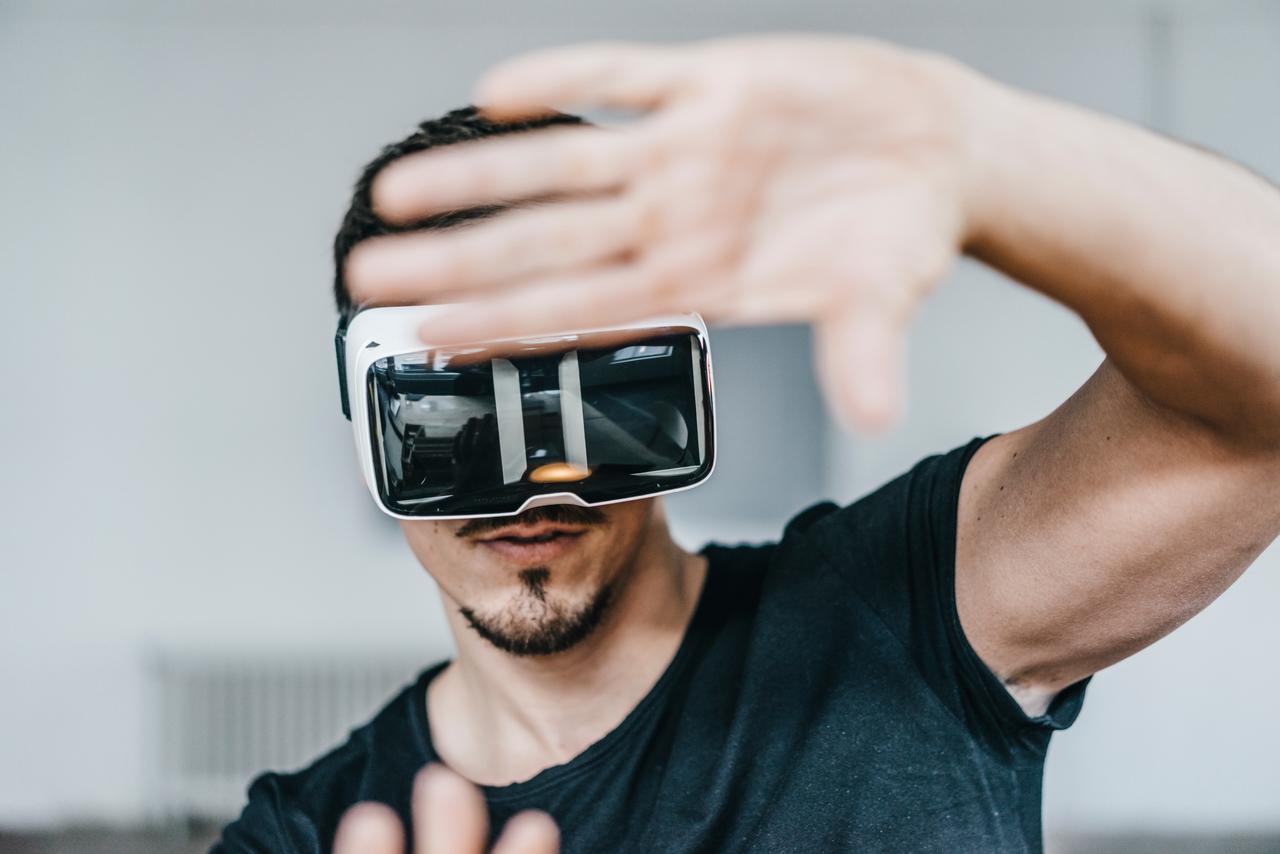
Immersive virtual reality combines the physical and virtual worlds, although in a few years the distinction between both spaces, virtual and physical, will become almost impossible, so much so that the everyday life of millions of people will radically change. Meanwhile, to understand its importance and the economic impact that this tool can have, the consulting company PwC has already estimated in 2019 that around 824,00 jobs have been positively affected by AR (augmented reality) and VR (virtual reality). , a trend that will continue to grow to 23 million jobs by 2030, and has estimated a $1.5 trillion impact on the global economy, highlighting product design and development, healthcare, and retail.
What is immersive virtual reality?
Immersive virtual reality aims to create a complete 360 experience by transporting users into a digital three-dimensional environment. Through the use of devices such as virtual reality headsets and tracking controllers, we can interact and explore virtual worlds in a realistic way. The key to this technology is to make the user feel that the experience is authentic.
To achieve this degree of realism, Immersive virtual reality uses advanced motion tracking techniques and high-quality 3D graphics. In this way, users explore and manipulate objects in a natural way, as if they were physically present in the digital environment. This achieves a sense of presence and realistic interaction, something very valuable in sectors such as the entertainment industry, education, learning simulation and psychological therapy, among others.
Despite the possibilities, one of the challenges of immersive virtual reality is providing a seamless experience without discomfort. Achieving these aspirations implies the need for technologies to maintain coherence between the user’s movements and the response of the environment.
The main ways of using immersive virtual reality
This technology is very versatile, so its use is becoming more widespread, although its use is highlighted in the entertainment and video game industry. Developers use it to create 360 experiences, allowing players to fully immerse themselves in the digital world and actively participate in the proposed narrative and action.
Education is another area where this is very useful. It is used to recreate complex or dangerous learning scenarios in a safe and controlled environment. For example, medical students can practice virtual surgeries, and pilots train in highly realistic flight simulators. Thus, immersive virtual reality enhances knowledge retention and practical skill acquisition in a risk-free, interactive environment.
Architecture and design They also benefit from this innovation. Architects can create virtual models of buildings and spaces, allowing them to visualize and explore their ideas in three dimensions before putting them into practice. So they have a very useful tool for decision making, project presentation and early problem detection.
Perhaps less well known is its use in psychology, particularly in therapy to address various issues. By using controlled virtual environments, patients can more easily face their fears or difficulties. A good example is the treatment of anxiety and post-traumatic stress, as patients experience virtual situations that replicate their fears or problems, but in an environment that promotes their recovery.
Finally, the development of immersive virtual reality will be key in promoting the metaverse and all that it has to offer for companies and users.
How does it work?
Through the combination of hardware and software, a three-dimensional and immersive experience is created for users. Devices such as virtual reality headsets are then placed on the user’s head and cover their eyes, blocking their view of the real world and immersing them in a new environment. Finally, stereoscopic images are created to simulate 3D vision using high-resolution screens and special glasses.
In addition to helmets, other devices are used to enhance interaction and immersion. Tracking controls, also known as motion controllers, allow you to interact with the virtual world using gestures. To ensure realism, the position and orientation of members in space is tracked.
Software is another key element. Developers create virtual environments using game engines or development platforms to create the environment. In order for the experience to be reliable, the quality of the graphics and the accuracy of the motion tracking are very important to achieve satisfactory results. Once in the virtual world, it is difficult to distinguish it from physical reality.


