14:45
The 90s was a pivotal time for video games to increase their cultural influence and economic profitability worldwide. Leaving behind the specter of the crisis that almost ended the segment in the early 80s, the last years of the 20th century were full of innovations, technological advances, creativity and experience that changed the industry forever.
Consoles such as the Super Nintendo (SNES) and Sega Megadrive, with greater graphical and audio power than their predecessors, dominated the market and helped cement the popularity of legendary sagas such as Super Mario World, Donkey Kong in Sonic the hedgehogin addition to Final Fantasy (FF), whose commercial success was such that it took over in Japan what had until then been a niche product in the Far East: RPGs (role-playing games), games that offer deep stories, tactical combat systems, and the ability to create and customize characters.
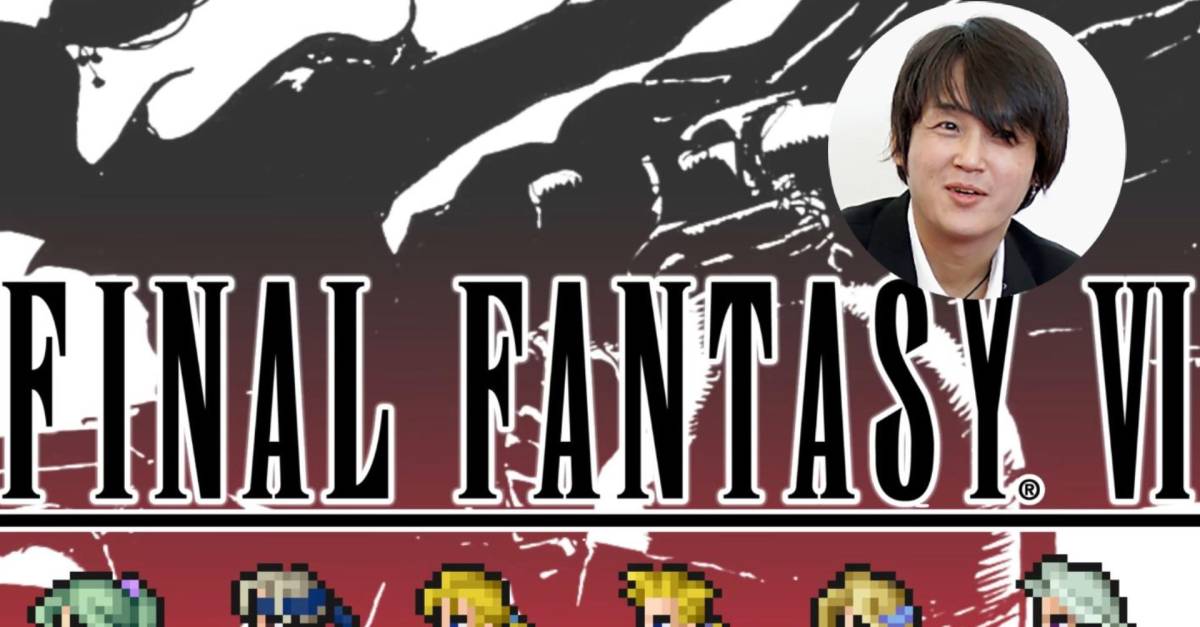
Final Fantasy VIwhich for many is the best part of the saga, this week celebrates 30 years since its release on the SNES in June 1994. Critics praised it as an epic with a complex narrative, memorable characters and a legendary soundtrack, its story explored universal themes such as love , War, Loss, and Redemption, and since its release it has captivated 2.55 million players of all ages.
Behind this masterpiece was Tetsuya Nomura, an artist who started his career in video games in 1992. He started working at Square Enix (the parent of FF) after reading a job offer in a magazine and went on to have one of the most successful careers in the industry as Nomura also brought his unique style to other sagas such as Chrono Trigger, Parasite Eve, Kingdom Hearts o Xenoblade Chroniclesthat is why it is considered a legend.
Remember how you participated in the project to create FF VI?
“I mainly designed the monsters in the game and worked on the visual aspect of the battles. At the time, we didn’t have that many employees, so everyone would come up with ideas for game stories and other things that we wanted to include in a certain title. We would write them and have meetings where Hironobu Sakaguchi (FF VI producer) and others would decide what things would be covered. “That’s how some of my own ideas ended up being used in the story of the game.”
Which ideas have been tested?
“The idea of the coexistence of machines and magic is best represented by the opening scene where the Magitek armor walks through the snow. This is taken from a document I wrote with another contributor. I contributed the basic ideas for the Shadow and the Setzer background. At the time, we had an unusual way of creating game stories: each of us would contribute our own ideas, and then Sakaguchi would choose what would go into the game. It didn’t matter what the job was, we were all just offering what we wanted to do. The next title in the series, Final Fantasy VII, also started this way, but then Kaushige Nojima took over as screenwriter, and it’s been a one-man story ever since. I was also very involved in the work on FF VII, as many of my ideas were used.”
He also designed the characters…
“Yes, I was responsible for creating illustrations for sprites characters of the group. I also drew preliminary storyboards for scenes and did original character drawings chibi in the operating instructions. At the time, everyone wrote their planning documents on computers, but after I learned about advertising, I liked to make them as if I was going to use them in a presentation: I wrote the text by hand, including lots of pictures and tried , so that the letters really stand out. Then one day Sakaguchi saw it and told me to do something similar for FF VI.
Do you have a favorite character or monster that you designed for FF VI?
“The last sprites What I’ve been working on is the Statue of the Gods and Kefka in the final battle, so they hold a special place in my heart.
I also created monsters for Final Fantasy V with a senior artist, and then in FF VI I worked on them with two junior artists. Everyone always wants to create bosses in a game, and in FF V my colleague lets me take care of them. Exdeath is huge on its own, but I wanted to do something even bigger; this is what inspired the creation of the Statue of the Gods.
I made it a point to draw my designs first before moving on to creating sprites, but few people did it that way at the time. I drew the boss in a notebook, screen by screen.
I usually had my sketch on hand and then created sprites based on that, but for the Statue of the Gods I scanned the sketch and made it sprite by scanning. At the time there were limits on how many colors I could use, so I scanned it in monochrome. It looked a bit rough, but I was able to improve it by editing and adjusting the colors manually. To be honest, I thought it would be a breakthrough in the way I created spritesbut then FF VII came out, everything became polygons, and I never used that method again.”