

After months of waiting since the official announcement last week, Meta (the big Facebook or Instagram company) has announced the launch date for Meta Quest 3, its new virtual and mixed reality headset that will arrive in stores from October 10 with two models, one with 128 GB of storage for 549.99 and another 512 GB for 699.99 .
We don’t have the helmet yet, so we can’t talk to you about how it feels when you use it or how it’s improved over the Quest 2 at this point, but We can offer you an overview of some of the most notable differencesat least on paper, between both devices.
The most obvious, hardware
The most noticeable and obvious differences, as you can imagine, are the hardware, starting with the new Qualcomm Snapdragon XR2 Gen 2 chip underpinning the Meta Quest 3in addition to this RAM increases from 6GB in the Quest 2 to 8GB in this new model.
Another of the most important changes is at the hardware level screengoing from Fresnel lenses from Quest 2 to pancake lenses from Quest 3which also has a higher resolution 2064 x 2208 pixels per eye along with 90 to 120 Hz refresh rate in the most modern helmet (in Quest 2 they went from 60Hz to 120Hz).
Since then, there have been other improvements at the storage level the Quest 2 maxed out at 256GB and the Quest 3 maxed out at 512GBconnectivity has also been updated to offer Wi-Fi 66 E and Bluetooth 5.2 (instead of Wi-Fi 6 and Bluetooth 5.0), and there are slight improvements to the speakers for better sound quality.
More innovative design
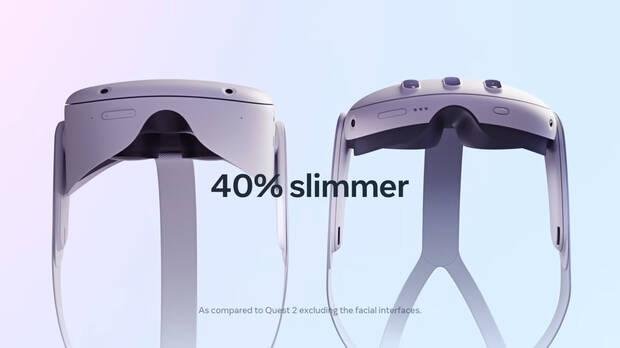
At the design level as well We found a few differences between Quest 2 and Quest 3 although the most obviousThe most innovative aspect of the new helmetwith those three front panels which give it a more futuristic look and also serve to house new sensors that serve to enhance the mixed reality experience.
Task 3 It’s also thinner (up to 40% more depending on the brand), and while it weighs a bit more than the Quest 2, its shape has changed slightly to better fit our head and more effectively avoid light leaks, all this on paper, unless of course we can test the helmet.
Goodbye Quest 3 controller ring
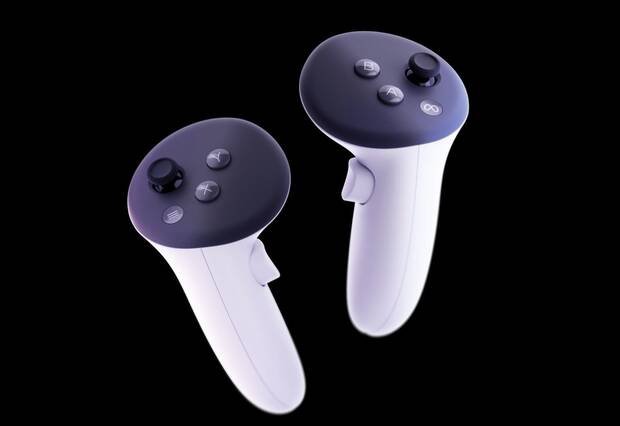
If we look at control elementsthe main difference we can tell at this point is that the disappearance of the circular ring that surrounded themsomething that will make them easier and more manageable, in addition to avoiding accidents in which we encounter this ring with furniture or other objects.
Greater commitment to mixed reality
Another one of the big differences we see at the moment between both helmets mixed reality. In Quest 2, we can see the surroundings in black and white with a fairly low image quality, just to navigate, not leave the boundaries of your game area and not much else.

However, in the Quest 3 we have a much better depth sensor and higher quality dual RGB cameras on top of that being able to see our room in full color, allowing us to enjoy all kinds of mixed realitysuch as placing a large virtual role-playing game board in the middle of our living room.


