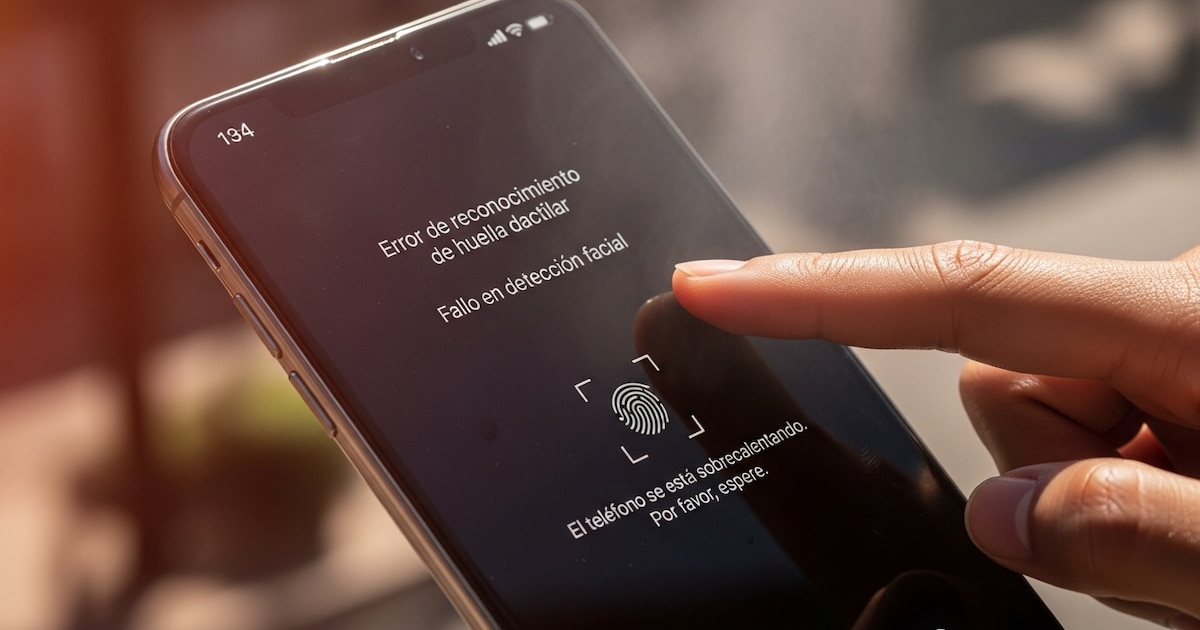
During the summer, many smartphone users began to notice a recurring problem: the mobile phone fails when trying to unlock with a fingerprint or face recognition. Although these biometric systems have become a key tool for everyday security and comfort, high temperatures can affect their performance.
Extreme heat, combined with humidity and intensive use of the device, has become a factor that reduces the accuracy of these mechanisms, generating frequent errors and forcing the use of a traditional PIN or password.
This phenomenon does not respond to an isolated malfunction of certain makes or models, but to a a technical limitation common to most current biometric systems. Environmental conditions affect both the user’s body and the phone’s internal components, creating an unfavorable scenario for accurate fingerprint and facial recognition.
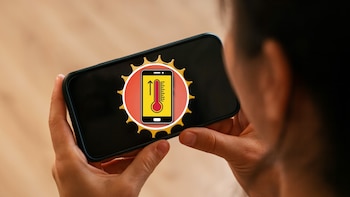
The effect of heat is twofold. On the one hand, it changes the physical condition of the skin; on the other hand changes the device’s hardware performance. In hot weather, sweating is a natural reaction of the body. This layer of moisture that forms on the fingers or face can directly interfere with biometric readings.
In the case of a fingerprint reader, sweat and natural oils from the skin create an irregular surface, making it difficult to detect the characteristic grooves and reliefs of each individual.
Optical sensors need a clear image to work properlywhile ultrasound depends on the proper propagation of waves through the skin. With excessive humidity, both systems lose accuracy.
Face recognition is no exception. Glare caused by sweat, changes in skin texture, and the presence of dust or moisture particles on the camera lens can affect the capture of facial features. This causes user identification to fail even in good lighting conditions.
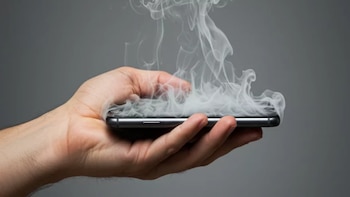
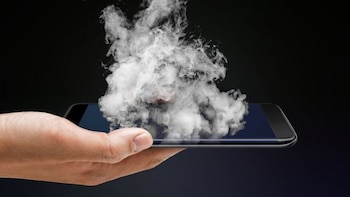
outside the skin the phone itself may be part of the problem. Prolonged use, direct sunlight or high ambient temperature will increase the internal temperature of the equipment. When this happens, some components reduce their performance as a protective measure.
Biometric sensors may temporarily go out of calibration or operate with less accuracy until the device recovers to the proper temperature. In extreme situations, the system prioritizes the overall stability of the device over secondary features, which explains why biometric unlocking usually doesn’t work when the mobile phone is hot to the touch.

Added to this is the accumulation of dirt. In the summer, dust, moisture and grease are more likely to fall on both the fingerprint sensor and the front camera. This combination acts as a physical barrier that reduces the quality of biometric reading.
Manuel Mori, product specialist at OPPO Peru, points out that these problems are directly related to external factors that often go unnoticed by users.
“In today’s environment, where biometric technologies are becoming increasingly essential for device security, it is essential that users understand how heat and humidity can affect their performance. Technological innovations must be adapted to real-world conditions, such as temperature changes,” he explains.
According to industry experts, today’s systems have tolerance limits, but they are not foolproof in the face of extreme scenarios. Extreme heat remains one of the biggest challenges for mobile biometrics.
Although it is impossible to completely eliminate the effects of heat, there are simple measures that can help improve the sensation:
- Keep the sensors clean: Cleaning the fingerprint reader and front camera with a dry cloth reduces errors.
- Avoid use when the equipment is hot: Allow the mobile phone to cool down before attempting biometric unlocking.
- Dry fingers and face: Remove sweat or moisture before using fingerprint or face recognition.
- Re-registration of biometrics– Repeated fingerprint or face scanning in a cool, clean environment can improve accuracy.