
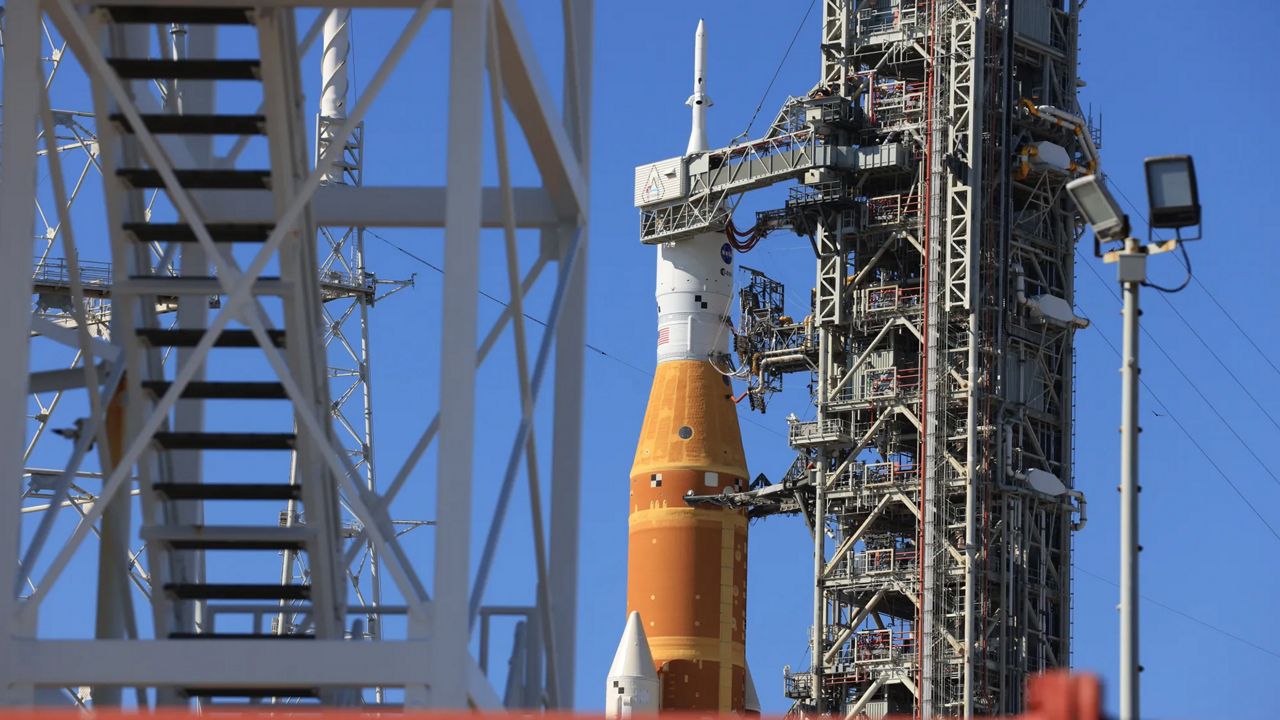
CAPE CANAVERAL, FL. — NASA’s New Moon rocket suffered another setback Saturday, almost certainly delaying the first trip by astronauts to the moon in decades until spring.
The space agency discovered the latest problem just a day after setting March 6 as the target date for the Artemis II mission, humanity’s first moon flight in more than half a century. The flow of helium to the rocket’s upper stage was interrupted overnight, officials said. A steady flow of helium is needed to bleed the engines and increase the pressure in the fuel tanks.
YOU MAY BE INTERESTED IN:
This helium problem has nothing to do with the hydrogen fuel leak that marred the Space Launch System (SLS) rocket’s countdown dress rehearsal earlier this month and forced a repeat test.
NASA Administrator Jared Isaacman said a faulty filter, valve or connection plate could be the cause of the halt in helium flow. Whatever the cause, he said, the only way to access the area and fix the problem is at Kennedy Space Center’s Vehicle Assembly Building.
“We’ll start preparations for the rollback, and that will take the focus off the March launch window,” Isaacman said via X. NASA’s next opportunities will be in early or late April.
Earlier in the morning, NASA said it was preparing to return the 98-meter (322-foot) rocket to its hangar for repairs while increasing the availability of the site.
“I understand that people are disappointed by this development,” Isaakman said. “This disappointment is felt especially by the entire NASA team that has worked tirelessly to prepare for this great endeavor.”
Hydrogen fuel leaks have already delayed the Artemis II flyby near the Moon for a month. A second fuel load test on Thursday found almost no leaks, giving managers confidence to target a March takeoff. The four astronauts began a two-week quarantine on Friday night, mandatory to avoid germs.
Disruption of the helium flow is limited by the SLS rocket’s cryogenic intermediate propulsion stage. This upper stage is essential for placing the Orion crew capsule in the correct high-Earth orbit for post-liftoff inspection. It should then separate from Orion and serve as a target for the astronauts in the capsule, allowing them to practice docking techniques for future lunar missions.
During NASA’s Apollo program, 24 astronauts flew to the moon between 1968 and 1972. The new Artemis program has completed just one flight so far, an unmanned lunar orbit mission in 2022. That first test flight also suffered from hydrogen fuel leaks before takeoff, as well as a helium problem similar to the one on Saturday. The first crew landing on the moon under Artemis is at least a few years away.
___
We invite you to visit us on the new NY1 Noticias WhatsApp channel. There, you’ll find the most up-to-date news about what’s happening in New York, as well as other stories about the rest of the country, Latin America and the world. Click this link to access the channel. We appreciate it in advance if you become one of our subscribers and express your reaction to what we post with emojis.


