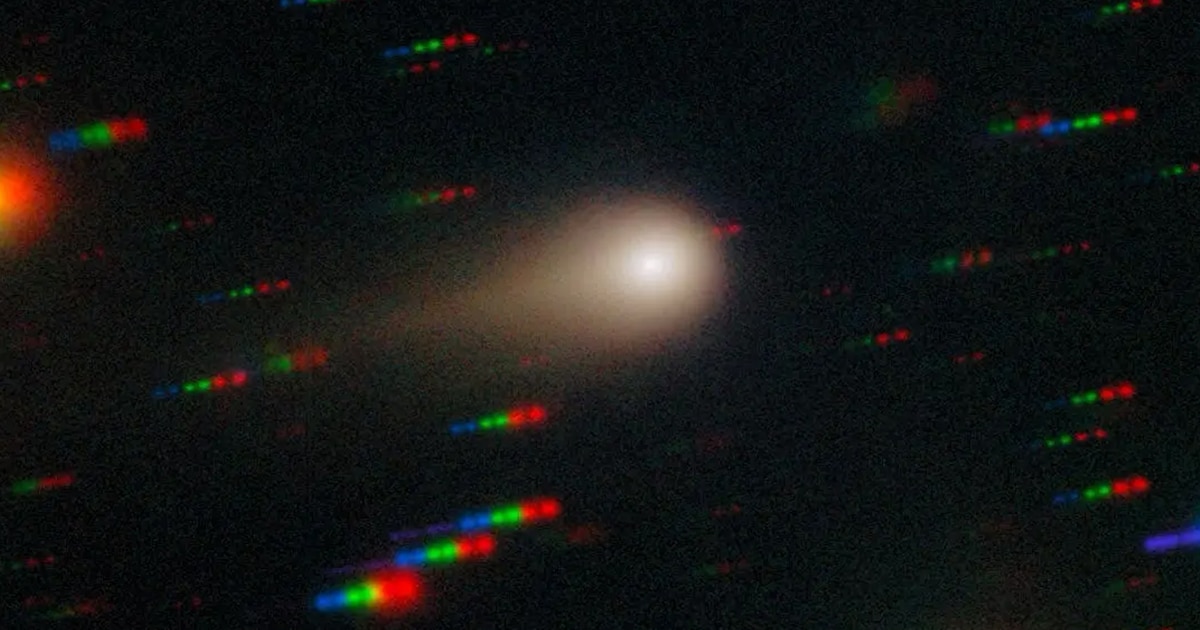
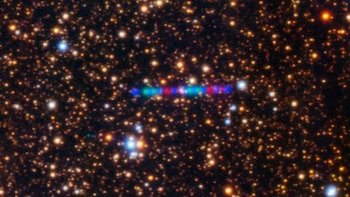
He comet 3I/ATLAS es a really unusual guest: it is a the body which comes from outside the solar systemwith a hyperbolic trajectory that passes through our cosmic surroundings before continuing its journey into interstellar space. Due to its origin and modern technologies, its study is of great importance for science, not only as an astronomical spectacle, but as a window into other star systems.
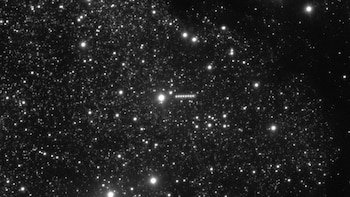
This comet was discovered on July 1, 2025 Asteroid Collision Telescope Observation System (ATLAS) from Chile. Its speed, direction and orbit indicated that it did not belong to the Solar System: it was moving at a very high speed and on a trajectory that did not correspond to bodies associated with the Sun. In fact, it is known to be the third interstellar object identified so far 1I/Reds en 2017 and 2I/Barysau en 2019.
The fact that it comes from another star system makes it extremely rare and valuable: each observation provides clues about materials and processes which are not directly related to the Sun.
“These comets orbit the Sun, tracing their path through the Solar System. Every once in a while one of them deviates and approaches Earth, partly pushed by Jupiter’s gravity, and that’s where you can see it with the naked eye,” he explained. Rodrigo Diaz, physicist and specialist in astronomical data.
The The 3I/ATLAS orbit is hyperbolicwhich means that it will not be connected to the Sun and will continue its journey into outer space after its passage. It is expected to reach its perihelion, the closest point to the Sun, around October 30, 2025 at a distance of about 1.4 astronomical units (210 million km) from the Sun.
Its closest approach to Earth is estimated to be approx 1.8 AU (about 270 million km)which means that it does not pose any threat to our planet.
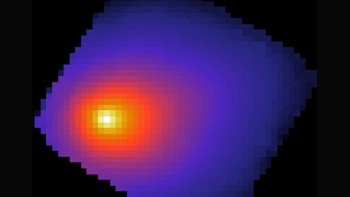
Observations made with modern instruments, including The James Webb Space Telescope and other ground-based telescopesshowed very interesting data about the composition of 3I/ATLAS. It was found to contain carbon dioxide (CO₂) in an exceptionally high proportion to water, together with water in a vaporous state, carbon monoxide and other volatile substances.
This indicates that formed in an environment quite different from that of most comets in the Solar Systempossibly in a star system with different icy, radiative, and chemical conditions.
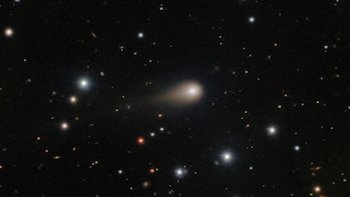
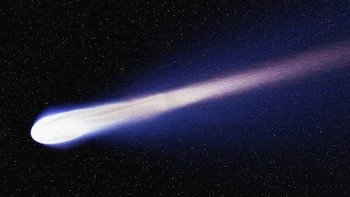
In addition, it was observed that it was already active when it was still relatively far from the Sun, which is not so common among comets in the Solar System. The Telescope images showed how its tail is developing as it approaches the Sun, allowing its evolution to be studied in real time.
In the next few months, scientists hope to observe in detail how the activity of the comet changes as it approaches its perihelion. This includes an increase gas and dust emission, tail development, interaction with solar radiation, and the amount of material ejected from the core. Measurements and monitoring from space orbiters as well as ground-based telescopes are also expected to compare its behavior with that of comets in the Solar System.
“Comets are very interesting objects for studying how planetary systems form. They are primitive remnants of system formation, so they act as pieces that allow us to understand the history and evolution of systems completely different from our own“, – said Ramina Mikulan, a graduate of astronomy and an analyst of scientific application Naval Hydrographic Service of the Ministry of Defense, dependent on the Buenos Aires Naval Observatory.
After perihelion passes, it will continue its journey out of and into the solar system the observation “window” will gradually close. So, it’s an opportunity worth taking while it’s relatively affordable. Although most observers would not expect it to be visible to the naked eye, it can be studied in detail with medium and large telescopes.
“He the main problem is that it is very weakalthough among all the interstellar objects we know, the largest still has a very small diameter, so it is not easy to observe it,” Diaz noted.
Additionally, when these types of objects approach Earth, there are different exploration protocols that can be adopted. “There is monitoring networks designed to monitor these objects“Many of them can only be detected when approaching the Sun, because before they were practically invisible,” Mikulan explained.
The graduate astronomer also emphasized that in Argentina There are scientists and specialists who are part of the international community to track minor objects, even if they are not directly involved in defense strategies. He cooperates in observation, analysis and study of this body type.
Among the theories associated with 3I/ATLAS a very plausible explanation is that it is a comet of natural originejected from its original star system by gravitational interaction, and is now traveling through the galaxy until it intersects with our system. Its unique composition confirms this hypothesis: it is a “sample” of another star system.
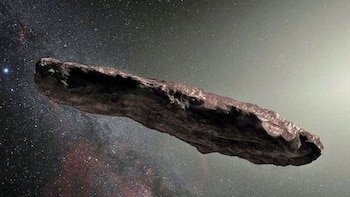
However, also more troubling ideas emerged (though far fewer accepted) which suggest that it could be a man-made object, an extraterrestrial probe, or some technology based on in certain unusual behaviors. Although most experts say that a natural explanation is the simplest and most reliable, according to the current data, we will have to wait until the 3I/ATLAS object gets closer to Earth to do this. to study its composition more precisely.