
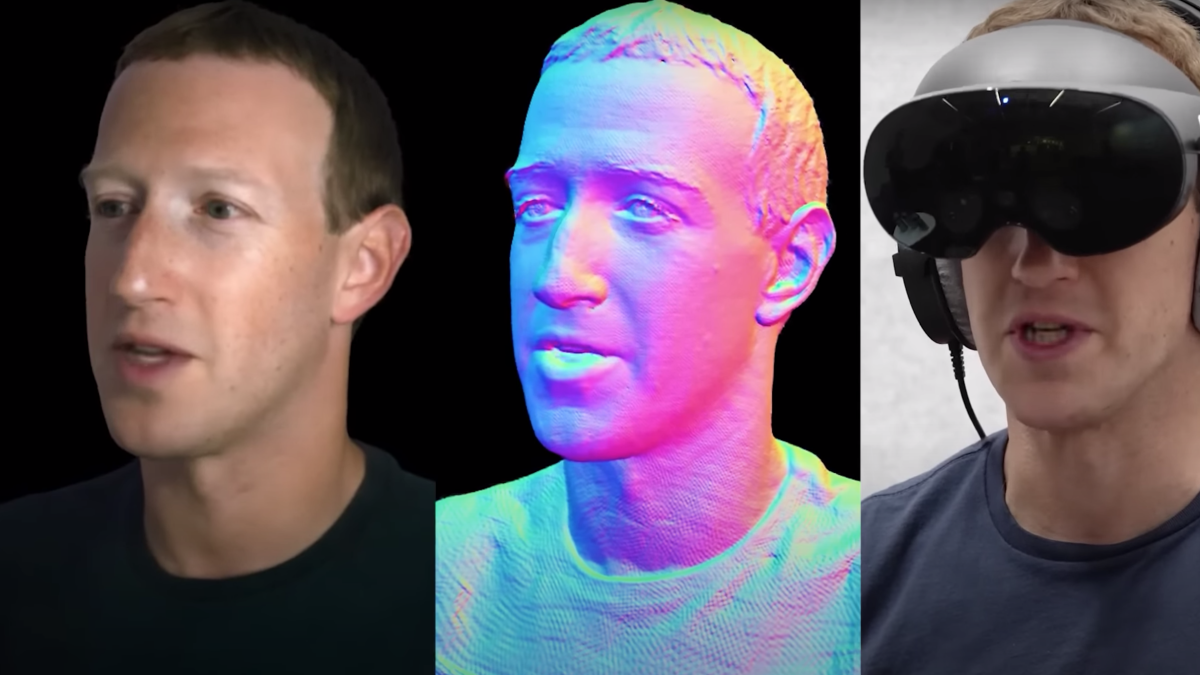
Mark Zuckerberg, CEO of Meta, rekindled interest in the meta universe in a virtual reality interview that shocked many. During a conversation with Russian-American computer scientist and podcaster Lex Friedman, Zuckerberg unveiled super-realistic avatars in what could be considered the first live demonstration of Meta’s “Pixel Codec Avatars” project. This project aims to enable virtual reality headsets, such as the Quest Pro glasses, to be able to analyze people’s faces and create real-time avatars that replicate their facial expressions during a conversation.
The interview, which took place entirely in virtual reality, allowed Zuckerberg and Friedman to meet face-to-face despite being separated by thousands of miles. “We’re hundreds of miles apart in physical space, but it feels like we’re in the same room because we look like photorealistic 3D Kodak avatars with spatial sound,” the podcaster commented at the beginning of the interview.
Virtual reality
How did they do it?
“This technology is incredible and I believe it is the future of how people connect with each other in a very meaningful way online. These avatars can capture many of the nuances of facial expressions that people use to communicate and move with each other,” Friedman commented.
Creating these highly detailed avatars nowadays takes a lot of resources and time. The CEO of Meta explained that in order to conduct this interview, both protagonists took some scans for “this research project that we have at Meta called Kodak Avatars.” After scanning the faces, in addition to many different expressions, the system creates each of the faces and bodies, which are then rolled into Kodak, which then, “when the headphones are on your head, sees your face, sees your expression and basically it can send an encrypted version of what that you should watch.’
Zuckerberg’s vision
What is the path to making the metaverse more accessible to humans?
Zuckerberg also emphasized the efficiency of this technology in terms of bandwidth for transmitting high-quality 3D content. Although it is not specified whether the avatars were generated on the Quest Pro glasses or on an external computer, the fluidity of the conversation in virtual reality is impressive.
Read also

So far, the technology has limitations, as faces and facial expressions must be scanned into a specific system. To simplify it and make it accessible to citizens, Zuckerberg explained that they have a project they are already working on: scanning through mobile phones. “You just need to pick up the phone, wave it in front of your face for a couple of minutes, say a few phrases and make a bunch of facial expressions.” The technology is expected to be commercially available in about three years.
At some point, you’ll be able to create an AI version of yourself that can interact with other humans

In the interview, Zuckerberg noted that another version of the improvements that will be carried over to the metaverse is how it will intersect with artificial intelligence (AI). “At some point, I think you can create an AI version of yourself that can interact with people not after you’re dead, but while you’re here to help people realize that desire to interact with you and your desire to build community,” he said. . commented.
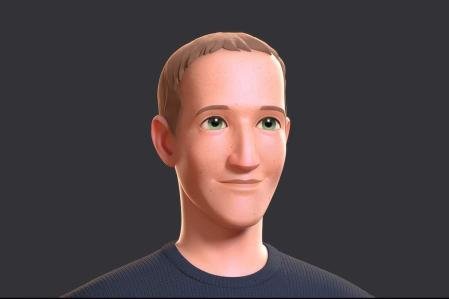
New avatar of sugarberg
To do this. clarifies CEO Meta, “there are still a lot of things we need to get right: we’re not ready to launch a version where a creator can create a version of themselves, but we’re starting to experiment with it in terms of launching a series of artificial intelligence that people can interact in different ways,” he added.
CEO Meta has reignited the conversation about the meta universe after the Meta Connect 2023 conference, which featured Meta Quest 3 and other AI-related news.
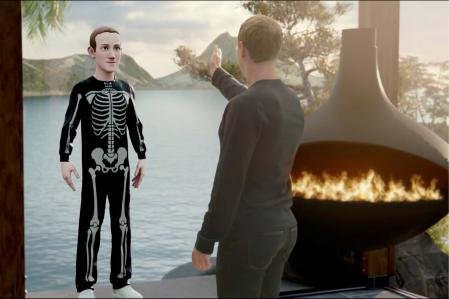
The first avatars of Mark Zuckerberg caused humorous comments
This presentation of realistic avatars aims to calm the criticism that Zuckerberg’s first avatar in the meta universe sparked a couple of years ago. This advancement in avatar imagery shows Meta’s ambitions for virtual reality and a meta universe that goes beyond immersive video calls.


