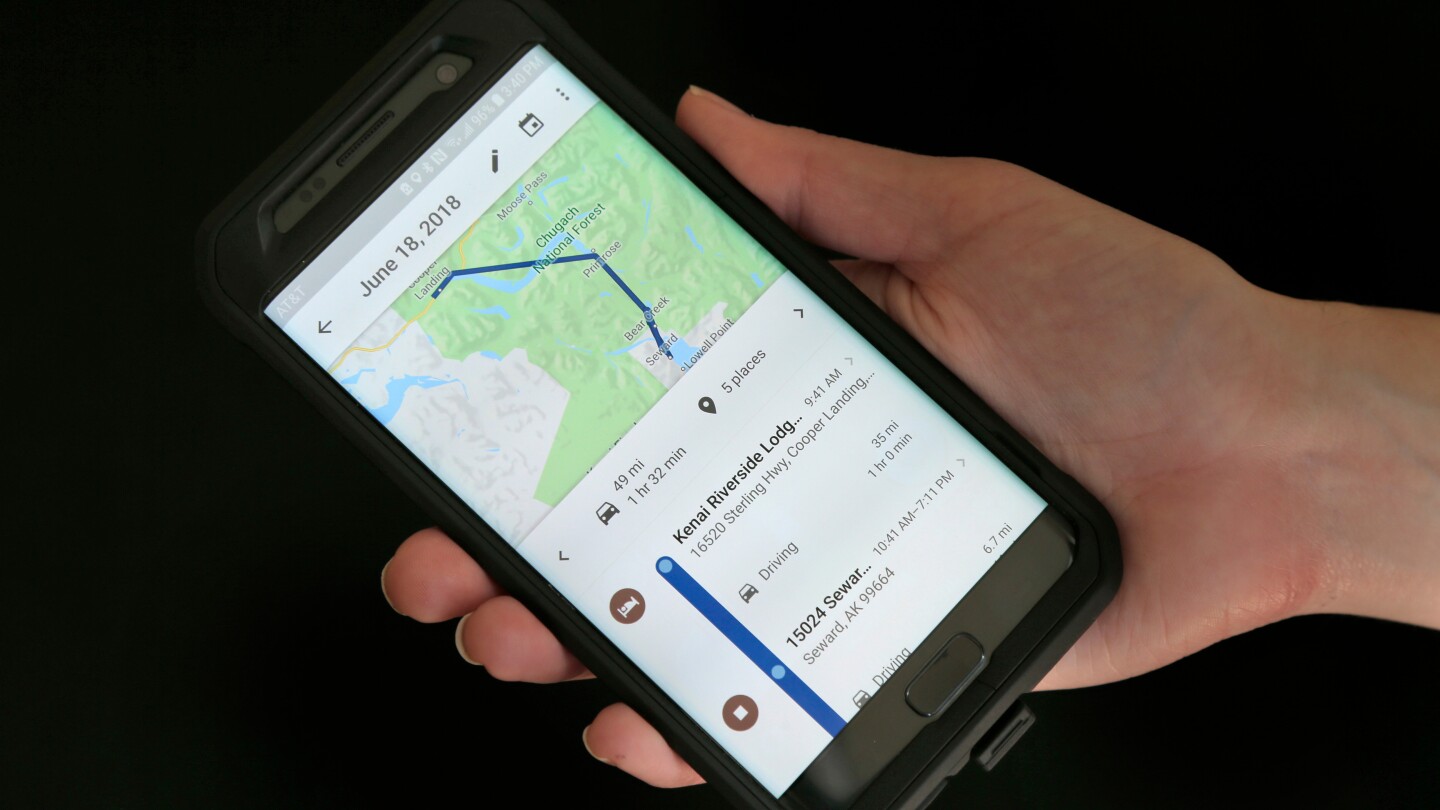
Google Maps is moving in a new direction with artificial intelligence as co-pilot.
The world’s most popular navigation app, which is powered by Gemini, Google’s artificial intelligence technology, will become a communication companion as part of a redesign announced Wednesday.
The hands-free feature is meant to turn Google Maps into something more like a discerning passenger, able to direct the driver to their destination, as well as recommend nearby places to eat, shop or see attractions when asked for advice.
“No manipulation required, now you can just ask,” Google promised in a blog post about the app upgrade.
The AI features will also allegedly allow Google Maps to more accurately show landmarks to show where to turn instead of relying on distance notifications.
AI chatbots like OpenAI’s Gemini and ChatGPT sometimes make things up—episodes known in technical parlance as “hallucinations”—but Google promises that built-in safeguards will prevent Maps from sending drivers down the wrong path.
All the information Gemini uses will come from the approximately 250 million locations stored in Google Maps’ review database, accumulated over the past 20 years.
Google Maps’ new AI features will roll out to Apple and Android mobile devices.
This will give Gemini a large audience to impress — or disappoint — with its AI prowess, given that the navigation app is used by more than 2 billion people worldwide. In addition to making Google even more indispensable, Google hopes the AI features will be a showcase to help give Gemini a competitive advantage over ChatGPT.
Buoyed by the launch of OpenAI ChatGPT in late 2022, Google has been steadily rolling out its own technology designed to ensure that its products continue to evolve in line with the disruption caused by artificial intelligence. The changes included an overhaul of Google’s ubiquitous search engine, which eliminated the list of relevant web links in its results and increasingly featured AI summaries and conversational responses.
______
This story was translated from English by an AP editor using a generative artificial intelligence tool.