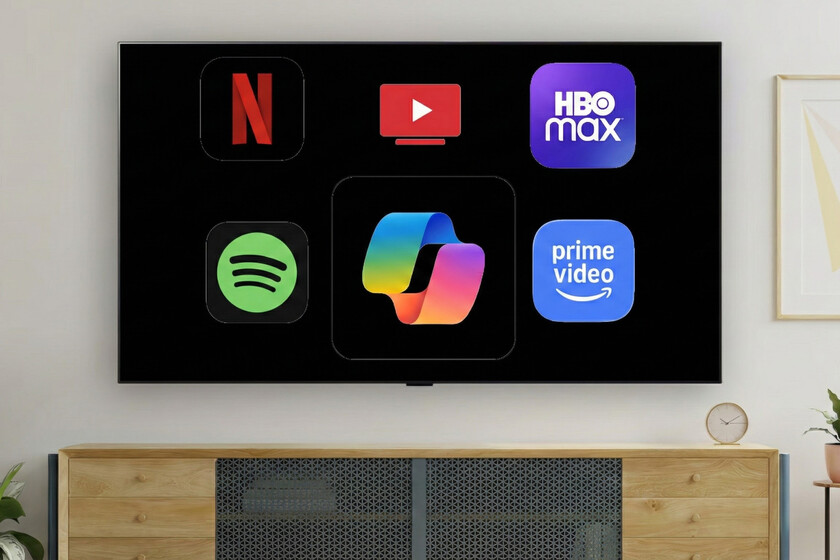
In recent days, LG Smart TV users have noticed something. Some of them have seen a new “tile” appear on their TVs in the main interface. And it matched an app they didn’t install or request: Microsoft Copilot. The criticism has been huge, and rightfully so.
Why it matters. The arrival of this new app is the latest example of consumers losing control over the devices they buy. You pay for it, but you don’t actually own it. This is a condemnation that we see everywhere in digital products and services, and what LG and Microsoft have done is the latest example of this.
What does Copilot do on my TV?. Several Reddit users have reported that the latest software update for their LG TVs includes a new tile that appears on the home screen of the webOS interface and is compatible with Microsoft Copilot.
And you won’t be able to delete it. The worst part isn’t even that LG and Microsoft have agreed to offer this app forever. The worst part is that users can’t even uninstall it. The only thing you can do is hide the icon so it’s not visible in the main interface, but Copilot will still be available and installed even if you never use it.

Microsoft, that’s it. The movement is another drop in the bucket that has long exceeded the patience of users. Microsoft continues to fill all its products with co-pilots, even though it seems obvious that almost no one uses its artificial intelligence. What they get is not brand recognition, but an almost head-on rejection of Copilot. Not that it’s necessarily better or worse, but it’s everywhere, even if we didn’t ask for it. It’s not “want to try?” This is an imposition.
LG has already (half) warned. At CES 2025, the company confirmed its plans to integrate Microsoft Copilot into webOS as part of its “AI TV” strategy. In their presentation, they emphasized that Copilot is an extension of the AI experience on TV, which was designed to answer questions and offer content recommendations. The current integration is more like a shortcut to the Copilot web interface rather than a native app built into the TV. In fact, at this CES we’ve already seen the same intentions announced by Samsung or Google… who kept their word a few months ago.
TYour TV is spying on you (again). Other Reddit users have been talking about a tweak for LG Smart TVs called “Live Plus”. If this tool is activated, the content shown on the TV can be recognized and this information can be used to offer personalized services such as recommendations and of course advertising. In LG’s documentation, they describe Live Plus as an “enhanced viewing experience.” Fortunately, this option can be disabled in Settings -> All Settings -> General -> Advanced Options. From there, simply disable the Live Plus service. Again, TVs try to know everything we do under the pretense of improving the experience.
TV, you are left without internet. Faced with this avalanche of invasive options, the solution is obvious: disconnect the Smart TV from the Wi-Fi and/or cable network (Ethernet) and do not use this main interface, except in special cases, such as adjusting the picture or sound.
Google TV Streamer/Fire TV – an option (more or less). For everything else, the recommendation is clear: buy a streaming device like Fire TV or Google TV Streamer (or similar)… although the latter have also become advertising showcases. In such cases, there are alternatives: we can use alternative launchers such as Projectivy on these devices to avoid these ads and regain control over what we see and how we see it. And we can also choose other “TV boxes” that also allow us to regain control.
In Xataka | Google killed Chromecast. Goodbye, the convenient and affordable product that helped us enjoy television more than ever