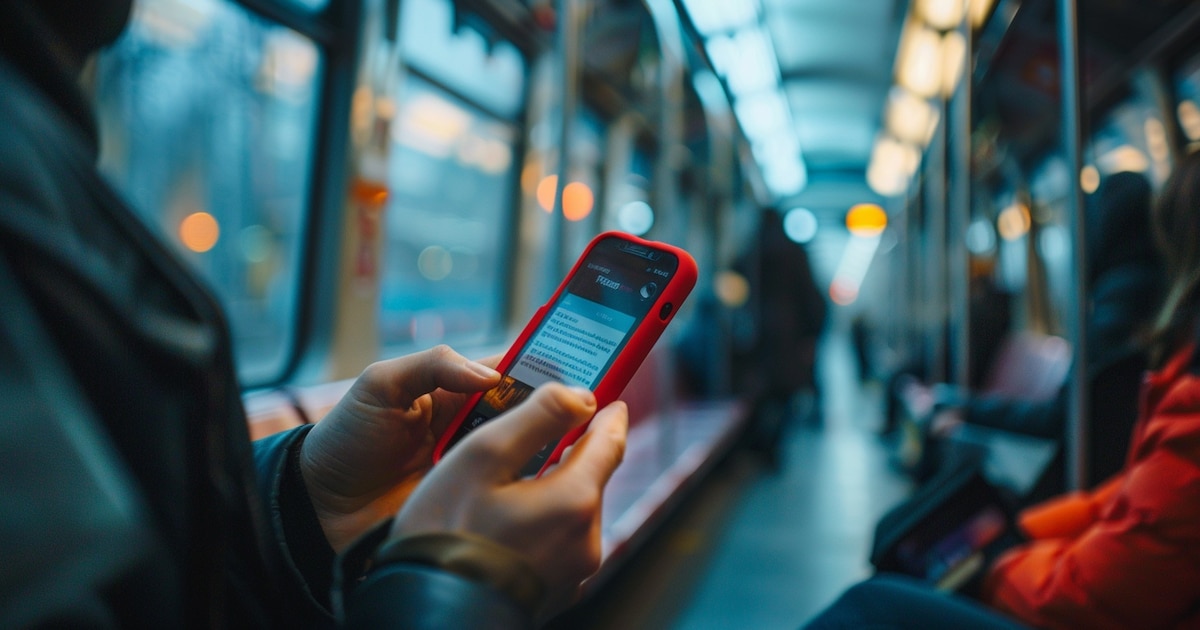

Google is preparing an Android innovation that aims to improve the experience of those who use their mobile phone while traveling in vehicles. It’s a feature called Motion Cuesdesigned to alleviate the dizziness that many people experience when using a mobile phone while driving or on public transport.
This new tool, which is expected to make its official debut in the Android 17arises as an answer to a common problem and seeks to match the solution previously implemented by Apple in its devices.
Google has started working on the development of Motion Cues. Although the existence of this feature became known a year ago, its launch was delayed due to technical reasons. The team of Android Authority confirmed that the feature is still there, although hidden in the code of test versions of Google Play services and releases such as Android Canary.
The essence of Motion Cues is not too different from Apple’s solution. It also consists of the projection of dots or animated elements on the edges of the mobile screen that move in real time when the phone detects the movement of the vehicle. In this way, the system provides the user with a visual structure in harmony with the movement, reducing the nausea and discomfort that usually occurs.
However, there are relevant technical differences. In previous versions, the animated dots that are part of the traffic signals disappeared when the user accessed the notification panelssettings or lock screen.
The reason was due to the high security permissions required by the feature to use key system elements. Android has restricted these types of overlays to prevent malicious third-party applications.
All indications are that Motion Cues will officially debut with Android 17. Some rumors suggest that it could arrive in a late Android 16 update, although a full system refresh would be the most likely scenario.
It is possible that Google will rename the feature before its final launch (alternative names such as Motion Assist are being called) and that the solution will be activated automatically when the system detects that the user is driving a car. In addition, it can be integrated with the upcoming “Transit Mode”, which will regulate other mobile functionalities by identifying traffic.
Users who urgently need such a solution can download third-party applications in the meantime, e.g KineStop —present in the Play Store since 2018—, though none of them are fully integrated into the system like the version Google is preparing.
Mobile phone users have faced the discomfort of traveling when they choose to use their devices while sitting in the back seat or as co-pilots. A phenomenon called “sensory conflict” occurs when the brain receives conflicting signals: While the eye remains fixed on a static screen, the inner ear detects the movement of the vehicle.
This blackout causes dizziness, nausea and, in some cases, so much discomfort that passengers are forced to stop using their cell phones until the vehicle comes to a stop.
The origin of this discomfort lies in the lack of visual orientation that reflects real movement. The eyes say the user is still, but the body senses the opposite. The appearance of this discrepancy causes the classic discomfort associated with motion sickness.
an apple addressed this issue in mid-2024including a feature in iOS aimed at adapting mobile use when the device detects that it is moving in a car. The feature is called Vehicle Motion Cues and came with iOS 18.