Email has been around for decades, functioning almost silently as a basic part of digital life that we rarely question. We use it to study, work, sign up for services, coordinate our personal lives, and deal with procedures that continue to go largely through the inbox. It is for this reason that the changes in this section are usually minimal and reasonable. Gmail has been a good example of this stability over the years. Now Google has decided to go deeper and do it with the help of artificial intelligence.
From the Mountain View company, the argument is clear: the problem is no longer simply receiving e-mail, but managing the volume and context that accumulates in the mailbox. Gmail was born in 2004 in a completely different scenario, and today it coexists with endless streams, cross-conversations and information overload that never stops growing. As part of this, the company presents the so-called “Gemini era” as a logical step, a way to turn the inbox into something more than a chronological file and begin to see it as an active system for understanding, prioritizing and acting on information. Google attributes much of this change to the Gemini 3 model, which it says is behind the new capabilities.
Look less, ask more. The traditional logic of email has always been the same: search, filter and read. AI Overviews breaks this sequence by introducing a layer of automatic synthesis. As the thread gets longer, Gmail can create a summary of important points, eliminating the need to go through each message. And if specific information is required, the offer is even more direct: ask in the mailbox. Gemini interprets the request, examines the corresponding emails, and returns a summary response. Google splits the scope of these features, with automatic circuit summaries gradually rolling out to everyone, while the ability to ask questions in the AI review inbox is tied to Google AI Pro and Ultra subscriptions.
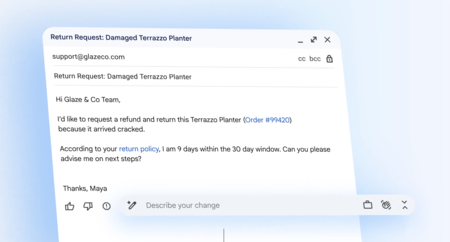
Write with help and understand what is included in each plan. In addition to making e-mail easier to read, Google also wants to make it easier to write. Help Me Write is free and allows you to both polish existing posts and write them from scratch based on a short prompt. Added to this are new Suggested Answers that evolve classic Quick Answers to take into account the full context of the topic and the user’s own style. The most advanced level, Proofread, adds grammar, tone, and style checks, but is for those who subscribe to Google AI Pro and Ultra. According to Google, the rollout begins today in the United States and begins in English, with the promise of expanding languages and regions in the coming months.
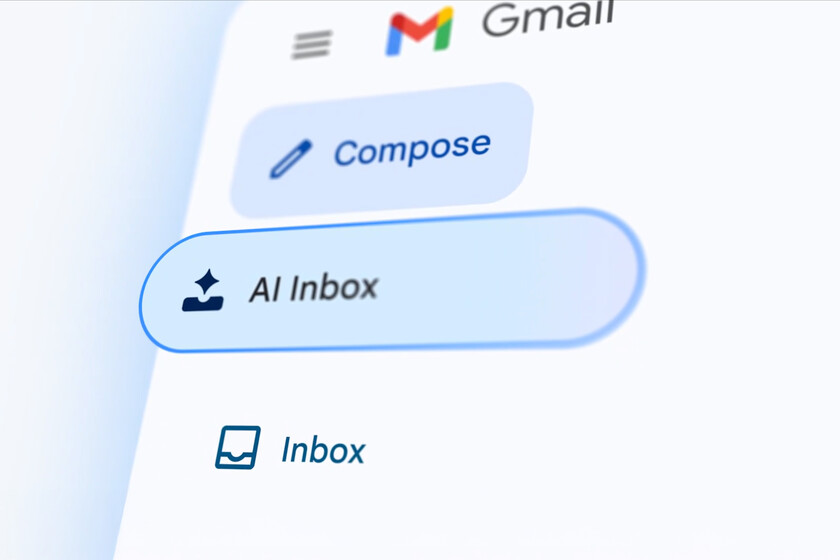
New mailbox. AI Inbox is the most ambitious bet as part of this change. Gmail introduces an alternative view that turns your inbox into a combination of a task list and a summary of active topics. Artificial intelligence promises to detect pending commitments, payments, meetings or responses and present them as suggested actions, while grouping long conversations together to easily catch up. The idea isn’t to replace email, but to redefine it so that what’s important emerges without having to manually scroll through messages that, while relevant, are buried in the volume.
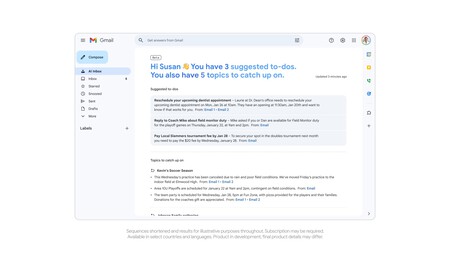
AI Inbox is not a feature open to everyone at this time. Google is testing it with “trusted testers” in the United States and through the browser only, with personal Gmail accounts prioritized over Workspace accounts. In addition, the suggestion still has visible flaws: there is no system for marking suggested actions as done, which limits its usefulness as a task manager.
Control in the hands of the user. The new Gemini-based features can be turned on and off, and the classic inbox is still available. This control isn’t exactly granular, though: turning off AI also means you lose other smart features that many users already take for granted. On the privacy front, Google says it doesn’t use Gmail email to train its AI models, a key guarantee that this new layer doesn’t breed mistrust in such a sensitive space.

This move makes it clear that Google has decided not to stand still in a field that has operated without major changes for years. If this new way of understanding email proves to be useful on a day-to-day basis, it’s reasonable to think that other vendors will eventually follow suit. In a technology career, not moving or reacting late is usually costly. But email also follows a very different logic: if something works, touching it involves risk. Now Gmail is entering a real testing phase, where it will be necessary to see if it will be able to simplify the work or add unnecessary complexity.
Images | Google
In Xataka | Alphabet has just overtaken Apple in the ranking of the world’s most valuable companies. The reason is in AI