
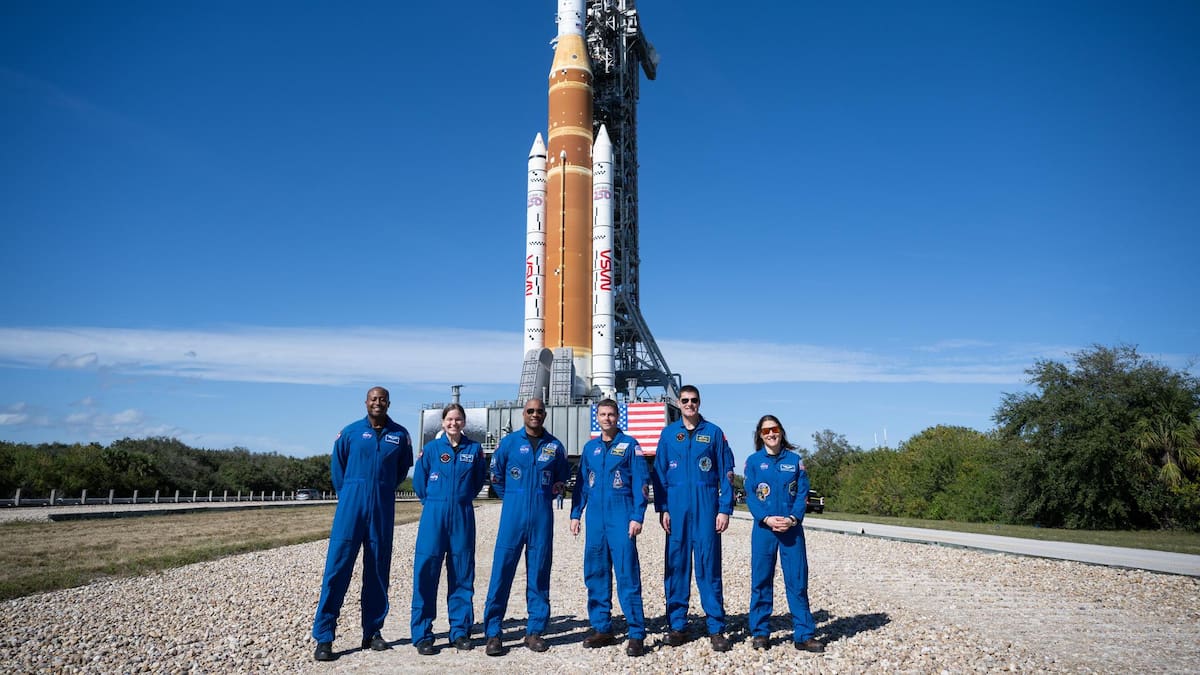
NASA is now targeting early April for a new attempt to launch the Artemis II manned mission to the moon. The decision comes after the discovery of a problem with the flow of helium in the rocket’s upper stage, which forced the cancellation of the window of opportunity announced last Friday, scheduled for March 6.
It is the second time a US federal agency has been forced to postpone a historic space trip that would have sent humans into lunar orbit more than 50 years after the Apollo missions ended. A fuel leak has already forced the postponement of the mission, which was originally scheduled for February.
Rocket Space launch system (SLS) and the Orion spacecraft, components of the Artemis II mission, which will orbit the moon with four astronauts, will be lifted off the launch pad at the Kennedy Space Center this Tuesday, February 24, for repairs, weather permitting.
Engineers continue preparations for the transfer after discovering a problem with the flow of helium to the rocket’s booster stage. On February 21, managers decided to remove the newly installed platforms before strong wind gusts hit the Space Coast.
NASA Administrator Jared Isaacman explained this on his Facebook account. Xthat the helium bottles are used “to bleed the engines and also to seal the LH2 and LOX tanks.” While it was stated that the systems worked correctly during WDR1 and WDR2, it was confirmed that the team “could not get the helium to flow through the vehicle”.
So NASA has confirmed that work is already underway to return the rocket and VAB spacecraft, but they are forcing the launch to be delayed to the April window of opportunity pending the results of inspections. The European Space Agency confirmed in its publication X that the new opportunity opens on April 1.
Four members of the Artemis II crew — Christina Koch, Victor Glover, Jeremy Hansen and Reid Wiseman — have been released from quarantine, which they began on the night of February 21, and remain in Houston.
In a statement, NASA said it will hold a media event in the coming days to discuss the rollback and plans for the Artemis II test flight. “Later this week, a broader briefing is expected where we will outline the path forward not only for Artemis II, but also for subsequent missions to ensure that NASA fulfills the President’s vision of returning to the Moon and, this time, staying there,” Isaacman explained.


