
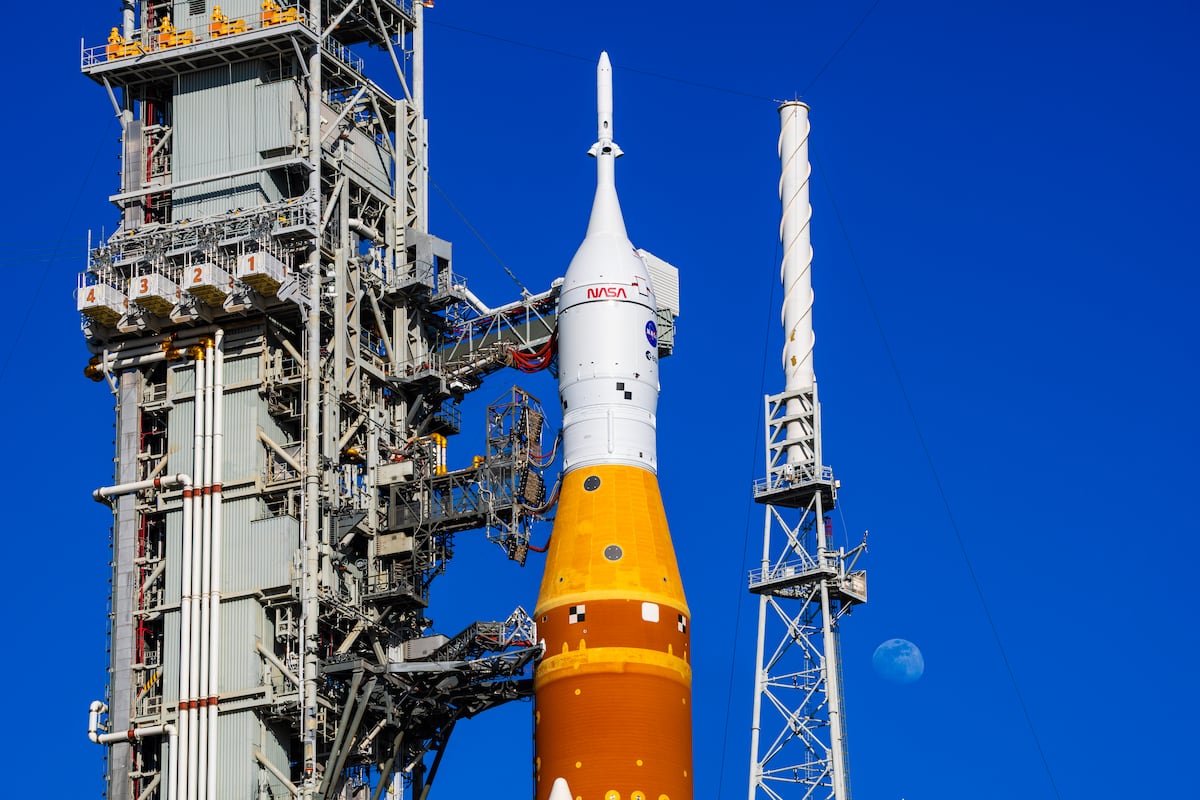
Optimism at NASA with Artemis 2 was enough for less than a day. Last Friday, the space agency gave the all-clear to launch the mission on March 6 – the first manned mission to fly by the moon since 1972 – after the launch’s dress rehearsal was finally successfully completed: they managed to overcome previous problems with a fuel leak. However, a few hours later, a new malfunction was discovered in the SLS rocket’s booster stage.
Repairs to the incident will require the spacecraft to be removed from the launch pad in the coming days, the space agency confirmed this Sunday. “It means forgetting about the March launch window,” NASA chief Jared Isaacman said early Sunday morning. In a message on the social network
The NASA administrator also clarified that the problem detected in the upper module of the space shuttle is a helium jam, similar to the failure that was also detected before the launch of the Artemis 1 mission. Without the circulation of liquid helium – which is used to clean the engines and increase the pressure in the fuel tanks – this module could not perform its critical role in the first hours of the mission. And in order to access (and repair) this upper part of the giant rocket, it is necessary to return it to the hangar at the Kennedy Space Center (in Florida, USA).
The March launch window was only five days long, days 6, 7, 8, 9 and 11. Repairs to the spacecraft and its return to the launch pad make it impossible to take advantage of these launch opportunities. The next opportunity will be in early April, but while NASA will speed up operations to be able to launch on those dates, it’s too early to know if the craft will be ready then. NASA agreed this week to explain its new plans for the Artemis 2 mission and its strategy for dealing with future problems with the SLS rocket, also designed to launch Artemis 3, which aims to land on the moon by the end of this decade.
On the 3rd, due to fuel leaks — liquid hydrogen — during the first dress rehearsal, the February launch window was canceled. Euphoria was unleashed at NASA after last Friday’s success in a second test that met all targets. The astronauts were already in quarantine. But a new problem is delaying the launch for at least another month. It also had to return to its hangar several times during the Artemis 1 mission, and it took eight months from the time the rocket first left there, en route to the launch pad, until it was finally able to lift off on November 16, 2022.


