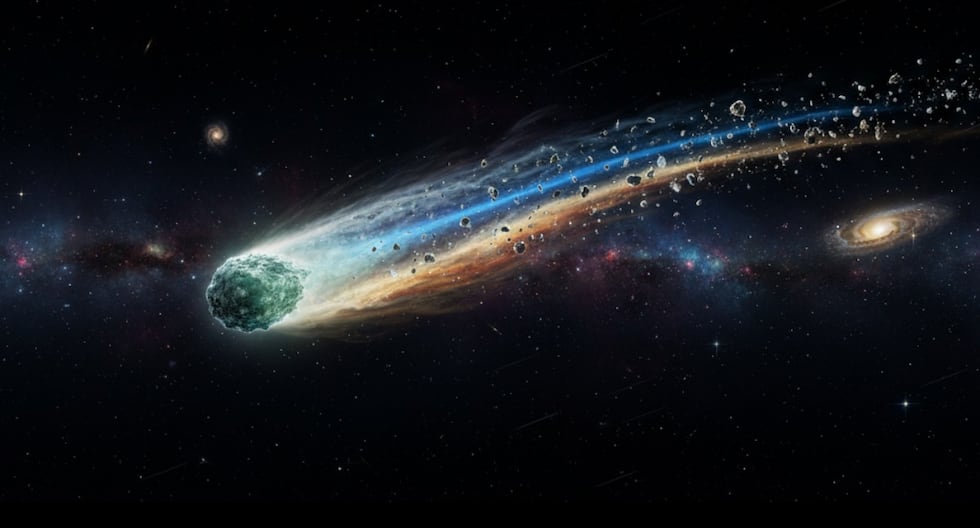
A mysterious traveler attracted the attention of scientists. This is Comet 3I/ATLAS, an object that originates from interstellar space and has just defied the known laws of astronomy.
SEE ALSO:
Astronomers recently discovered traces of water on an object in a place where ice should remain intact forever, a finding that could change our understanding of how planets form in other star systems.
Since its opening in July, 3I/ATLAS has been a real mystery. Its trajectory makes it the third interstellar object to cross our solar system, but what really intrigues experts is its unusual behavior: it is releasing water vapor millions of kilometers from the Sun, in a region where normal comets remain completely inactive.
Interested in this phenomenon, a group of astronomers from Auburn University in Alabama used the Neil Gerrels Swift Space Telescope to observe the space visitor. During their observations, they detected a faint ultraviolet glow, indicating the presence of hydroxyl gas (OH), a molecule produced when sunlight splits water.
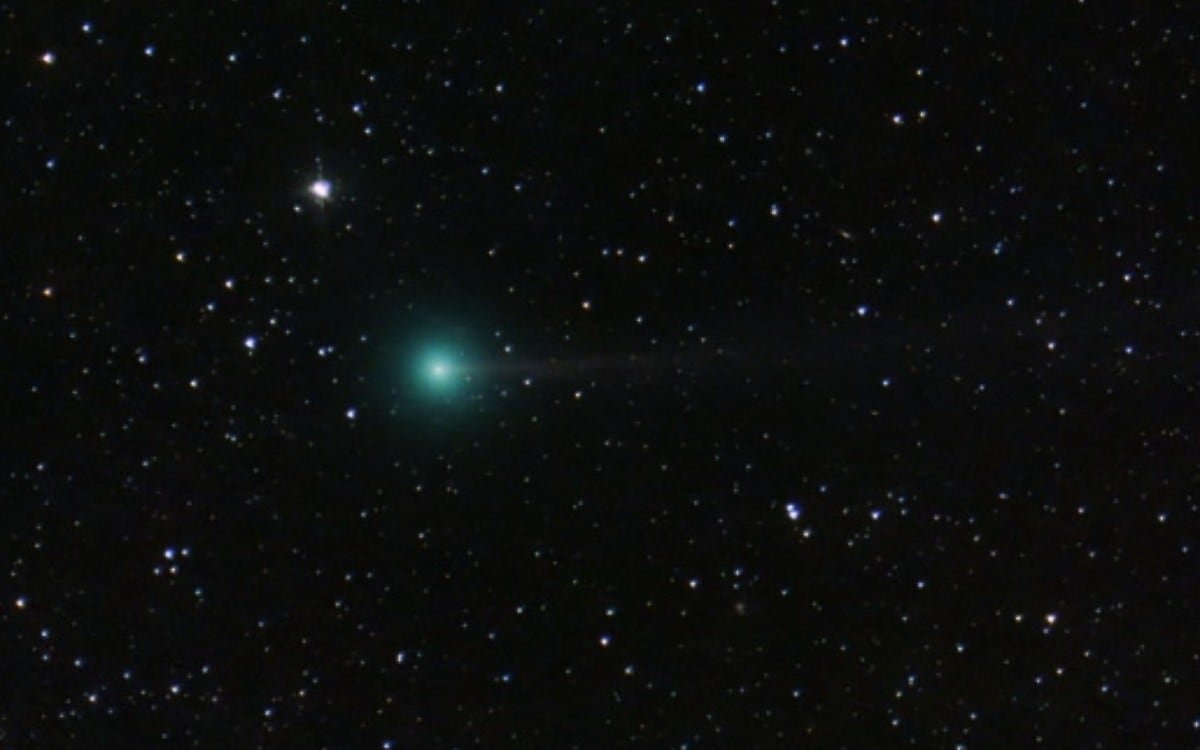
The discovery occurred at a distance where ice cannot melt, challenging theories about the behavior of comets. (Credit photo: Dan Bartlett/NASA/AFP)
What is surprising is that this discovery occurred at a distance three times the distance between the Earth and the Sun, at a point where the temperature is too low for ice to evaporate.
No known comet in our system has been so active at such a distance; However, 3I/ATLAS breaks this pattern, with data showing that it loses about 40 kilograms of water per second, an amount that baffles experts.
At the moment, the most accepted theory is that solar radiation heats small ice particles that break away from the comet’s nucleus. When separated, they slowly evaporate to form a visible vapor.
For scientists, this phenomenon is more than a physical mystery: it is a window into the basic components of the universe.
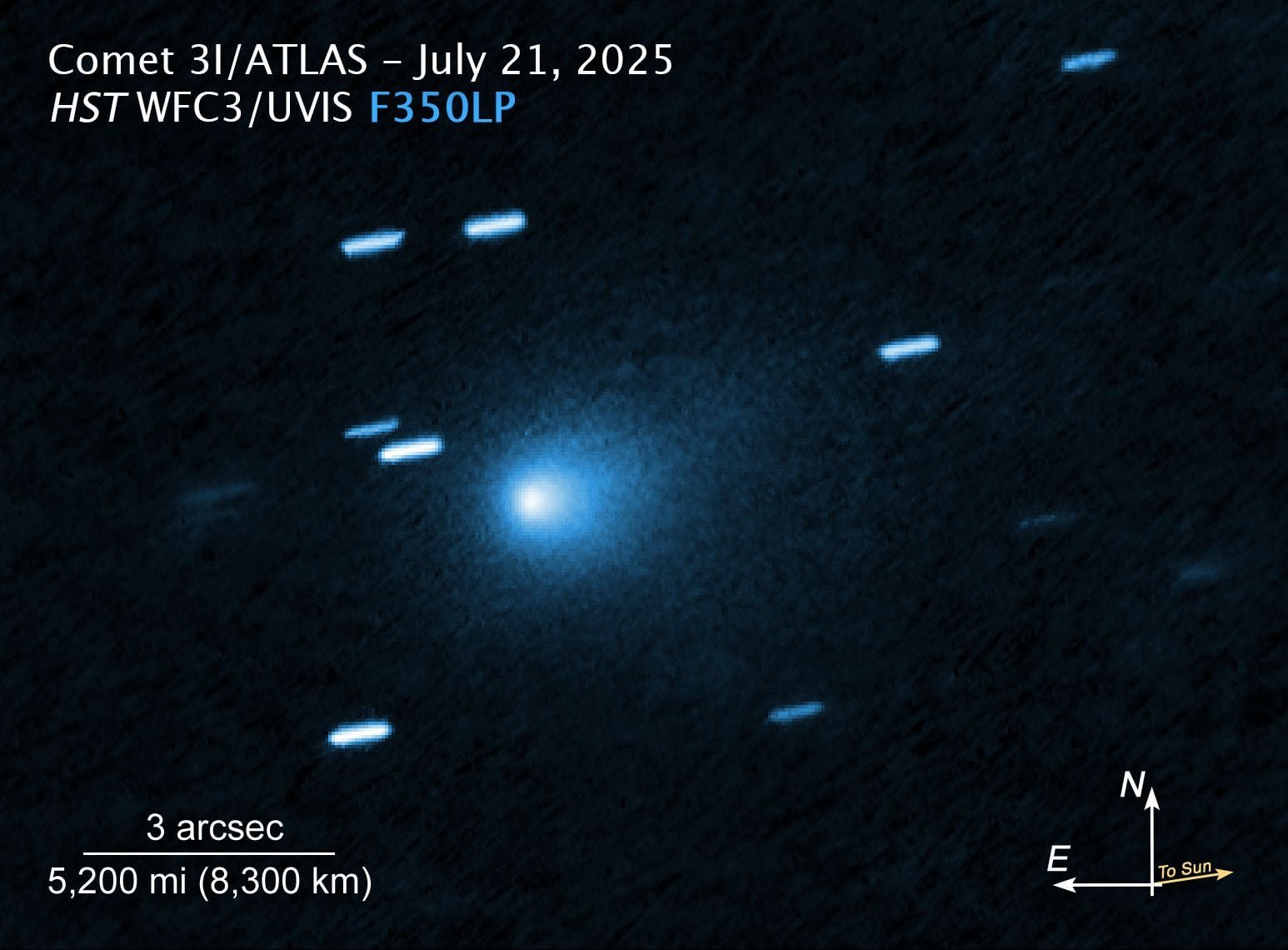
The researchers found that the comet is losing about 40 kilograms of water per second, possibly due to solar radiation. (Photo: NASA)
“When we detect water—or even its faint ultraviolet echo—in an interstellar comet, we are reading a note sent from another planetary system.”said Dennis Bodewitz, a professor at Auburn University.
In other words: the discovery in question leads us to believe that materials necessary for life, such as water, may be much more common than previously thought.
While Comet Oumuamua and Comet Boris surprised us years ago with their arrival, 3I/ATLAS is doing the same with the abundance of water in an environment where it shouldn’t exist.
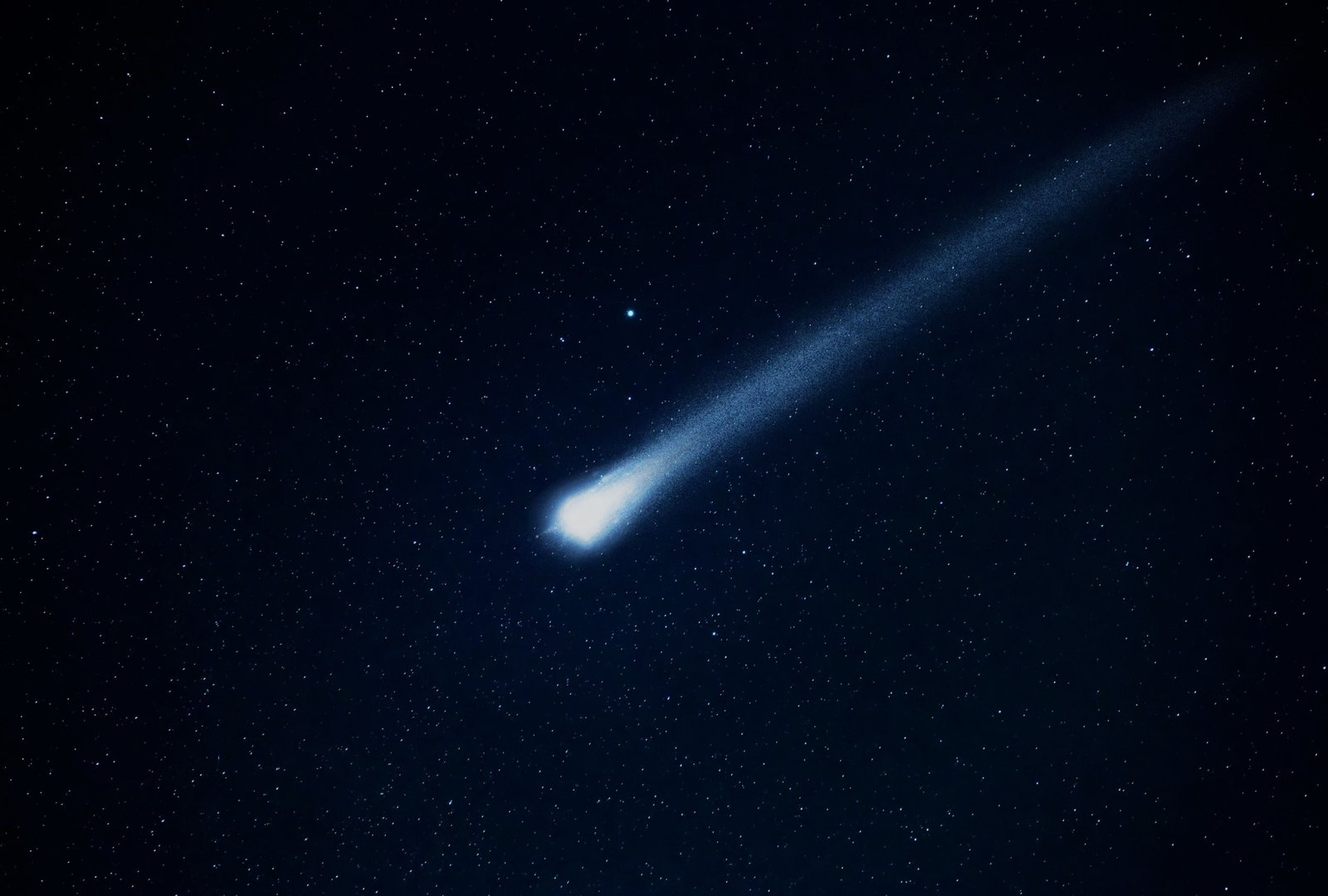
This phenomenon suggests that water and elements necessary for life may be more common in the universe than previously thought. (Reference photo: Trifonov_Evgeniy/iStock)
“Every interstellar comet has been a surprise so far. They all rewrote what we thought we knew.”commented astronomer Zesi Xin, lead author of the study.
It should be added that although 3I/ATLAS has disappeared from view, it will be visible again in November 2025. At this point, there are more questions than answers, but one thing is clear: this interstellar object continues to challenge everything we thought we knew about the universe and the origin of life.
If you are interested in this news and want to stay up-to-date on events and trends in the US and the world, join our WhatsApp community. 👉 Join here