– Advertisement –
AUTHOR: Ph.D. ING. AVID RAMANO-GONZALEZ
During IAC 2025, the world’s most important event in the field of astronautics, Peruvian researchers presented a paper entitled “Development of digital twins for the simulation and study of Mars in the terrestrial environment: a proposal”.
The research, developed in collaboration with Victor Uaman, Milagros Vara and Natalia Indira Vargas-Quentas, represents a significant advance in astronaut training and preparation for future manned missions to the Red Planet. The research was carried out between the Research Laboratory of Aerospace and Medical Sciences (INCAS-Lab) of the National Technological University of Lima Sur (UNTELS), the Research Laboratory of Image Processing (INTI-Lab) of the University of Sciences and Humanities (UCH) and the Peruvian research incubator Business on Engineering and Technology SAC (BE Tech).
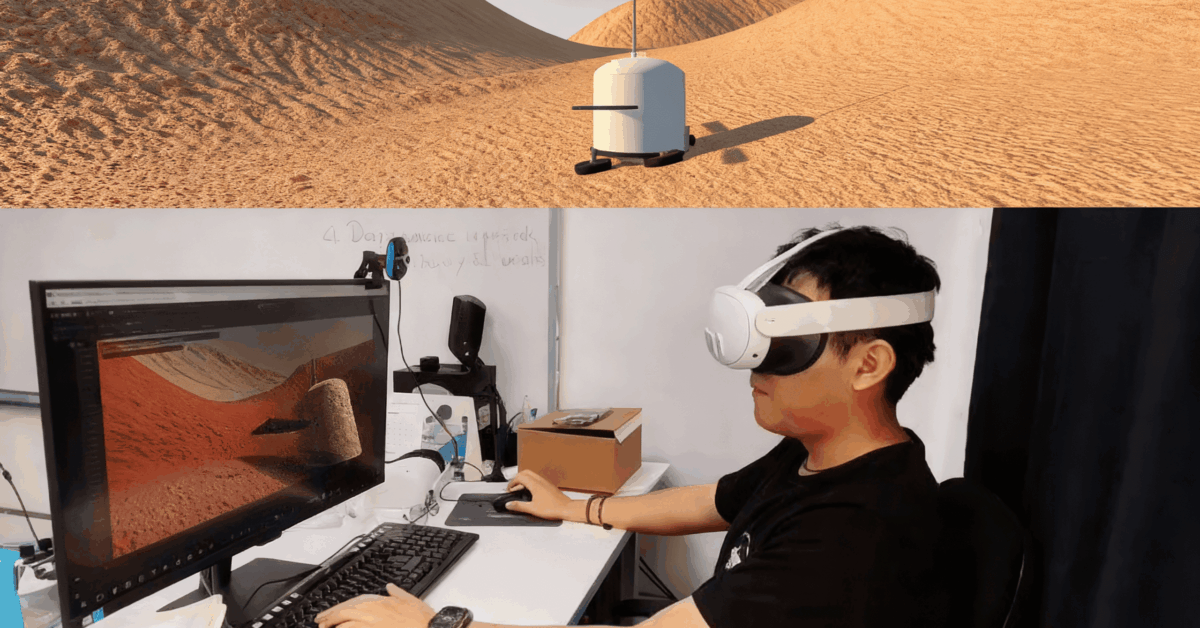
The research paper proposes the creation of a digital double of Mars, a virtual version of the planet built on the basis of satellite data, rover images and geological and atmospheric models. This digital environment combines virtual reality (VR), augmented reality (AR) and mixed reality (MR) to offer an immersive and realistic experience that allows astronauts, scientists and students to learn without the geographic or economic constraints of physical Martian counterparts.
Mars exploration requires rigorous training, but current simulation environments are expensive and limited. With a digital twin, we can democratize space training by allowing more people—even from developing countries—to virtually visit Mars. We will move from what many know as “analog astronauts” to “virtual astronauts”.
The digital doppelgänger will enable simulation of research missions, perform critical tasks such as sample collection or navigation on Martian terrain, and improve technical and decision-making skills in highly complex environments.
In addition, the tool is designed to train students and young researchers, offering an open and adaptable educational platform. This technological democratization could make Peru a benchmark in the use of immersion technologies in space education and exploration.
In recent years, Peru has increased its participation in the congress, reflecting the steady growth of its technological research and development ecosystem.
This work shows that from Latin America we can contribute to space exploration through innovation. Digital twins are a powerful tool not only for training astronauts, but also for inspiring new generations.