

Focusing on the birth of the phone’s most important component: the motherboard, we were able to follow its creation step by step. From a simple empty plate to a full-fledged brain that gives life to every device. An exciting mix of extreme heat, robotic precision, laser scanning and a level of protection that seems straight out of a sci-fi movie. That was all we saw in the “heart”. Oppo.
Exclusive newsletter for subscribers

Getting Started: Optical Inspection and Assembly
The process begins when motherboards undergo automated optical inspection (AOI). The tour guide who gave us the tour explained that in the past they had to move some components around because the light on the original inspection machine couldn’t scan them properly. After this inspection, the board goes to a chip assembly machine that places the tiny components with robotic precision.
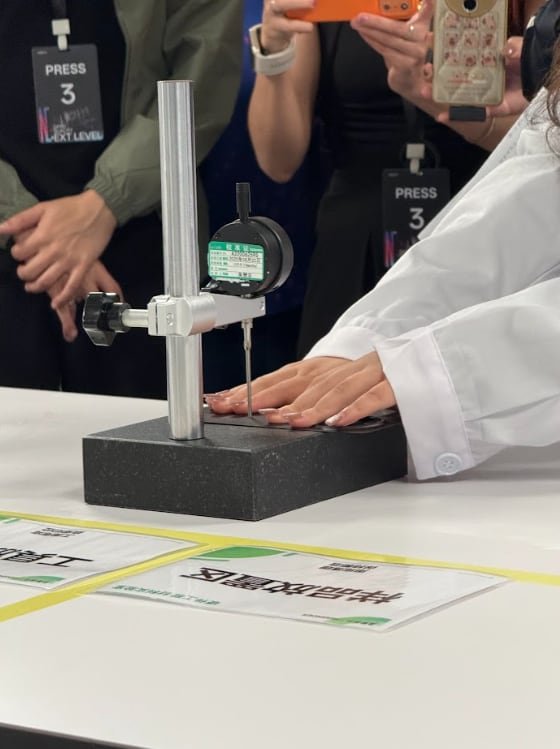
At Oppo’s factories, we were able to assess the process that mobile phones have to go through in regards to their durability before they hit the market. (Photo: Paolo Valdivia)
Precision Soldering: Nitrogen Reflow Furnace
Once the components are assembled, the board goes into a “nitrogen BTU remelting furnace.” This car is a must. The manual described how the board goes through four controlled temperature zones: preheat, activation, reverse chill, and cool down.
The goal is to melt the solder paste. As the temperature rises, the paste melts and, as it cools, creates solder joints that permanently connect the components to the board.
The use of nitrogen is intentional. The guidance was categorical: “at very high temperatures, oxygen may cause some damage to electrical products.” Nitrogen, being “much more stable,” is critical “for product quality.”
Quality control at 245°C
Maintaining the exact temperature inside the oven, which peaks at 245 degrees, is critical. For this, the institution does not skimp on control. “There are more than twelve different temperature sensors in this oven,” the guide noted.
If any part deviates from the “stable range”, the sensors will send a message and alert to the supervisors. This allows the monitoring team to see what is happening inside the furnace and make corrections immediately.
The Global Brain: A Connected Control Center
One of the highlights of the visit was the plant’s control center. This room not only manages the lines of this factory Oppo in Dongguan, but “helps manage all these different lines, not only in this factory, but all over the world.”
A system of colored lights informs about the status of each production line:
- Green light: “That means everything is working fine.”
- Yellow light: Indicates “waiting for materials”.
- Red light: “It means something bad has happened.”
A “red light” incident can be anything from “no material” to “robot arm stuck”. When this happens, it “sends a message to the control center” and the center mobilizes personnel to solve the problem.
Full traceability and barcode power
After the welding process, the guide emphasized the importance of barcodes. Each motherboard and “some critical components” have one.
These codes are the key to a complete record of information. “By scanning the barcode, we can help record all the information,” he explained. This includes “on which production line it was made, at what time, what type of material was used, and from which supplier.”
This database is a fundamental quality tool. “In the event that something bad happens, it’s very easy for us to trace back and find out what went wrong with that product.”
Preview, playback and hidden layers
The work on the motherboard does not end in the first oven. It goes through another inspection machine that specifically looks for defects such as soldered jumpers or missing solder.
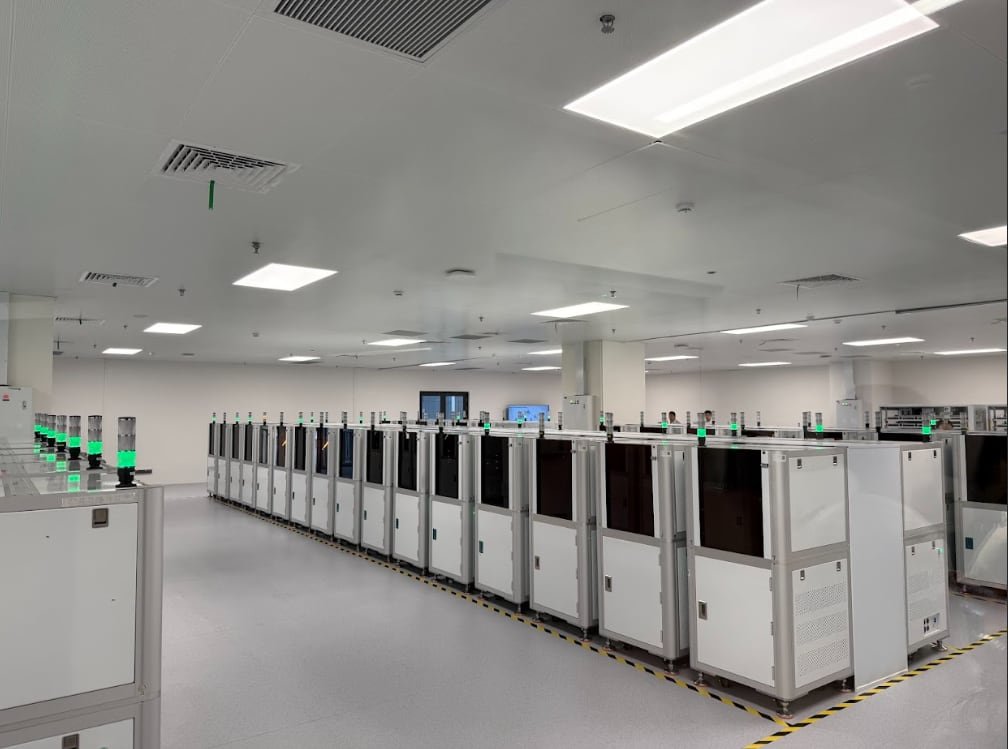
The brand manages to produce up to 3,000 cell phones per day. (Photo: Oppo)
From Hardware to Software: Bringing “Life” to the Board
After the equipment of the board is finished, the management offered a clear analogy: the board is like a “newborn baby”, but “empty in the head”.
The next step is to download the software. It is at this point that we add a lot of information and all the necessary software is downloaded to the hard drive, from the ColorOS operating system to the preloaded applications that the end user will find when they turn on their phone.
Rigorous calibration and testing
With the installed software, the board enters the intensive testing phase. First, the calibration of radio frequency values. The tour guide noted that “Oppo set strict requirements compared to our national requirements.’
Once the values are calibrated, they are recorded on the mobile phone and it goes through a comprehensive check, then Wi-Fi and Bluetooth tests and finally an electrical test to make sure that every function of the motherboard works well under voltage.
Extreme Protection: Motherboard shielding
Since the motherboard is a critical component, protecting it is a priority. The manual contextualized its importance: “around 2000, the biggest problem that could happen to a mobile phone was the motherboard” due to drops or water. “Nowadays,” he continued, “the biggest problem might be the screen,” precisely because the motherboard is now so well protected.
This protection is achieved by adding many accessories and applying adhesive to the surface of the motherboard. This adhesive has a dual function: it helps to harden the components and on the other hand, it also acts as a waterproofing agent.
It is this technology that allows you to take some series of our mobile phones with you in the shower, swimming or diving. In addition, copper sheets and silicone waterproofing are added, all as part of the protective work.
Production, human factors and final tests
The production performance of the plant is noticeable. The floor visited several production lines, and “each production line can produce about 2-3 thousand” motherboards “per day.”
As for the staff, the number varies. The Reno series requires between 30 and 50 people per line, while other high-end series may require less staff and other ranges may require more.
Finally, even after passing basic tests (such as the 5G signal test), the phones do not enter the market. They must pass the “Reliability Lab”. According to the management, this is where the devices “fight” various stress tests, ranging from shocks to other types of attacks that a mobile phone can be subjected to, in order to guarantee the resistance of which the brand is so proud. Only after their passage are they allowed to be released on the market.


