
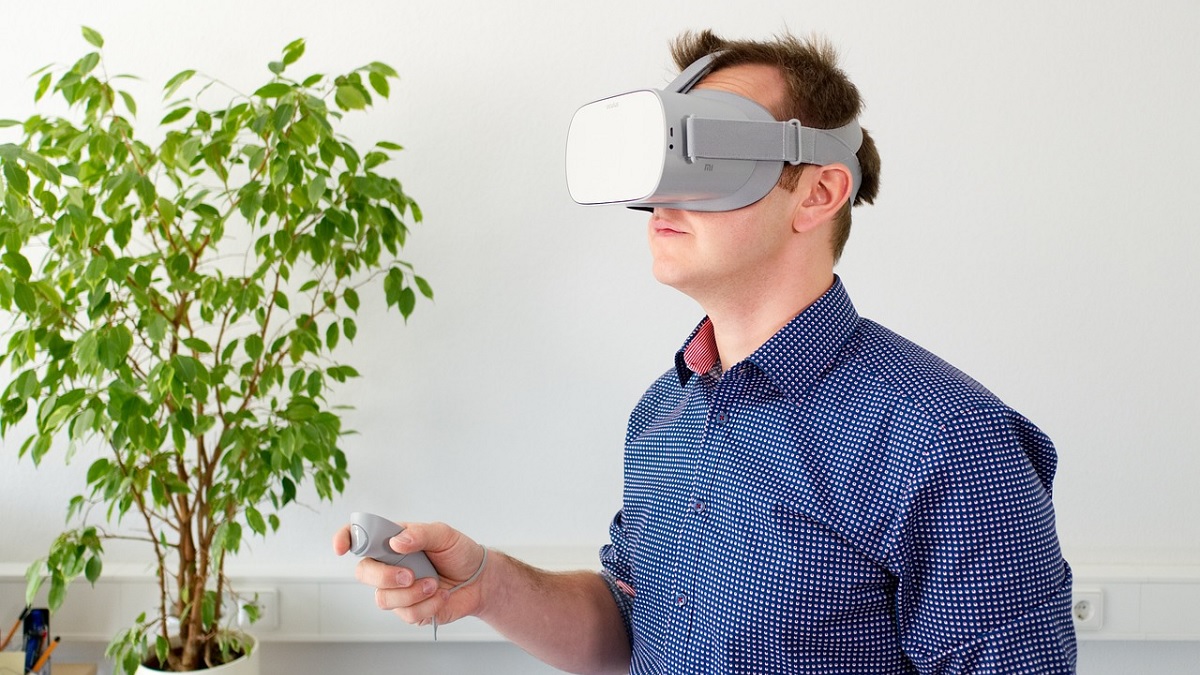
Like a science fiction story unfolding before our eyes, the arrival of innovative virtual reality glasses in a short period of time not only promises to change the way we shop, but also the way we approach commerce.
Imagine for a moment that you can enter a store from the comfort of your home or even while traveling on public transport (although it seems further due to the need for more space). The evolution of virtual reality glasses It transports you to a world where the aisles are always clean, where products jump in front of you with amazing realism, and where every corner is designed to dazzle your senses. What happened? Have we managed to make distance no longer an obstacle and the store a scene of countless possibilities?
It all boils down to six words: improving the customer experience. But beyond that virtual scenario, what’s really impactful is its impact on CX. How will retail CX change with the addition of VR headsets? What effect will this have on the relationship between consumers and institutions?

Virtual Reality: Its Impact on CX
As Dominique Angerer, CEO of Storyblok, comments via media Customer magazine, being able to see how the sofa will look directly in the living room of your home with a virtual representation is a great leap in quality. We no longer have to rely on millimeter measurements and imagination, now we can consider it in the future before making a purchase.
To shed more light on the possibilities of virtual reality in this type of experience, almost as long as the arrival of humans on the planet, today we detail four aspects that we must take into account, some limiting factors and others very positive for the customer or user experience.
1. Interaction with the product
The previous sofa example could well summarize this section. Touching the fabric of a pair of sneakers, seeing how a t-shirt looks on you in a virtual fitting room… There are endless suggestions that take the interaction with the products you intend to sell to another dimension in terms of customer experience.
For designers, this means a change in mentality. It’s not just about creating GUIs, it’s about developing a multi-sensory experience that transports the customer to a new exciting world. Virtual reality requires intuitive controls that respond to the slightest gesture, feedback systems that make the user feel an integral part of the virtual world, and visual cues that naturally lead through this immersive digital territory.
Virtual reality requires intuitive controls
Everything is aligned to create a unique opportunity to stimulate all human senses in a fully immersive and interactive journey.
2. Availability
No matter how obvious it may seem, it is very important not to succumb to the temptation of a new innovative achievement and forget about the main thing. Because virtual reality technology is still evolving, not all consumers have access to the necessary devices. Therefore, retailers must maintain their presence in traditional e-commerce and consider an inclusive strategy that serves all customers.
3. The ease of improving the “story”
A store or virtual space can become a unique platform for the famous “story”. A large number of retailers are already investing in this as it provides a unique opportunity to convey a brand’s origin, identity, values and vision in one fell swoop.
When done effectively, it can not only change the perception and customer experience of your brand, but can also have a huge impact on conversion rates, especially in e-commerce.
Virtual reality becomes more than just a storefront, but a portal to imaginary and immersive worlds where your brand values can come to life in ways unimaginable in the physical world.
4. Constant update
Applying virtual reality to retail outlets requires brands to constantly update their products and content. This is critical to staying relevant, adapting to changing trends, leveraging new functionality, displaying special events, improving customer experiences, and gathering valuable consumer feedback.
A VR-based approach will require retailers to easily create, maintain and modify virtual, augmented content and other immersive experiences. This content will also need to be easily integrated into existing marketing channels.


