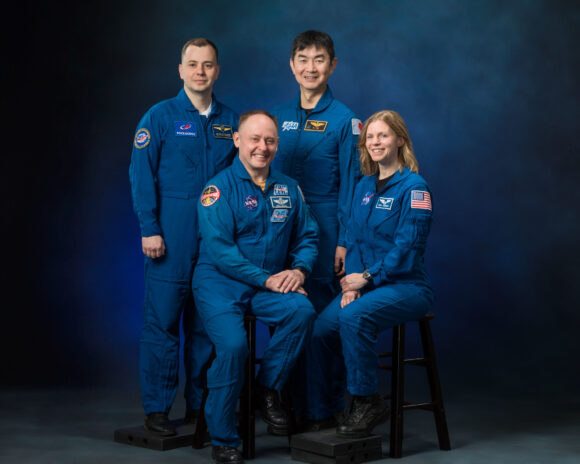
NASA has decided that the Crew-11 mission will return ahead of schedule because one of the four crew members is suffering from undisclosed medical problems. The Crew Dragon Endeavor spacecraft will undock from the International Space Station (ISS) and return to Earth in the coming days with Zeno Cardman, Mike Finke, Kimiya Yui, and Oleg Platonov, leaving the Union MS-28 crew (Sergei Kud-Sverchkov, Sergei Mikaev, and Christopher Williams) alone on the station. While some astronauts have had health problems during their return to Earth in the past for a variety of reasons — none of them serious (except Soyuz 11, of course) — this is the first time in ISS history that a spacecraft has returned earlier than planned for medical reasons. Of course, this is not the first case of the space age. What other similar cases were there?
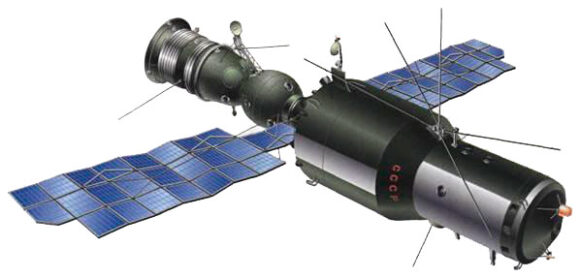
The first case of this type occurred in 1976 during the Soyuz-21 mission. The ship with the crew of Boris Valinov and Vitaly Zholabov docked at the military station “Salyut-5” (OPS-3). Thus, “Salyut-5” became the second military station in the “Diamond-OPS” program of Vladimir Chelomey, which received a crew. Likewise, Soyuz-21 will be the second manned spacecraft to dock with the OPS military station after Soyuz-14, which docked with Salyut-3 (OPS-2). Soyuz-21 was launched on July 6, 1976 and docked with Salyut-5 the next day. The mission was supposed to last about two months, but on August 24, after 48 days in orbit, it was decided to return the crew due to Jobalov’s ill health. The return was not easy, as Soyuz refused to undock from the station and only managed to do so on the third attempt, one orbit – 90 minutes later – after receiving specific instructions from ground control. The landing, which took place on August 24 – 11 days before the planned return – was also eventful, because due to strong winds in the landing zone, the capsule’s solid rockets slowed their descent steadily and the impact on the ground was greater than expected.
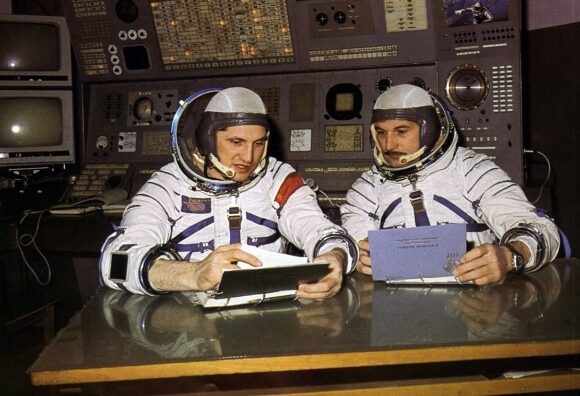
For many decades, it was not known what exactly happened to Soyuz-21. It was believed that Zholabov was exposed to a leak of hyperhalic fuel from the station, or even that the two men simply couldn’t take it. In reality, Zholabov’s psychological condition gradually deteriorated due to the immense stress of the mission to the point where he could no longer function in space. Apparently, the incident that triggered this situation occurred when the station suffered a malfunction while passing through the night hemisphere and all systems were shut down. The two cosmonauts suddenly found themselves in the dark, out of range of Soviet ground stations and with the shrill noise of on-board alarms in the background (a nightmare situation indeed). Although the alarm had been turned off, the station was still without lights and, worst of all, the life support system was not working. They considered evacuating the station, but eventually they restored power and activated major systems one by one.
However, after a few days, Zholabov started having severe headaches, and he stopped sleeping normally. As a result, he stopped exercising on the treadmill and had less and less vitality. Commander Valinov, no doubt somewhat irritated by his companion, stated that Zholabov “floats around the station more often” and that “he had to take over the work of both of them.” The crew did not inform the ground controller about the situation, hoping to resolve it on their own. Finally, Valynov, whose overwork was also starting to take its toll, convinced Zholabav to report his position to ground control. Despite everything, the cosmonaut’s condition continued to deteriorate. As a result of Valinov’s conversation with his superiors on August 23, a decision was made to end the business trip. By that time, Zholabav’s psychological situation had deteriorated so much that Valinov had to practically dress him in a wetsuit “Sokal” and fasten him with a safety belt in a capsule chair.
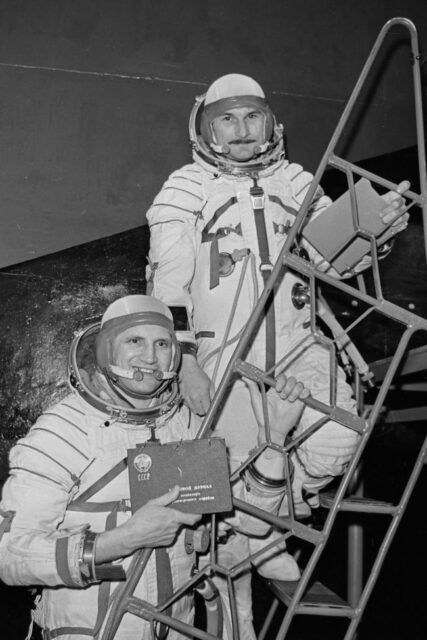
Once on the ground, doctors believed that Zholabov’s mental state could have been caused by a leak of hyperhalic fuel – hence this version of events – but a thorough examination of the cosmonauts did not show any signs of contact with toxic substances. Zholabov’s version of events is, logically, somewhat different, although it does not refute the commander’s statement. According to the flight engineer, Valinov also experienced significant stress and psychological damage during the flight. The experience of “Soyuz-21” served to strengthen the role of psychological testing in the selection of candidates for the cosmonaut detachment and the maximum reduction of stress during long-term space flights. Vitaly Zholabov never flew into space again.
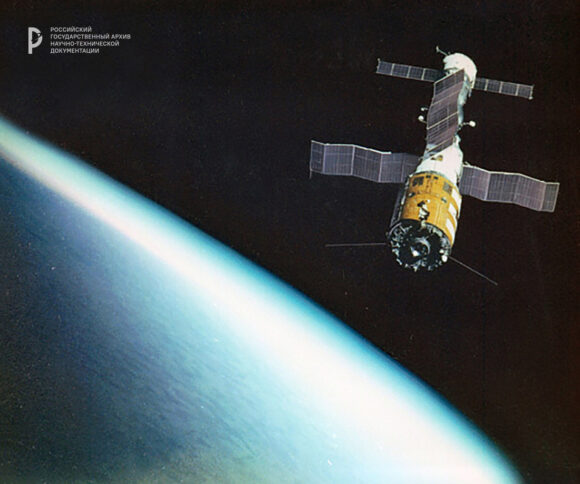
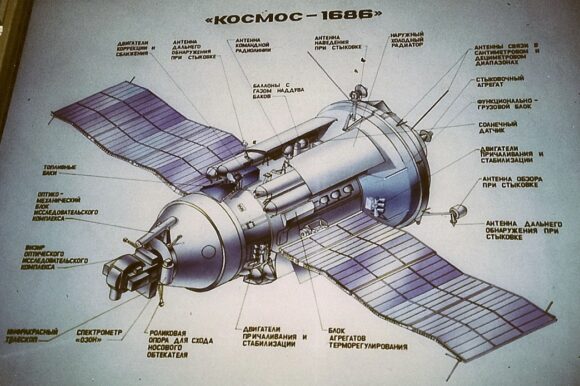
But, without a doubt, the most famous episode of illness in orbit was the one that caused the return of the Soyuz T-14 in 1985. “Soyuz T-14” took off on September 17, 1985 with Vladimir Vasyutin, Georgy Grechka and Alexander Volkov and docked to the aft part of “Salyut-7”. It was the first crew to visit the station after the impressive rescue of Soyuz T-13, Uladzimir Dzhanibekov and Viktor Saviniy. The veteran Grechko returned to the T-13 with Dzhanibekov after eight days working together, while Saviniy remained on board with Vasyutin and Volkov for six months. The main task of the crew was to monitor the docking of the TKS-M (Cosmos 1686) ship, a heavy unmanned vehicle of the “Almaz” program, which, instead of a VA capsule, had a “Pion-K” military equipment complex at one end. In fact, and although it is not usually commented on in textbooks on the history of the Soviet space program, one of the reasons, if not the most important, for sending the Soyuz T-13 on the rescue mission to Salyut 7 was that the military wanted at all costs to launch the TCS-M to test the Pion-K military instruments associated with the Soviet response to the Reagan R&D.

However, after two months of being in orbit, Vasyutin suddenly fell ill. The commander felt a strong general discomfort and the temperature rose. The situation, far from resolved, worsened day by day. On October 27, while preparing for the spacewalk, Savinius concluded that his colleague’s condition was very serious and discussed the situation with the flight’s deputy medical director during a communications session. Savinius insisted that he refused to go into space with Vasyutin and that if the TSUP decides to go on extravehicular activity, then in any case it will do it with Volkov. Ground control asked Vasyutin to explain his condition, but it was difficult for him to speak coherently. Doctors concluded that it was a urinary tract problem, possibly related to the prostate, and prescribed Vasyutin antibiotics and other medications.
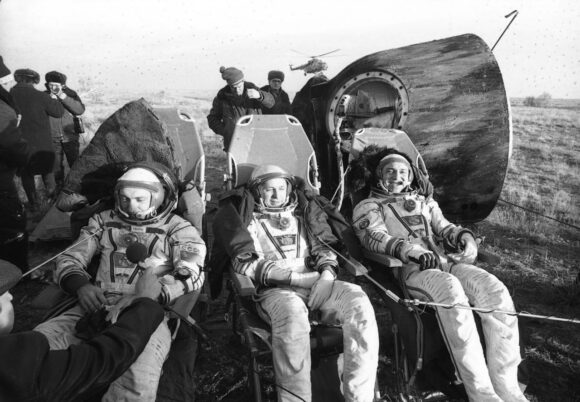
Although at first Vsyutin improved, he did not fully recover. On November 17, the cosmonaut and flight manager of the TSUP Valery Rumin ordered the return of the Soyuz T-14 and appointed Savinag as the mission commander instead of Vasyutin. Three astronauts will return to Earth without problems on November 21. After landing, Vasyutin was urgently taken to Moscow for examination, where it was confirmed that he had prostatitis. On February 25, 1986, Vasyutin left the cosmonaut detachment due to health reasons. As a result of this incident, prostate tests were added to the medical tests required for men to join the astronaut corps. Uladzimir Vasyutin died in 2002 from cancer (it is not known whether it was related to the prostate).
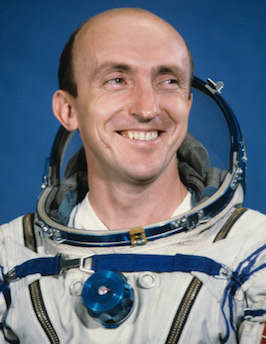
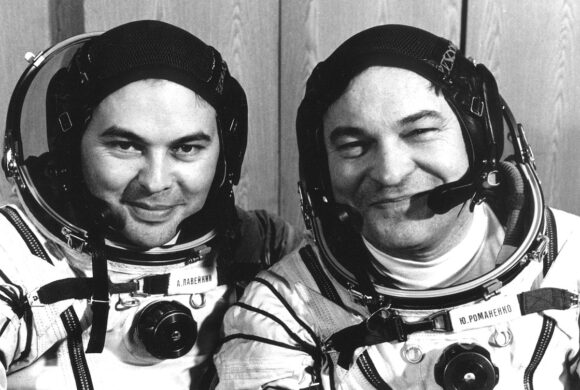
Although this technically did not involve an early return of the spacecraft, another health-related incident occurred with Soyuz TM-2 crew member Alexander Laveykin. Laveykin took off with Yuriy Ramanenko on February 6, 1987 and docked at the Mir station. Both cosmonauts were supposed to spend 326 days on Mir, returning on Soyuz TM-3. But during tests conducted before entering outer space, doctors discovered that Laveykin had an arrhythmia in his heart that had not been detected during the many ground tests before the flight. After completing a special training program, the arrhythmia disappeared by May 15. Unfortunately, he reappeared in the next test, so ground control decided to replace Laveykin mid-flight with Alexander Alexandrov, one of the Soyuz TM-3 crew members. Thus, Laveykin will stay in space for only 174 days instead of 326 for Ramanenko. Although Laveykin’s heart problems are no longer apparent on earth, the cosmonaut will not return to space.
As we can see, the medical incident with crew-11 is not the first in history, although something like this has not happened in decades thanks to the series of tests and training that astronauts undergo today. In any case, an emergency return to Earth is relatively simple for the crew on board the space station, but in the case of a flight to the Moon or, above all, to Mars, things would be very different.