
The evolution of virtual reality to mixed reality
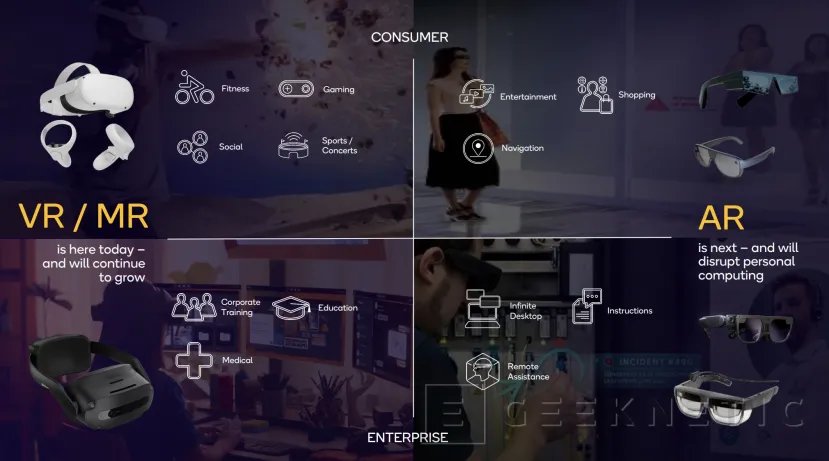
The Virtual reality It is developing in the direction of integration into our environment. Although one of the most representative characteristics of virtual reality is the ability to “transport” oneself into exciting virtual worlds, current trends are aimed at integrating the real world into what we call Mixed or augmented realitywhere The virtual is integrated into our environment in a realistic way. At the same time, augmented reality also continues to grow as components are miniaturized to create lighter glasses that allow for simpler information and elements to be superimposed on our daily lives.
From the maximum immersion in VR and Mixed Reality to simple and unobtrusive AR information projection, its use can be focused both at the consumer level and in professional and business environments, with gaming, multimedia or entertainment solutions; or assistance systems for technicians, physicians, education, training, remote assistance or virtual multi-screen desktop systems.
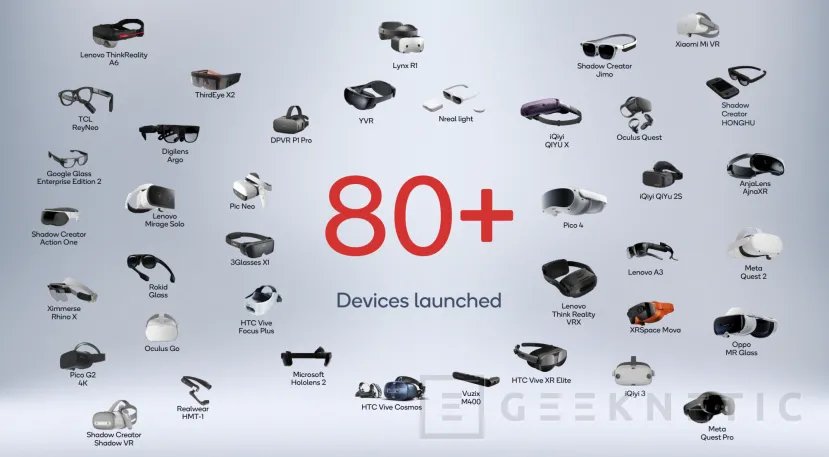
Qualcomm has been one of the companies that have invested the most in this type of solution, and currently more than 80 VR, AR and mixed or augmented reality devices have some of their SoCs from the Snapdragon XR and AR platforms, including bestsellers such as like Meta/Oculus Quest 2.
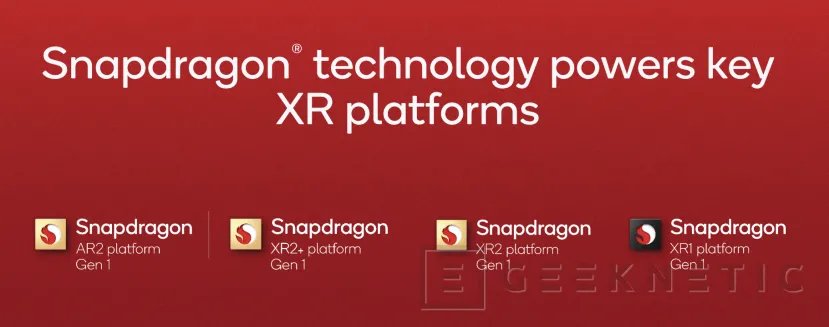
Until now, the company has had different platforms for solutions of this type: Snapdragon XR1 Gen1, XR2 Gen 1 and XR2+ Gen 1 for virtual and mixed reality glasses, as well as Snapdragon AR2 Gen 1 for augmented reality glasses. they are present in the vast majority of stand-alone devices (those that can operate on their own), as well as glasses that require a connected mobile phone or computer.
New Snapdragon XR2 Gen 2 with up to 2.5 times more performance
Today, Qualcomm announced its the new Snapdragon XR2 Gen 2 for next generation virtual reality and mixed reality systems. Snapdragon Development Idea There is also the Snapdragon AR1 Gen 1 for compact AR glasses, which we will talk about in this article.
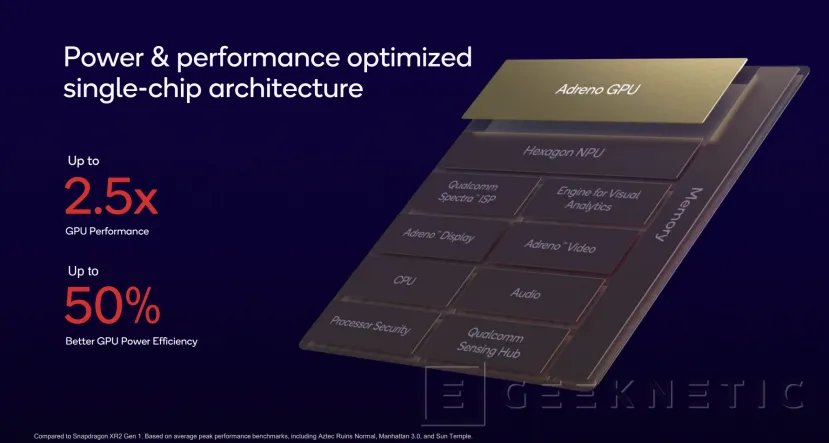
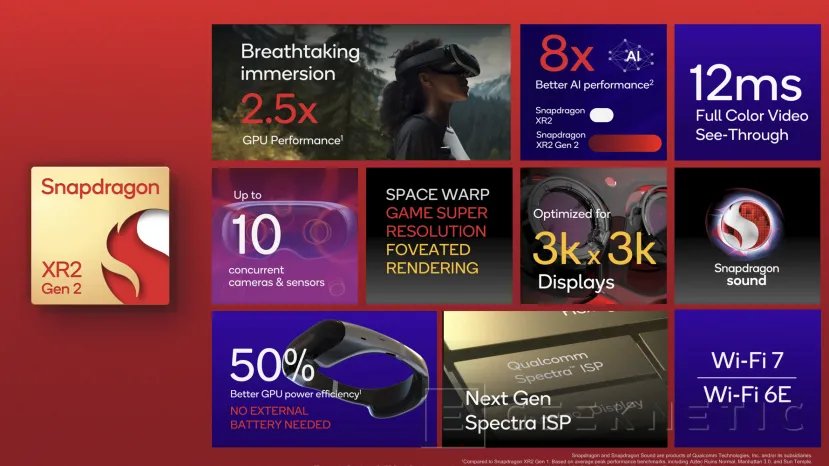
Continuing with Snapdragon XR2 Gen 2, We have a new chip with exciting new features in terms of power and AI integration. This new SoC achieves two and a half times the GPU performance of XR2 Gen 1, while its power efficiency increases by 50% (with the same performance as XR2 Gen 1, it will consume half as much). This means a performance boost that will enable a new generation of VR/MR glasses with much more capability, such as the new Meta Quest 3. In fact, the GPU is much more important than the CPU in these types of systems.
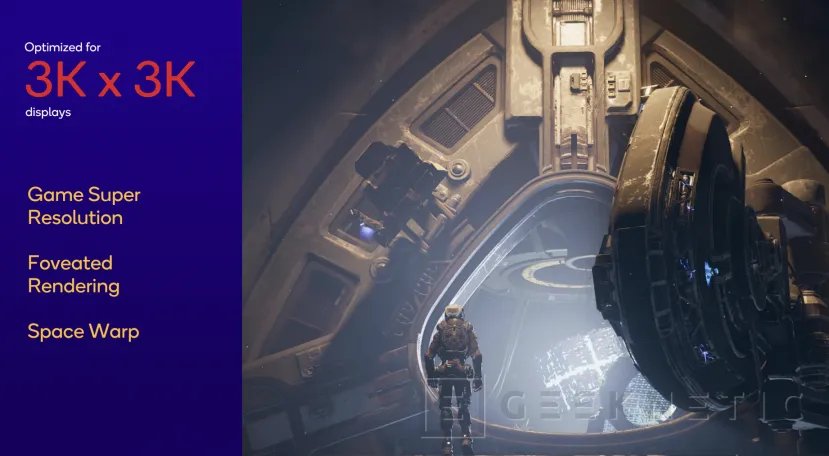
This Adreno GPU has been optimized for use in high-resolution glasses with 3K x 3K displays, and it adds support for upscaling technologies such as Game Super Resolution, Foveated Rendering (a technology that focuses rendering power and image quality on areas on which the eyes focus), or Space Warp.
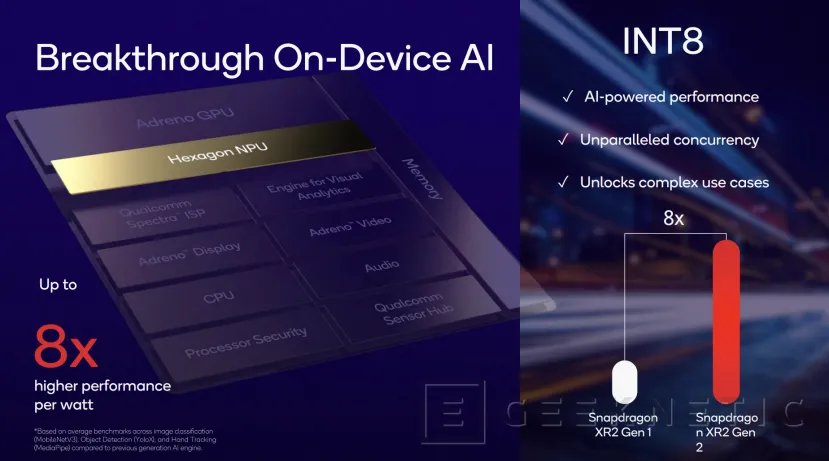
Hexagon NPU with 8x performance per watt in AI
Artificial intelligence also has a wide range of applications in these systems. Not only due to performance in VR, but also due to the features of mixed reality, it is necessary to analyze the environment to achieve an optimal experience, in addition to detecting objects, depth, and the user’s own position and movements. For this reason, XR2 Gen 2 includes various hardware accelerators to distribute these tasks.
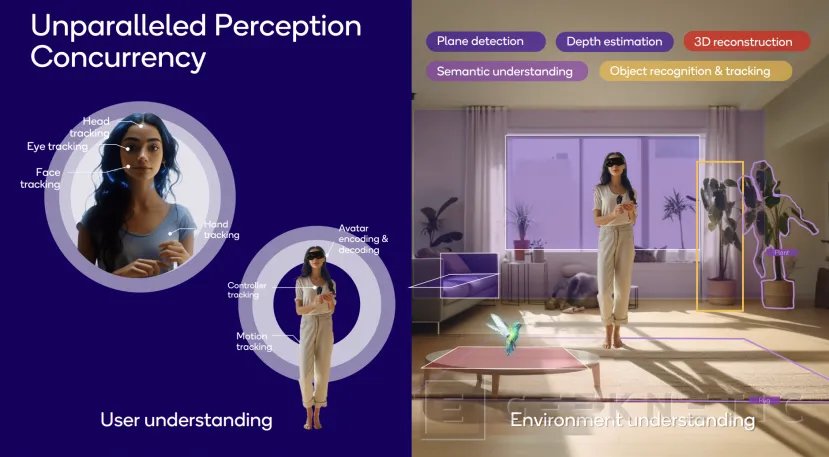
The Snapdragon XR2 Gen 2 features a Hexagon NPU that promises up to 8x performance per watt and 8x INT8 AI processing performance.
Another key component is Engine for Visual Analytics or Engine for Visual Analytics, the SoC module responsible for detecting key points in the environment and managing positioning in the environment and what surrounds us.
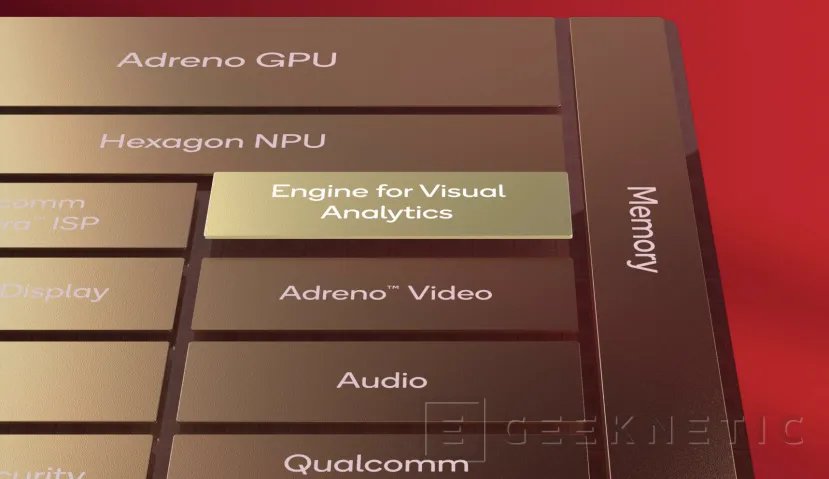
This module allows 6DoF (degrees of freedom), or what is the same, movement in 6 directions (3 movements of the glasses in 3 axes, plus 3 movements in relation to the environment (front-back, side-to-side, up-and-down), and that’s something the main thing in any virtual or mixed reality glasses.
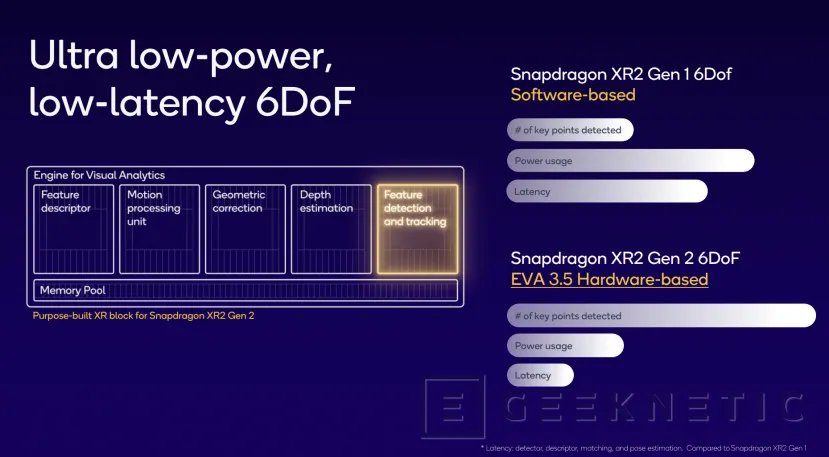
What’s new in the Engine for Visual Analytics (EVA 3.5) module is that it allows hardware to control this motion and environment detection, whereas in XR2 Gen 1 it was done by software. So it can detect much more key points to position itself in our environment with less consumption and much less latency.
Latency is key in this type of system, because if we have a “lag” in detecting motion, we can experience feelings of dizziness or disorientation.
It is also able to detect elements, text labels or even integrate with generative IAS.
Video latency increases from 50ms to 12ms with Snapdragton XR2 Gen 2
Another key point in the Snapdragon XR2 Gen 2 that is directly related to mixed reality is – Spectra ISP integration. We’re used to talking about these providers in their smartphone SoCs, because they’re responsible for managing photography and video. In Mixed Reality glasses, they are also very important because it requires the use of one or more cameras to be able to see the environment in real time in MR mode and to be able to integrate the virtual world into the real one.
This provider supports technologies such as geometry correction, noise reduction, and hardware dynamic range enhancement.
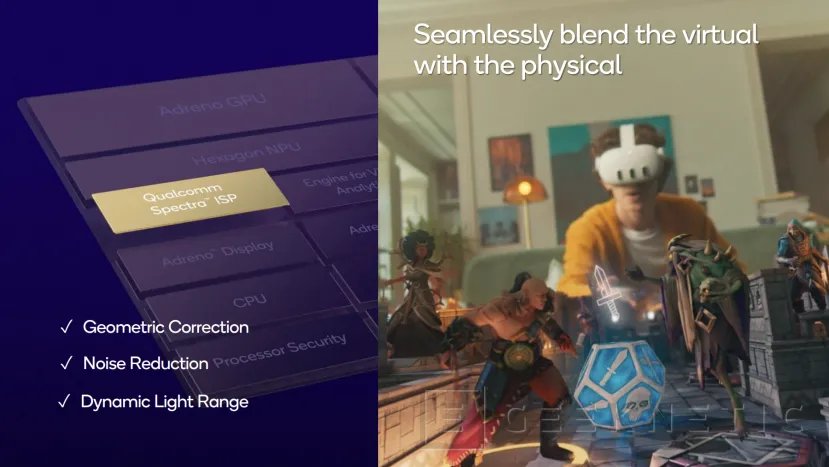
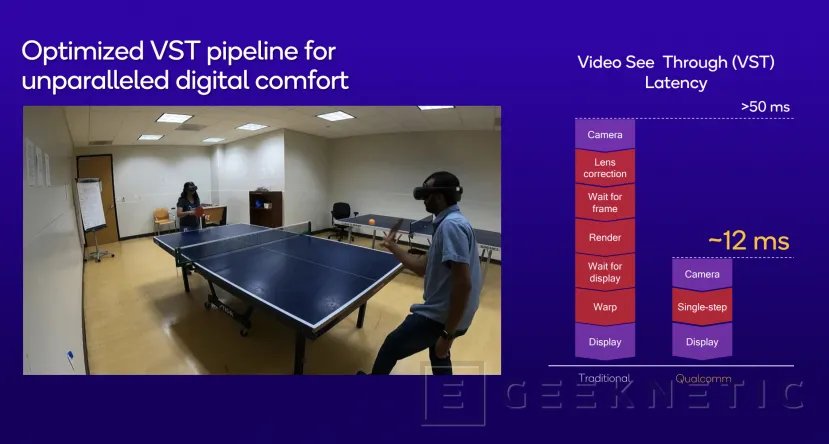
Qualcomm has optimized its Video Passthrough or Video See Thouth (VST) processing to the point where it is nothing more than viewing the VR/MR environment through the glasses with a latency of about 12 milliseconds.
This is much faster than the more than 50ms achieved by traditional processing, where there are various phases of lens correction, waiting, rendering, screen waiting from the time the image is captured by the cameras to the screen. , adaptation to the shape of lenses, etc.
Thanks to the optimized VST processing of the Spectra ISP Snapdragon XR2, all these stages are reduced to one. In fact, Qualcomm boasts that you can play real-time ping-pong with the glasses.
Connecting to WiFi 7 and running on Quest 3
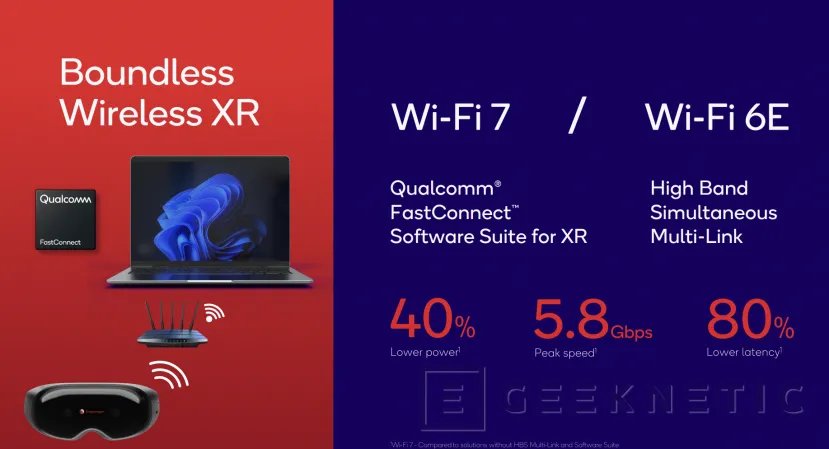
In terms of connectivity, we have support for Qualcomm FastConnect modem technology with support for WiFi 6E and WiFi 7, with a bandwidth of up to 5.8 Gbps, 80% lower latency and 25% lower consumption.
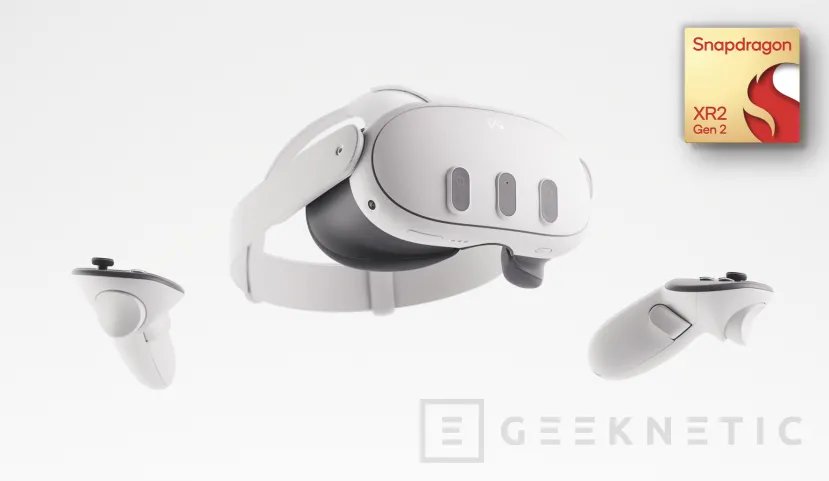
From today, Snapdragon XR2 Gen 2 is now available. Be the first in the newly introduced Meta Quest 3, the latest generation of the famous Oculus/Meta VR glasses, now with very great capabilities in terms of mixed reality.
End of article. Tell us something in the comments!


