The team under the leadership of scientists c CONICET and National University of Córdoba, in cooperation with Harvard Universityfrom the United States, discovered a genetic component characteristic of central Argentina, still unknown, with an age of at least 8,500 years.
This is a genetic fingerprint published in the journal Natureremains with the current residents and provides a a new perspective on the evolution and diversity of indigenous peoples from South America.

The finding was based on ancient DNA analysis individuals from archaeological contexts in the center and north of the country.
Rodrigo Noresresearcher c Institute of Anthropology of Cordoba (IDACOR-CONICET-UNC), explained: “We wanted to reconstruct the history that was not written, the history before the Spanish conquest, using a methodological approach that is complemented by archaeological information.”
Scientists have determined the existence of a ancestors unique to the region, whose genetic continuity has been preserved for more than eight millennia and can be traced back to the modern population of central Argentina.
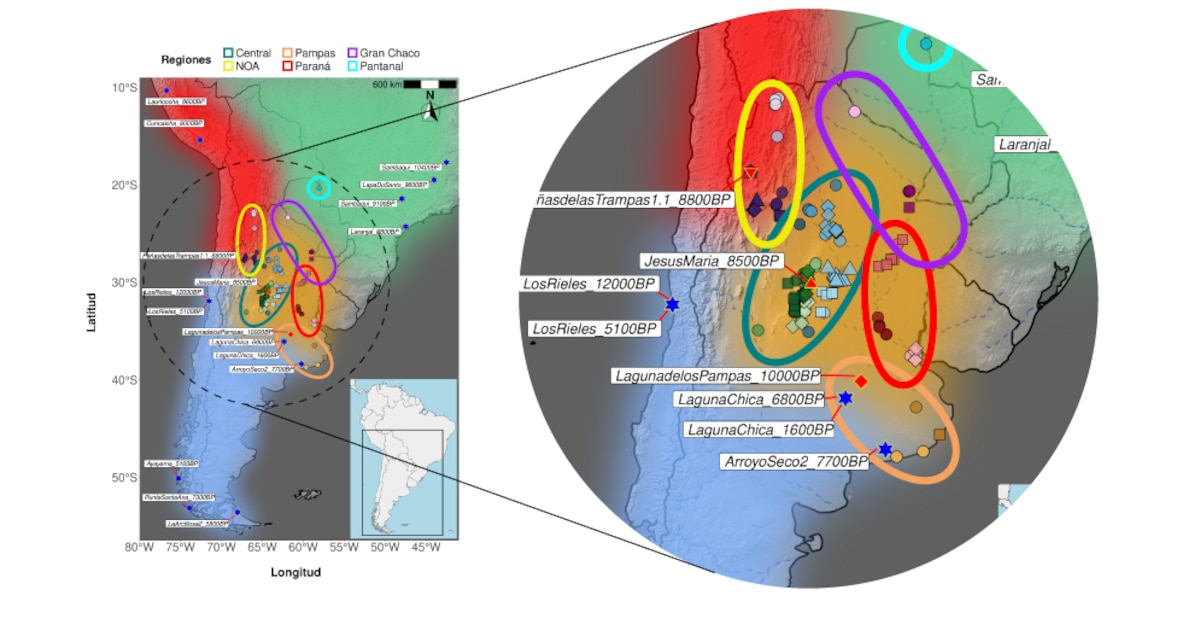
The investigation began in 2017 yearwhen the team collected 29 teeth from an archaeological site in Córdoba. Joint work a more than 30 archaeologists who are part of 20 national research centersallowed us to expand the sample to 344 remains of 310 individuals collected in 133 locations in the northwest, northeast, east, and center of the country.
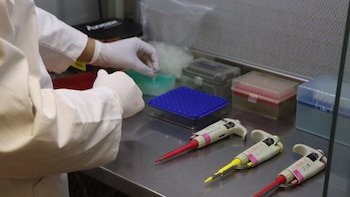
Genetic data They were analyzed together with experts from Harvard University and the Laboratory of Human Evolutionary Ecology. with National University of the Center of the Province of Buenos Aires (UNCPBA).
They applied advanced statistical methods to hundreds of thousands of genomic markers per sample.
According to the team, statistical processing and interpretation of bioanthropological and archaeological evidence allowed to determine patterns of kinship and migration between groups of people who inhabited the region before the arrival of Europeans.
Nores elaborates: “We process large amounts of genetic data in statistical terms and read them in bioanthropological and archaeological terms. gain information about the history of human populations. “If two groups happen to have more genetic variants than expected, they probably shared the same ancestor at some point in the past.”
The analysis revealed genetic differentiation between populations of the Southern Cone and other regions of South America that began at least 10,000 years ago. A person from the province of Córdoba, who is 8,500 years old, showed a pedigree a previously unknown South Americanfrom which the individuals sampled in the region, ranging in age from 4,600 to 150 years ago, are descended.
This genus participated in three major migration events. It was integrated into northwestern Argentina, where it mixed with the Andean component; It advanced to the Pampas region, where it became the main ancestor 800 years ago; and migrated to Gran Chaco, where he joined the Amazon race. As a result of complete population replacement, there have never been: evolution was local and continuouswith the inclusion of new mutations and own characteristics.

The data show that, unlike other regions of the world where population movements and replacements have been frequent, South America has an advantage continued existence of human groups in the same areas for millennia.
Currently, the central genetic component coexists with ancestry from Western Eurasia and sub-Saharan Africa who entered after the conquest.
“Argentina, and the center in particular, has been underrepresented in paleogenomic studies. The discovery of a previously unknown South American lineage demonstrates that there are still gaps in our understanding of the settlement of the Americas,” Nores emphasized. These results contribute to the goal reconstruct the evolutionary history of South America from traces of ancient DNA, showing that the diversity and origins of its peoples are still a challenge for science.
The identification of this lineage extends the genetic history of the region to previously unsuspected horizons.confirms the depth of the roots of indigenous peoples and reinforces the importance of Argentine science in international paleogenomics research.