
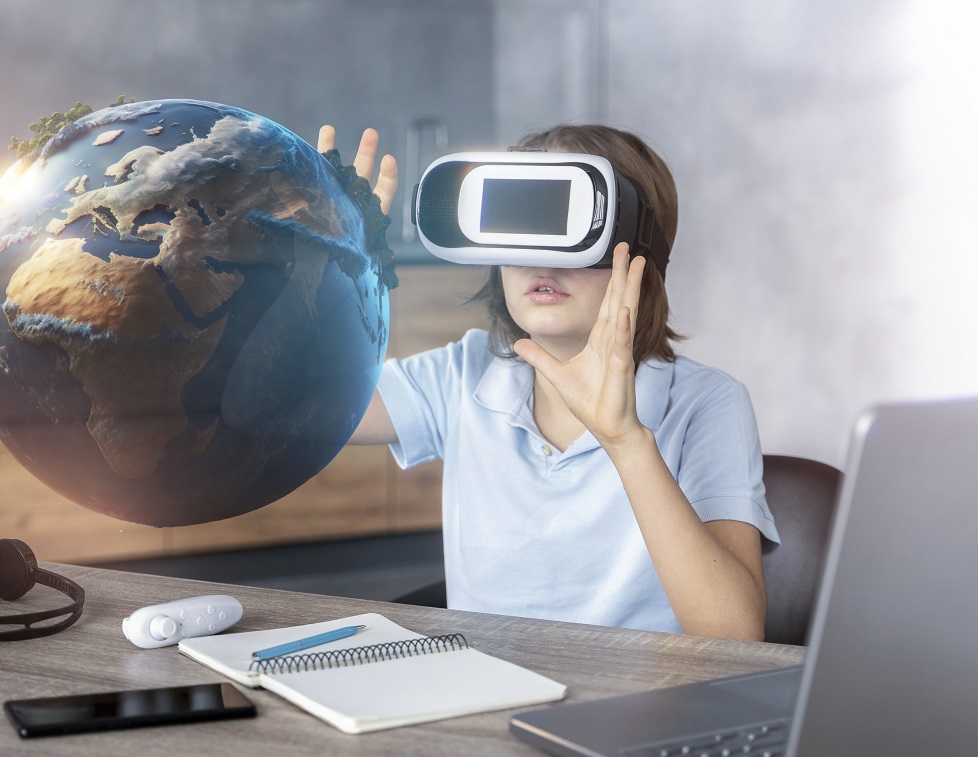
Today, our students need a meaningful, experiential, engaging and personalized educational model. And in such a scenario, the metauniverse can be very useful: it offers an opportunity to improve teaching and learning processes, as well as to expand the boundaries and possibilities of education; promotes learning through immersive experiences; maintains students’ attention and motivation; increases participation and eliminates the boundaries of space and distance for human interaction.
Games, shops and all types of exciting educational content
But to realize the full potential of the metaverse, developers must create immersive content that can be seamlessly integrated into the virtual environment. This can include everything from games and interactive experiences to virtual stores and social spaces. Transposed into the educational environment, this means developing tools that capture attention, create immersive worlds that can be explored and manipulated from multiple perspectives, and that counter the natural tendency to distract typical of the modern subject and immerse him in a rich educational experience. an experience that is stimulating and absorbing.
And to achieve this, one must face the various challenges that the implementation of the metaverse in education presents, as it requires improving the technology, making it easier to access it, creating exciting content, and transforming the role of teachers to improve the previous educational experience.
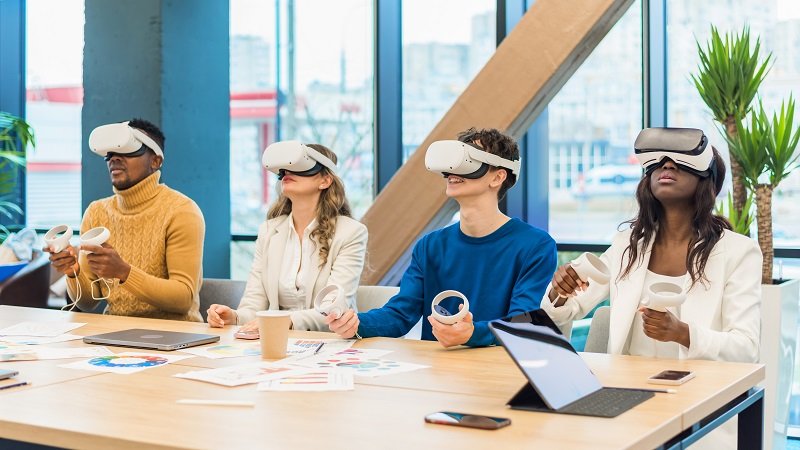
Here’s how the metaverse can improve education
Beyond that, the possibilities multiply and in the meta-universe we can find various ways in which technology can enhance and facilitate teaching and learning in digital education:
- Immersive learning experience: create experiences that allow students to explore complex concepts and ideas in a three-dimensional environment. For example, students can use virtual reality headsets to explore a historical site or a science lab. This can bring a topic to life in a way that is not possible in a traditional classroom.
- Collaborative learning: promote collaborative learning and allow students to work together in a shared virtual space. Students can interact with each other and with digital objects in real time, which can improve communication and collaboration skills.
- Personalized learning: Enable personalized learning by creating a personalized learning experience for each student. The technology can track a student’s progress and adjust the learning material according to their individual needs and interests.
- Access to resources: provide students with access to resources that may not be available in their physical environment. For example, students in remote or underserved areas can access educational resources from around the world.
- Economic efficiency: can be a cost-effective way of providing education. Eliminate the need for physical education classes and reduce the cost of travel, accommodation and other costs associated with traditional education.
The role of the teacher
The metauniverse will also enable a change in the methodologies used in the education sector due to the interactivity and participation opportunities it offers. However, in order to achieve this, teachers will need to learn and know all the possibilities of this new virtual environment, because only in this way they will be able to adapt their lessons, use engaging content in an appropriate way and optimize the use of Metaverse to improve the learning process of their students.
Therefore, the role of educators will be to facilitate and guide students as they navigate these spaces: they must be aware of the potential ethical and social implications of their use for education, which includes issues related to privacy, digital citizenship, and justice. In addition, it is essential that they ensure that the use of technology is inclusive and accessible to all students, regardless of their education or ability.


