
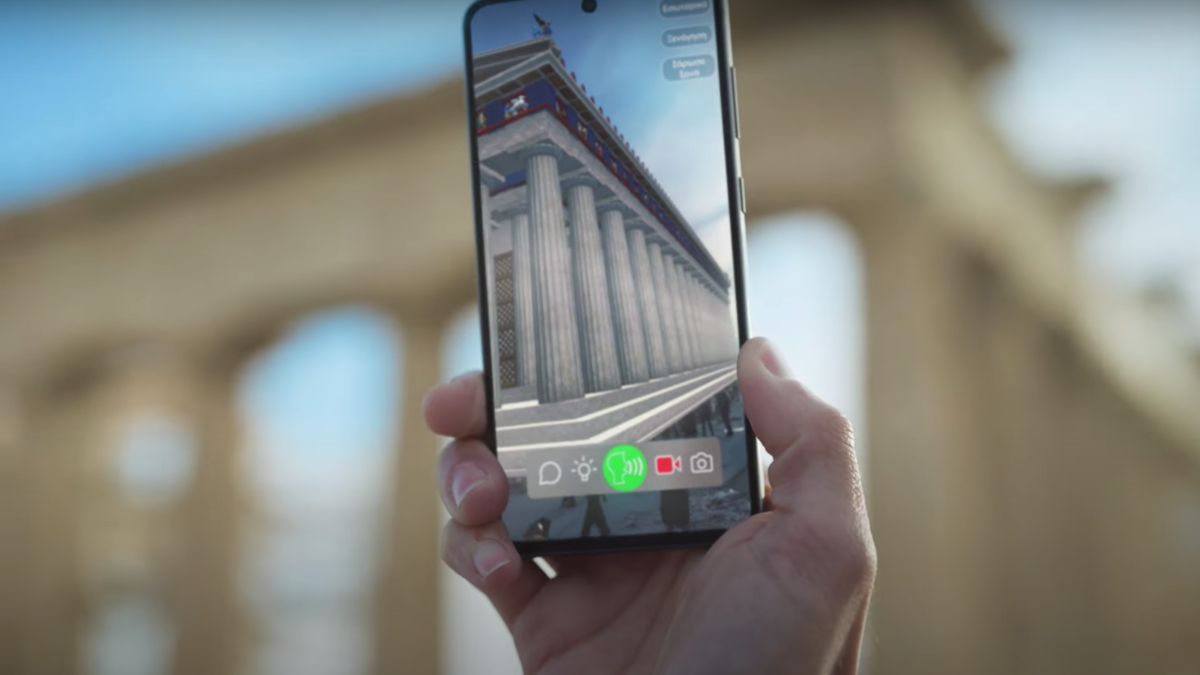
From now on, tourists visiting the Acropolis in Athens will be able to appreciate this iconic archaeological site in a new way. Thanks to the Chronos app, supported by the Greek Ministry of Culture, visitors will be able to see how the Acropolis is thought to have looked 2,500 years ago. And the only thing tourists need is to use their own smartphones.
This technological advance offers digital overlays of ancient structures, including sculptures now housed in the British Museum in London. In fact, Greece is demanding the return of the marble sculptures from the Parthenon, which were removed more than 200 years ago.
What can be seen from the application
Chronos, named after the mythological king of the Titans and the Greek word for time, allows visitors to see what the Parthenon originally looked like or the sculptures inside by simply pointing their mobile devices at the monument. This vision is possible thanks to augmented reality, which shows the old impression of the place on the screen. In addition, the program reveals lesser-known features, such as the bright paint that used to adorn many of the Acropolis’ sculptures.
Read also

The app, developed by Greek telecommunications provider Cosmote, offers an artificial intelligence-based virtual guide called Clio that offers more detailed information about whatever is displayed on the screen to offer an immersive experience.
Virtual restoration not only offers a more comprehensive view of a place, but can also save visitors time by avoiding long uphill walks and long waits to see iconic monuments up close. This could be beneficial to the country’s campaign to turn Greek cities into year-round destinations, as tourism is vital to the Greek economy.
For tourists, this interactive experience enriches their visit. Shriya Parsotam Chitnavis, a tourist from London, expressed her excitement, saying: “I didn’t know much about the Acropolis and they had to convince me to come here. Seeing it made it more interesting to see it in colour. I’m more of a visual person so the interactivity really helped me appreciate it.”
The rise of augmented reality
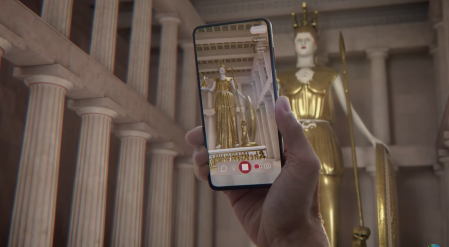
Chronos allows visitors to point their phones at the Parthenon and sculptures found in London
Augmented reality is becoming a promising technology in various fields: from medical surgery to entertainment and tourism. Tech companies like Meta and Apple are promoting virtual reality, but mobile phones remain the primary platform for providing augmented reality to consumers.
Greece’s Ministry of Culture and the National Tourism Authority have combined technology to improve the accessibility of ancient monuments. The minister of this portfolio, Lina Mendoni, emphasized that these innovations will increase access to ancient monuments in Greece, complementing physical facilities such as ramps and anti-slip paths. “Accessibility extends to the digital space,” he said.
Visitors increased by 21.9%
According to the Bank of Greece, the number of visitors who arrived between January and July increased by 21.9% compared to the previous year, and the revenue was more than 10 billion euros. In addition to “Chronos,” other efforts such as the popular video game Assassin’s Creed Odyssey and an immersive digital tour of ancient Olympia in collaboration with Microsoft attracted new visitors.
The virtual reconstruction using “Chronos” also extends to other monuments of the Acropolis, including the adjacent Roman Theater and parts of the Acropolis Museum, further enriching the experience of visitors exploring this cultural treasure in Greece.


