
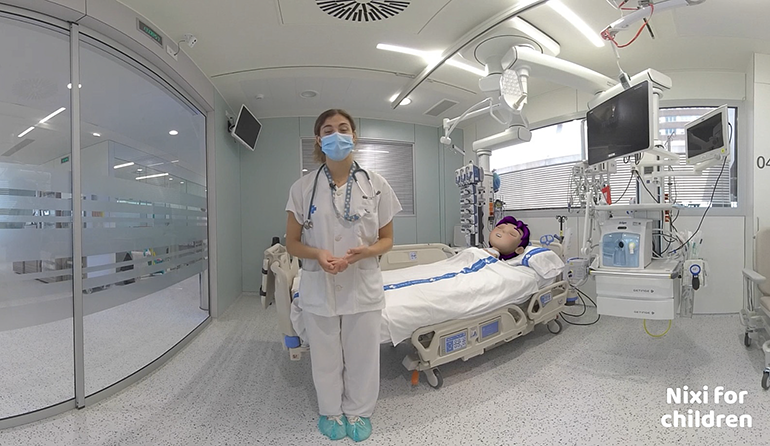
In order to alleviate these emotions, the German Trias hospital in Badalona has launched a virtual reality project that allows children and their families to learn about the space and work of the pediatric intensive care unit before admission.
With this initiative, the center is taking another step on its platform Evolutionan immersive virtual reality portal that helps users get up close and personal with some of the most pressing aspects of hospitalization in these wards.
The project, which arises as a result of cooperation between the service of intensive medicine, Art launch Nixi for Children and Mobile World Capital Barcelona were supported by Fundació Somni dels Nens. A pioneer in the implementation of educational virtual reality, Germany’s Trias Hospital became the first center in the country in 2019 to use virtual reality as a preparation tool for pediatric patients. After a successful implementation in pediatric surgery, it has continued in the adult intensive care unit and cardiac surgery, to which the pediatric intensive care unit is now being added.
Pediatric Critical Care Virtual Tour with Nixi
Before visiting the hospital and through virtual reality cardboard glasses, patients can take a tour with Nixie, an animated 3D character, who will take them to the most representative rooms of the pediatric intensive care unit.
In addition, their loved ones have a digital platform that features interviews with patients, family members and professionals who talk about their experiences in the ICU. The platform is also designed to enable families of toddlers to learn about German Trias critical care and provide quality support.

With this content, the hospital aims to ensure that children and adolescents who, for example, have to be admitted to the pediatric intensive care unit due to surgery, do so knowing the room where they will be admitted and understanding what their environment will be like during that time. days. . This way, your experience will be less traumatic and your subsequent recovery will be better and faster.
As part of the program of humanization of hospitals
“It is very important to consider the emotional aspects of being admitted to a unit with these characteristics, both because of the difficulty of the situation and because of the amount of new and strange equipment that the patient and their families are faced with,” explains the director clinics. territorial pediatrics, Carlos Rodrigo.
The project is part of the hospital’s humanization program and aims to reduce the possible cognitive and emotional consequences of spending time in the intensive care unit for both patients and their loved ones, according to numerous scientific studies that have appeared in recent years: – it what is known as pediatric post-acute syndrome and familial post-acute syndrome.
These are complex syndromes, and it is known that a lack of knowledge about the intensive care environment and the medical procedures used, as well as a lack of communication with specialists, can contribute to their occurrence. They also affect the patient’s recovery, making it difficult to be discharged from the hospital and impairing the quality of life after discharge.


