
OpenAI has decided to drastically limit the free use of Sora, its artificial intelligence video generator, sparking a wave of criticism on social media. The changes were applied immediately and without noticea gesture that users find unexpected and not very transparent. The company is looking to ease pressure on its infrastructure, but the sudden reduction in access has caused frustration among those who use the tool to experiment, create content or test personal projects.
The decision comes at a time when Sora is going through her most popular phase. Although the application is not available worldwide, it is heavily used in countries such as the US and Japan. In addition, thousands of people in other regions are turning to virtual private networks to access the service, which has increased demand above expectations. Saturation forced OpenAI to make successive adjustmentsbut the last cut is the most severe for many.
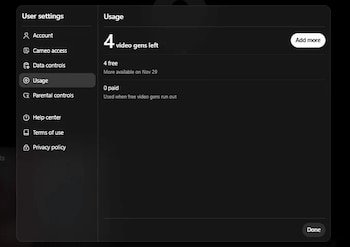
Since its launch, Sora has offered virtually unlimited usage. Users were initially able to create as many videos as they wanted, fueling a burst of creativity on social media. However, as the platform grew, OpenAI began to put up barriers: first a maximum of 45 videos per day, then 30. Now the free limit is set at five generations per day for 10-second clips.

The new scheme is based on loans. Each user gets five per dayand each video consumes a portion of them. A 10-second clip costs one credit; one 15 seconds, two. This means that if someone creates two 15-second videos, they will only have room for one additional short clip. The decline was so noticeable that many users believe that the tool has stopped allowing them to experiment.
One of the elements that caused the most outrage is that even if Sora doesn’t produce the video – either due to technical glitches or a security breach – the credit is still removed. In recent weeks, The tool showed an increase in errors and cancellationsforcing users to repeat requests and losing credits without getting any results.
The situation is made worse by the fact that according to users in the digital communities, the platform has become more unpredictable in assessing what it considers to be a violation. Failures depend not only on the text of the prompt, but also on the final result. If the AI creates a scene it interprets as inappropriate, even if the user didn’t request it, Sora blocks the video and removes the credit anyway.
This instability forcing users to refer to extremely detailed descriptions to prevent artificial intelligence from introducing elements that may be considered outside the allowed parameters. For example, a simple query like “women who play sports” may result in a rejection if the clothes created are too light. With so few daily attempts, adjusting the prompt became a slow and frustrating process.
Added to these limitations is another complaint: the apparent degradation of the quality of the videos produced. On social media, some users have reported that results with multiple characters often cause problems in dialogue, such as voice swapping or desynchronization. These glitches make many videos unusable, requiring re-spawning and adding to the frustration of being limited.
While some speculate that these changes may push users towards paid versions, there is no official confirmation. The truth is that the combination of tight restrictions, frequent crashes, and poor quality has created an atmosphere of visible discontent in the community.