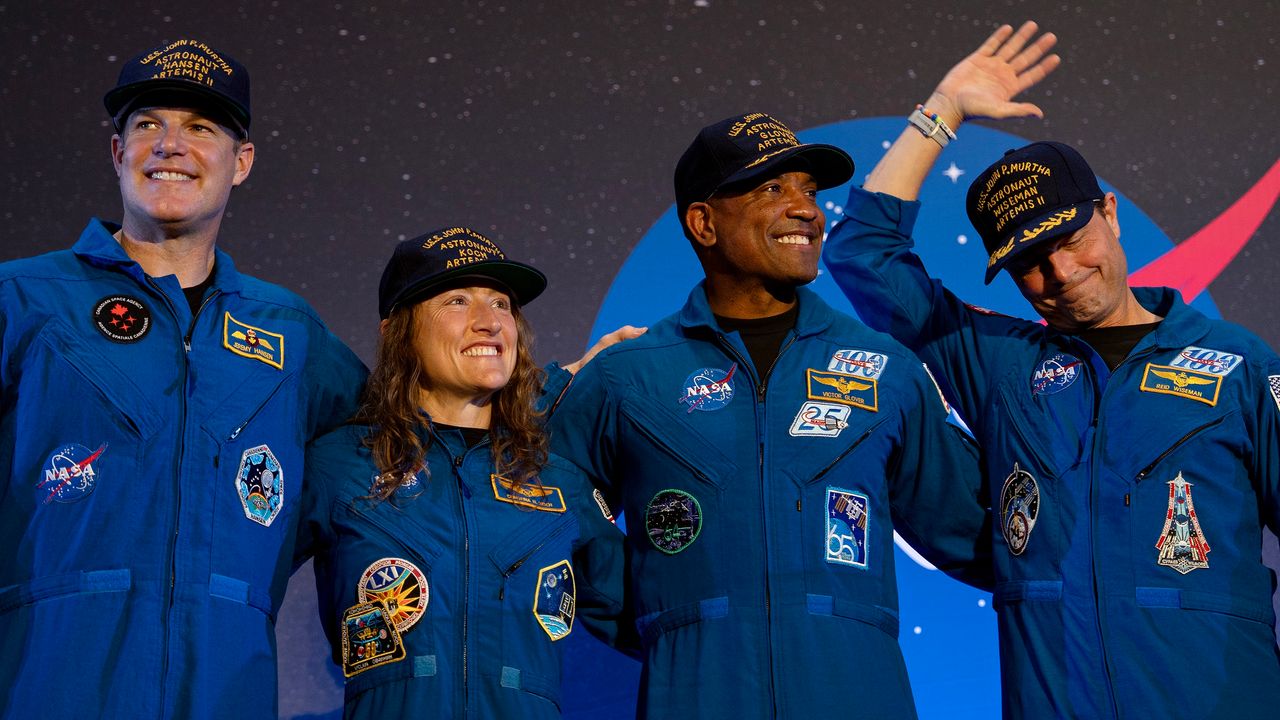
As if they were the Fantastic Four after an intergalactic journey, the crew of the Artemis II mission received a hero’s welcome this weekend after their successful re-entry into Earth’s atmosphere on Friday afternoon. “It hasn’t sunk in what we just did, and I’m afraid to even begin to try,” pilot Victor Glover said at a news conference in Houston.
Glover was accompanied by Reid Wiseman, Christina Koch and Jeremy Hansen on a 10-day journey around the moon, a feat that had not been accomplished by humans in more than 50 years. “Besides the difficulty of trying to describe what we’ve been through, there’s an appreciation for having seen what we’ve seen, what we’ve done, and being with who I’ve been with,” Glover added. “He’s too big to fit in one body.”
Artemis II marked several milestones. First, the distance record set by Apollo 13 in 1970 was broken, reaching a maximum distance of 406,771 kilometers from Earth. At its closest approach to the Moon, the Orion capsule was at an altitude of about 6,550 kilometers above the lunar surface, and the astronauts discovered some hitherto unknown craters. One of them was named “Carol” after the late wife of mission commander Reid Wiseman. The astronauts also witnessed a solar eclipse from the far side of the moon and apparently witnessed six meteorite collisions on the lunar surface.
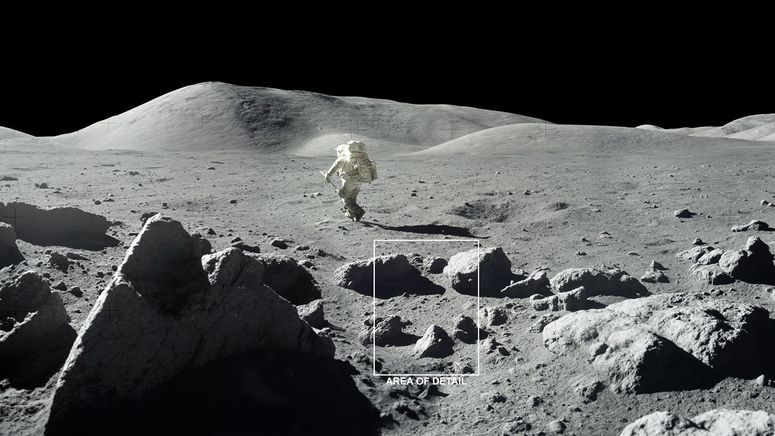
The Moon is not just a barren rock orbiting the Earth. Artemis missions could answer the great unknowns the satellite holds.
But perhaps the most important thing for NASA was to demonstrate that it could send a manned mission to such a great distance and return it safe and sound, and using a technology very different from that of the Apollo era, where the only thing that presented a noticeable complication was the toilet. There were other technicalities, such as a helium leak in Orion’s propulsion system, but nothing that would cause NASA to abort the mission or endanger the crew.
After the shift in focus in recent years to commercial companies such as SpaceX and Blue Origin, there were not high expectations for the “old” NASA to be able to effectively carry out such an ambitious program as returning to the moon. Political conflicts, budget cuts, the four-year gap between Artemis I and Artemis II, the many delays and postponements of the launch, all this history of obstacles fell by the wayside when Artemis II began to share the first images of the Earth and the Moon, and the world shifted its gaze from other events, such as the war in the Middle East, to space, at least for a day or two.
What is the future of the Artemis program?
Back to the moon landing, that’s clear. But when? The roadmap was recently changed by the new NASA administration led by Jared Isaac, so the future of the Artemis program is a little different from the original plans.
First, the next mission is Artemis III, scheduled for mid-2027. Rather than landing astronauts on the Moon, this mission will test critical on-orbit operations, especially rendezvous and docking between the Orion spacecraft and lunar landers from vendors such as SpaceX (Starship HLS) and Blue Origin (Blue Moon). These demonstrations are aimed at confirmation equipment and procedures before attempting an actual lunar landing.
“With the completion of the Artemis II mission, attention is now firmly focused on assembling Artemis III and preparing to return to the lunar surface, build a base, and never leave the moon again,” Isaacman said at a news conference. It is not yet known whether the Artemis III tests will be conducted in low or high Earth orbit, but it will be a manned mission.