

Although the concept of the metaverse is about 40 years old, in 2022 they burst onto the scene in a powerful way with the advent of decentralized cryptocurrency networks. However, the furor from these innovations has already passed, and there are even those who say that it was just a fad.
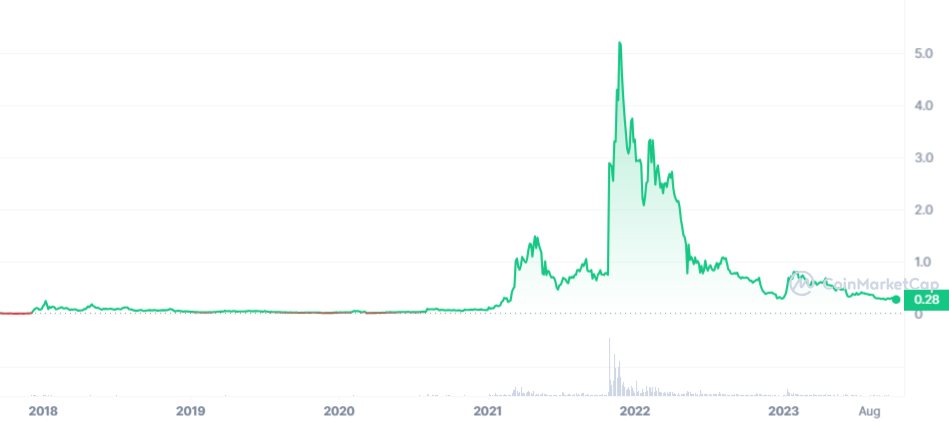
An example of the public’s loss of interest in metauniverses can be seen in the value of MANA, the native token of the Decentraland virtual world. It reached its all-time high in 2021 when the token reached a price of US$5. Since then, it has a marked downward trend.
MANA token is currently priced at $0.25. That’s 95% below the all-time high.as seen in the following graph.
However, a study conducted by Dr. Lennart Ante, director of research firm Blockchain Research Lab, revealed that there are still those who invest in the meta universe. In this case, Retail investors who were “seduced” by the attractiveness of virtual lands stand out.
The company views the emergence of digital land as an asset class not only as a “technological phenomenon” but also as a “sociocultural and economic phenomenon.”
Different virtual worlds have “turned into multifaceted platforms” as they are not seen as investment tools, but have become “canvases for personal expression and hubs for community participation,” Blockchain Research Lab points out.
4 types of investors in virtual lands
According to the study, four groups of investors are distinguished in the virtual real estate sector. The company calls the first “digital expressionists”.
This group sees metaworlds as “an unlimited canvas where you can paint your personality” as they try to portray their personal and distinctive style in these virtual worlds. In addition, They see an opportunity to turn their creativity into commerce.
“It’s not just about ownership, it’s about creating a virtual persona, crafting surreal experiences and potentially transforming passions into profitable digital businesses.”
Blockchain Research Lab, a research company.
The second group is called “social architects”. These investors also build communities, social connections and digital diplomats.
Besides seeing it as a virtual country, they are trying to give it a sense of belonging that promotes participation in events, activities and digital neighborhood.
This group sees real estate in the metaverse as “a powerful combination of community belonging, social status enhancement, and pragmatic utility, all anchored by the universal language of digital communication.”
The third group of investors are “pixel hunters”. These They are completely focused on speculation and investment virtual real estate. “They are day traders, but from digital landscapes. They buy cheap, sell expensive and do it quickly,” the investigation shows.
Last but not least, they are “pioneers of the digital frontier.” They see the metaverse as a “revolution waiting to happen.” Investors of this group focus on understanding the technology that powers virtual worlds and everything below them. They use their digital sites as experimental terrain for new applications, interfaces and experiences.
“Essentially, they are navigators of a nascent world with their eyes wide open to the horizon of limitless technological possibilities.”
Blockchain Research Lab, a research company
The main metaworlds are The Sandbox, Decentraland and Otherside. In these virtual worlds, as in the real world, price is determined by location. In December 2021, the digital property adjacent to the mansion of American rapper Snoop Dogg, It reached a price of 450 thousand dollars.noted in the company.
Similarly, companies are present in these worlds. Last June, the Bank of Chile built a virtual building, and South Korea’s Samsung opened a virtual replica of its store located in New York City in 2022. Both did so on the Ethereum-based Decentraland platform, as reported by CriptoNoticias.
“In the digital renaissance of brand engagement and real estate valuation, the crypto meta-universe is becoming an innovative place where imagination meets investment or marketing meets economics,” the study added.


