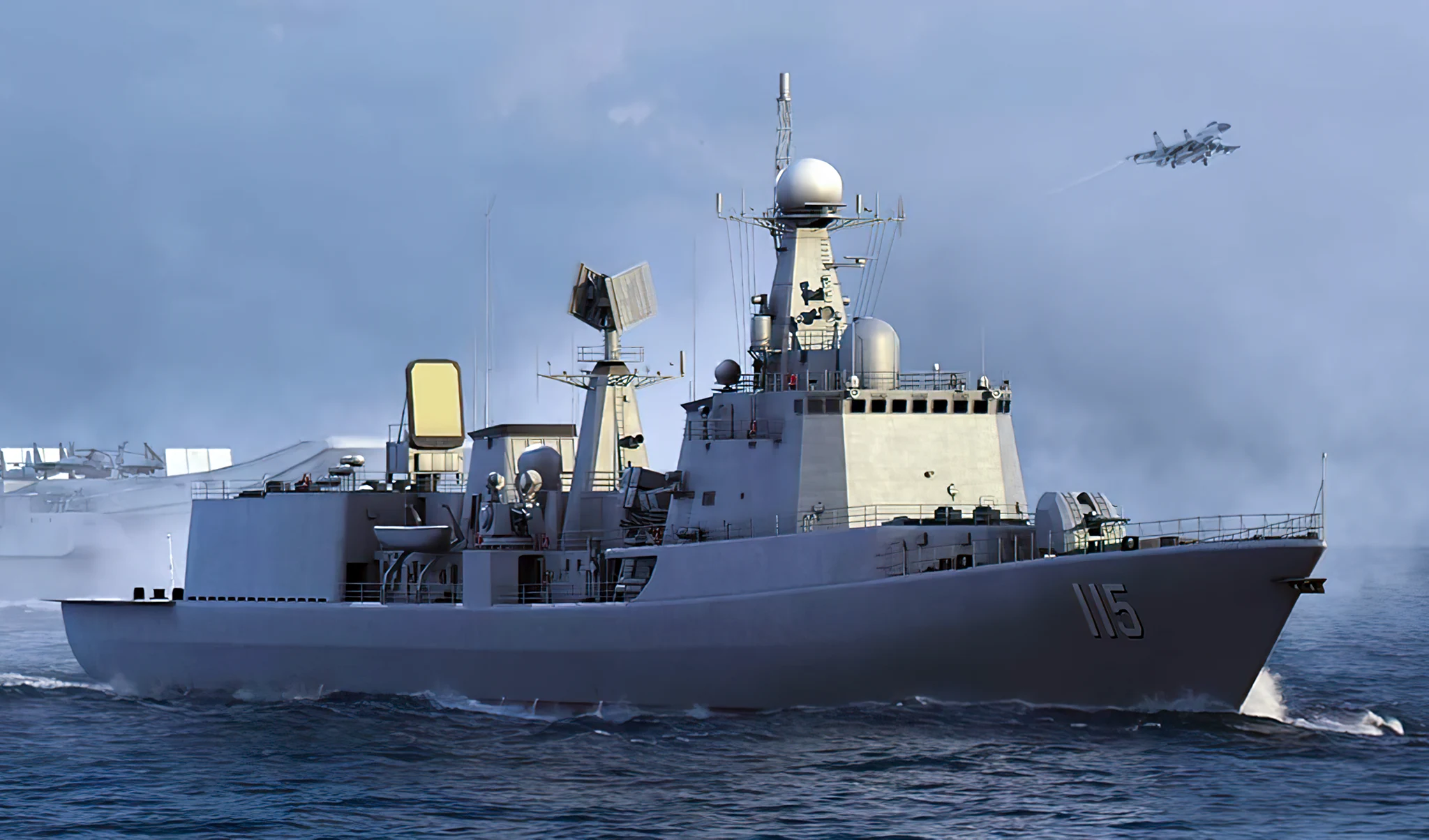
China is upgrading the Type 051C destroyers with VLS and national radars to replace Russian systems, improve fleet integration and reduce technological dependency.
Modernization of Type 051C and replacement of Russian missiles and radars
The People’s Liberation Army Navy’s Type 051C destroyers marked an important milestone by establishing Russian-origin air defenses to meet immediate needs. In January 2006 and January 2007, Dalian Shipyard built two units, Shenyang (115) and Shijiazhuang (116). Configuration responded to delays in program 052C. Today, both ships are undergoing deep modernization with the replacement of Russian missiles and radars with national counterparts, as a specialized analysis shows.
With the upgrade, the PLAN aims to bring these destroyers up to modern technological standards and facilitate their integration into modern formations. The goal includes reducing the operational impact associated with dependence on imported components. The time window extends from the late 2010s, with signs of planning in 2025, during a period of continuous expansion of China’s naval capabilities. This decision cements the transition to national systems with more coordinated service and logistics.
The role of the class was essential because it provided short-term regional air defense while more complex national programs were being developed. Accumulated operational and maintenance experience has paved the way for viable modernization without excessive ship architecture change. The focus is on maximizing interoperability with Chinese command networks and increasing weapons loading flexibility to support missions and protect naval task forces.
The purpose of the upgrade is to increase interoperability with the new destroyers and reduce the limitations associated with imported systems. The changes favor national radar, missile and combat control modules with incremental replacement and limited structural changes. The expected result indicates greater readiness, better resistance to countermeasures and a logistics chain aligned with the rest of the fleet. The initiative coincides with an increase in the number of modern destroyers in service under the PLAN.
Validate upgrade program technical keys
- Installation of 16 VLS cells in the bow and 32 in the stern, compatible with HHQ-9 missiles with a range of 200 kilometers.
- Replacing the 30N6E Tombstone radar with the HT-233 variant and the Top Plate with the national Type 382.
- Replacement of “Mineral-ME” with “Type 366” and maintenance of radar “Type 364” with improved characteristics.
- Change from YJ-83 missiles to YJ-12 missiles with a range of more than 400 kilometers, as well as the Type 1130 CIWS and an improved main gun.
- The 2025 and 2026 photos show the original equipment in Shijiazhuang with a possible operational horizon of 2027.
The Origins of the 051 Series and the Evolution to Naval Air Defense
The Type 051 series was born from the Luda destroyers of the 1970s, derived from the Soviet Kotlin class designs. These units, with a displacement of about 3,670 tons, fitted Hai Ying anti-ship missiles and limited radars according to the technical level available in China at the time. Later variants included anti-submarine helicopters and advanced sensors during the 1980s and 1990s as part of incremental capability development.
The Type 051B, built in 1998, was an improvement with a hull with a reduced radar signature and more advanced control systems, although it retained a reliance on Russian components for subsystems. The Shenzhen (167) ship received an upgrade in 2015 that replaced anti-aircraft missiles with Chinese variants and improved radars, according to defense technical publications. This experience set a useful precedent for subsequent works in the series.
The approach applied to the Type 051C increased the displacement to 7,100 tons and provided a priority air defense area to protect naval task forces from air threats. This configuration was a response to the need to fill gaps while more sophisticated national projects matured. The decision to integrate proven systems accelerated operational readiness, provided valuable technical skills, and paved the way for future transitions to national solutions.
The historical array shows a succession of iterations with incremental increases in capability, from basic sensors and initial anti-ship missiles to air defense-oriented platforms. The sequence of improvements reflected the industrial limits of each stage and the usability of external technologies. Over time, China consolidated its own lines, which today support standardized processes for the modernization of the surface fleet.
The original 051C systems and the reasons for the initial Russian integration
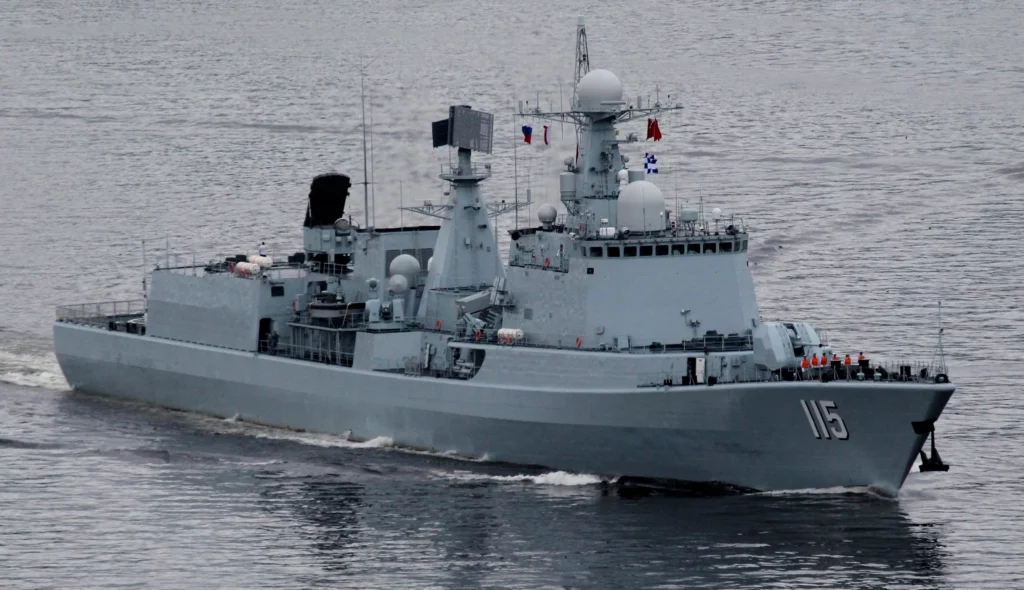
The original configuration of integrated Russian complexes was acquired during military-technical cooperation in the 2000s. Each ship had six revolver-type rotary launchers for 48 48N6 anti-aircraft missiles of the S-300FM system, the naval version of the land-based S-300. Semi-active radar guidance made it possible to intercept targets at distances of up to 150 kilometers with a volume of fire suitable for area anti-aircraft defense when performing escort tasks.
Fire control belonged to the 30H6E Tombstone radar with a phased grating, capable of illuminating up to 12 missiles at the same time and conducting simultaneous interception of six targets. As an adjunct, the Top Plate 3D radar provided long-range detection with 360-degree coverage. Maturity and immediate availability explain the selection of these components to meet the needs of the first decade of the 21st century.

Two quad launchers for YJ-83 anti-ship missiles with a range of 180 kilometers and a subsonic speed were installed on the ship. For point defense, two non-contact weapon systems of the 730 type were used. The main armament included a 100 mm PJ-87 cannon, as well as Yu-7 torpedo tubes. The aft pad allowed the helicopter to be maneuvered, but did not have a permanent hangar for sustained on-board tasks.
US congressional reports on China’s naval modernization have emphasized that the acquisition of Russian technology has reduced the air defense deficit, while domestic development has advanced. This transitional solution gave the PLAN true territory coverage and shortened the time of enlistment. The result provided a practical basis for useful operational experience and for subsequent standardization decisions with equipment of Chinese origin in the same category of vessels.
Modernization plan: Chinese VLS, HHQ-9 and new shipboard radars
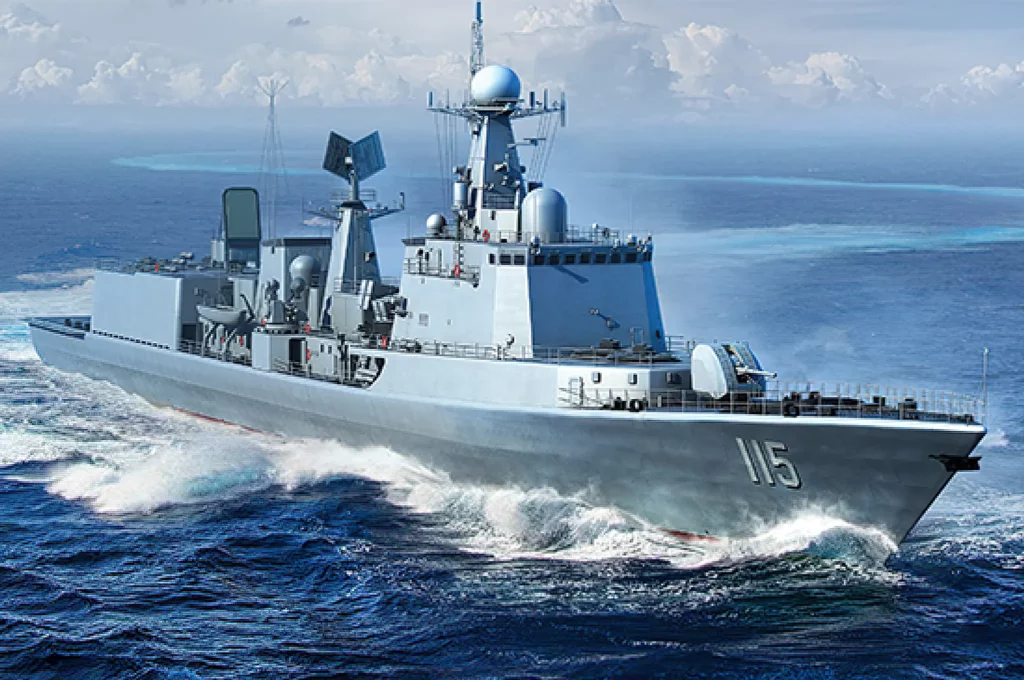
Modernization involves the removal of revolver launchers from the S-300FM and the adoption of a national universal vertical launch system. The plan places 16 VLS cells in the bow and 32 in the stern, compatible with the HHQ-9 missiles, the naval variant of the land-based HQ-9. Due to active radar guidance, the radius of action has been increased to 200 kilometers. The configuration increases the overall ammunition capacity and allows the use of different loads in anti-aircraft, anti-submarine or strike missions.
Russian radars are part of a phased replacement program. The 30N6E Tombstone is a modified version of the HT-233 used in HQ-9 ground systems, with a profile that limits structural changes. The Top Plate was replaced by the Type 382, a domestic air search radar with direct integration into Chinese command networks. The goal is to unify interfaces, improve target management, and strengthen resistance to interference.
The technical details described by the offshore analysis platforms indicate modifications with limited structural changes to maintain operability. The Type 364 surface search radar remains with improvements. The Russian-made Mineral-ME horizontal guidance radar has been replaced by the Type 366 to improve horizontal target acquisition. This transition ensures the coherence of the sensors on the deck and in the battle centers.
In additional weapons, the YJ-83 is second to the YJ-12 with a range of more than 400 kilometers and supersonic speed, which increases anti-ship capabilities. The Type 730 approach systems became the Type 1130 with greater speed and accuracy. The PJ-87 gun has been replaced by an improved version introduced on Type 054A frigates. The Yu-7 tubes and the helicopter platform are maintained, with priority being given to logistics standardization within the fleet.
Implementation, costs and strategic importance within the fleet PLAN
Modernization is consistent with the strategy of standardization through national systems. A similar trend has reached Suchasny destroyers purchased from Russia, modernized in the 2010s with Chinese YJ-12 anti-ship missiles instead of Mosquito. In parallel, PLAN operates more than 40 destroyers; The 25-unit Type 052D and eight-unit Type 055 classes concentrate their main component in long-range task groups.
Once upgraded, the Type 051C will take over area air defense and complement forward ships through cooperative intercept, in which the radars of other destroyers can provide guidance data. This capability was documented in joint exercises with Russia in 2015, when Shenyang participated in air defense maneuvers. This process responds to the transfer agreements of the 1990s and subsequent indigenization in the face of recent supply constraints.
The execution is accompanied by photos from official sources and forums. Images of Shijiazhuang in training from April 2025 released by China’s Ministry of National Defense show Tombstone’s stern. The 2025 analysis puts the process in its early stages for the unit and suggests an upgrade of Shenyang at the shipyard. Institutional opacity limits details, unlike announcements of orders for destroyers such as the Type 052DM in 2025.
The current state, according to observations of 2026, indicates combat readiness in the northern fleet and participation in patrolling. Photos from January 2026 show the original configuration with upgrades that may last until 2027. Cost estimates range from $200 million to $300 million per ship, based on comparisons with the US Naval Institute’s 051B. After the upgrade, the 051C will strengthen China’s air defense and industrial autonomy.