There’s something about iOS 26 that isn’t quite right. If we go back to August, we had Tim Cook baring his chest because it was “the most popular beta in history.” There was excitement. There was a desire to experience the future. However, we get to January 2026 and find a headline that seems to tell us the opposite: Adoption has stopped. But is it true? Because depending on where you look, iOS 26 is either an install crash or a perfectly normal update.
The riddle of two numbers: 16% or 60%?
Apple doesn’t usually share official adoption data this time of year. Traditionally, this data is saved for confirmation at WWDC in June, so until then we have to go blindly based on third-party estimates. And that’s where the movie changes depending on whether we’re looking at web traffic or app usage.
On the one hand, we have StatCounter, which measures market share based on web page visits. According to their records, only 15% of users have upgraded to iOS 26while more than 60% continue to stay on iOS 18. This is a number that is very surprising, especially when you remember the record downloads of beta versions during the summer. Logic dictates that this mass of enthusiastic users should already be on the final version, which makes this low percentage surprising.

iOS update data 26 (about 15%) according to StatCounter
However, TelemetryDeck tells a different story. This platform analyzes usage through SDKs integrated into applications and their data They claim adoption is approaching 60%. Why this startling difference?

iOS 26 update data (about 60%) according to TelemetryDeck
Technical “trap”: Safari lies to us
While we might think that the difference is related to the user profile (web vs. app), there is a technical reason why StatCounter “sees” so much iOS 18: In September, Apple froze the so-called “User Agent”. due to compatibility issue.
According to the WebKit development logs, Apple had to freeze the announced version of Safari in iOS 18.6. The reason? Avoid an online disaster. apparently many sites did not recognize that “26” it was a version above “18” (probably due to errors in the software logic when reading the numbers) causing pages to tear on load.

To avoid broken sites, Apple decided to force Safari to lie: Even if you have iOS 26, the browser says “I’m iOS 18.6”. By the way, this helps with privacy by eliminating a digital footprint, but the origin was purely functional.
This makes web-based measurement tools like StatCounter readable millions of devices are updated as if they were old. TelemetryDeck, on the other hand, when measured from the application code, does see the real version of the system. So the true figure is almost certainly much closer to 60% than 15%.
Even so, the leap from 18 to 26 is respectable
Fixed a web measurement technical errorwe can’t ignore that there are still tons of users who don’t update. And that may have less to do with design and much more to do with basic psychology. Let’s put ourselves in the shoes of the average user. Someone who doesn’t read Applesfera and just sees the notification in the settings. Suddenly, your iPhone offers to upgrade from iOS 18 to iOS 26.
This digital leap, prompted by Apple’s nomenclature change to coincide with 2026, is admirable. For a mass audience that updates more by inertia than passionan eight-figure jump suggests a drastic change, even “my phone will be old or slow when I install this.”

There has been a lot of talk about the new Liquid Glass design It pushes people away. But front-end failure is usually our niche, Apple’s domain. The reality of the average user you see when you’ve worked at an Apple store (as in my case) is completely different.
Yes, iOS 26 looks different, with new displays and animations, but functionally it’s still the same as iOS 18. In fact, an iOS 18 user knows how to use iOS 26 instantly (delete change in Safari). There is no traumatic learning curve. Most people who don’t update don’t do it because they hate the design, they do it out of sheer ignorance or simply because they didn’t miss an automatic update. Added to that is usability: iOS 18 has aged very well. It is stable, secure and fast. If something works, why touch it?
The solution already has a code name: iOS 27 will be the new “Snow Leopard”
Apple seems to have taken note of this situation and the answer will come in June with iOS 27. Rumors and leaks, confirmed by sources like Mark Gurman, suggest that the next version will be a “Snow Leopard”-type update.
What does that mean? As with Mac OS X Snow Leopard or iOS 12, the main focus will be on performance and internal stability, leaving aside major visual changes. Apple wants to optimize the experience and consolidate Apple Intelligence.
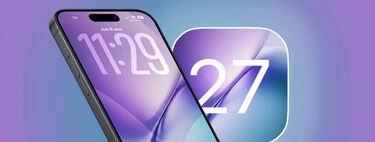
iOS 27 will be hard to convince so many people who haven’t upgraded yet to iOS 26. And while we still need to know Apple’s official version, we now know that thanks to Safari’s “necessary lie” to keep older websites alive, the reality of adoption isn’t as dramatic as the 15% we see in the graphs.
In Applesfera | The new iPhone 18 is everything we think we know about them
In Applesfera | The new macOS 27 is everything we think we know about it