NASA and the US military have contingency plans in place for Friday’s return of the Artemis II astronauts from California, where weather and the spacecraft landing outside of expected range are the main challenges, the space agency said on Wednesday (04/08/2026).
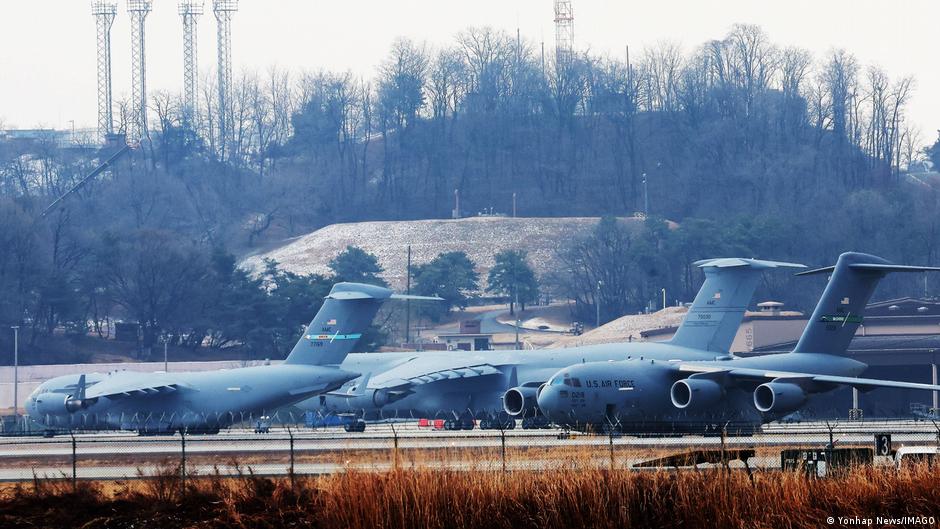
The Air Force has ready-made C-17 warplanes, in addition to two Navy helicopters to pick up the astronauts after they land, seven planes to follow the return, and the base at Pearl Harbor, explained Lily Villarreal, director of Artemis Landing and Recovery.
“We are still working with the military to ensure that in the event of a non-nominal event (other than expected) we will have a rescue force ready to go to the no-nominal landing site,” Villarreal told a news conference.
Specialists are taking precautions
Ahead of the return of the four crew members, who on Monday became the first to orbit the moon in more than 50 years, experts are “looking at things that might affect the guidance, navigation, control and propulsion systems,” said Rick Henfling, Artemis Return flight manager.
NASA has set an estimated range of 2,000 nautical miles (3,704 kilometers) in the Pacific Ocean for the Orion capsule it plans to land near San Diego, California, so “contingency plans” are focused on what happens if the craft goes beyond that parameter, he explained.
Despite this, he stressed that “there are favorable conditions for a good landing”, scheduled for 20.07. (EDT) on Friday (00:07 GMT Saturday), and that mission commander Reid Wiseman and pilot Victor Glover are trained to deal with the diversion.
Orion thermal panels reviewed
For now, NASA is testing the thermal panels that protect the spacecraft from the heat generated during reentry to see “if there is anything of concern that could change the reentry profile,” added Debbie Court, Orion’s deputy program manager.
The first step in reentry is the separation of the crew module from the rest of the Orion spacecraft, which occurs 42 minutes before docking, and re-entry into the atmosphere occurs 13 minutes before the astronauts arrive at sea, Henfling described.
During this period, the ship will reach a maximum speed of 10,657 meters per second, he added.
When the astronauts reach the ocean, medics will enter the ship to examine them, then take them to Navy helicopters in order: first to Christina Koch, then to Glover, then to Canadian Jeremy Hansen and finally to Commander Wiseman, as detailed by Villarreal.
gs (efe, dpa)