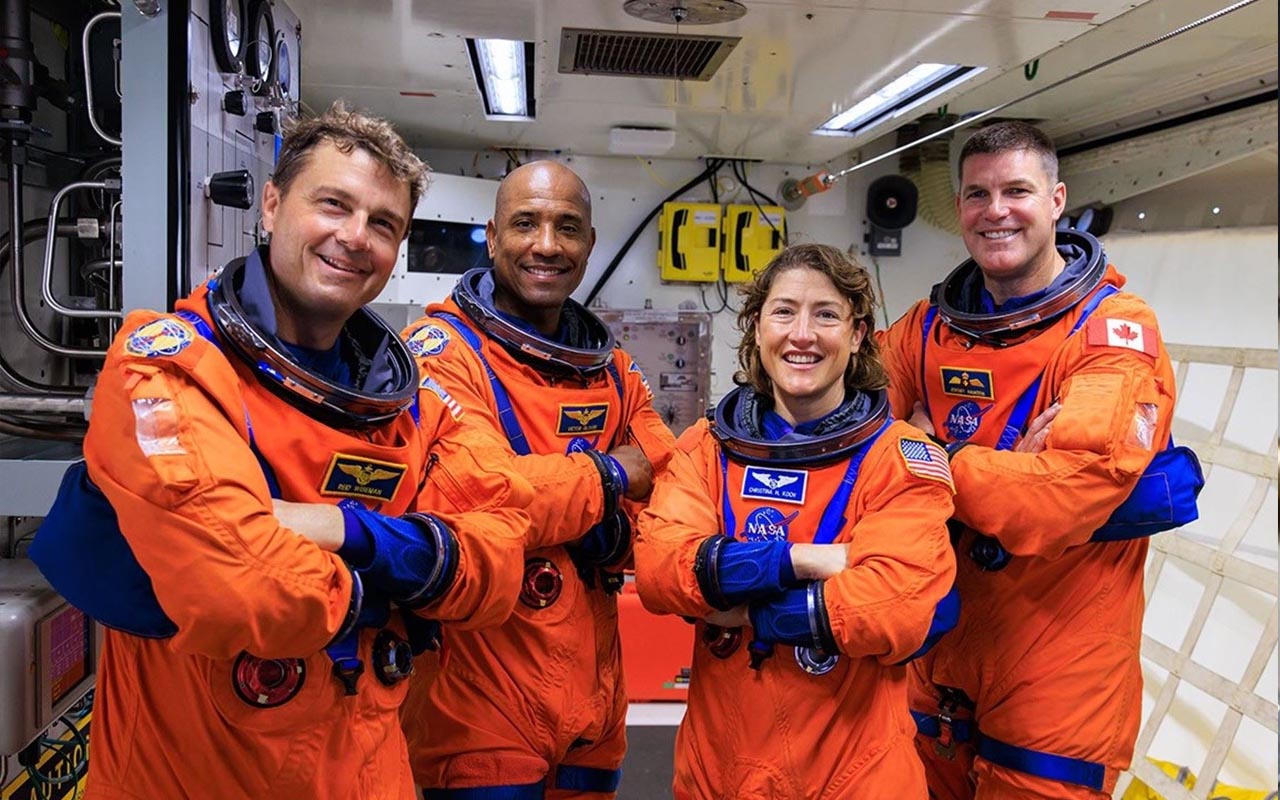


Mission Artemis IIthe next big bet of NASA’s lunar program, will be the first to send astronauts into deep space after the end of Apollo. In addition to testing the ship’s systems Orionthe crew will undertake a double task: they will act as researchers and, at the same time, as subjects to analyze how the human body reacts in extreme conditions beyond low Earth orbit.
Science on board: human health in extreme environments
Although the primary task is to test Orion’s life support system and equipment, Artemis II will operate as a mobile science laboratory. Astronauts will collect key data on sleep, stress, cognition and group dynamics through research ARCHERwhich will use wearables and pre- and post-flight cognitive testing.
Another area of research will be immunological analysis. Using saliva and blood samples taken before, during and after the mission, experts will observe how the body reacts to radiation, isolation and distance from Earth. The possible reactivation of latent viruses, as seen in previous low-orbit missions, will also be assessed.
Organs on a chip, biomarkers and the most comprehensive data to date
Artemis II will be the first to use the technology in deep space AVATARbased on “organs on a chip” built with stem cells from the astronauts themselves. Its exposure to microgravity and radiation will allow us to better understand the behavior of human tissue outside of terrestrial protection.
In addition, the comprehensive program will collect physiological and cognitive variables from six months before takeoff to one month after return. Blood, urine, and saliva tests will be performed, as well as muscle, eye, vestibular, and cognitive tests. It will be the most comprehensive account of the human impact of deep space since.
Radiation, lunar observation and real-time scientific support
The spacecraft will carry advanced radiation detectors, including new ones M-42 EXTdeveloped jointly with the German space agency DLRwith six times the resolution of its predecessor. Each astronaut will also carry a personal dosimeter to measure their exposure in real time and allow for preemptive decision making from Earth.
During the lunar flyby, the crew will make direct observations of areas not seen since 1972, including an area that may encompass the far side of the moon. These images will strengthen existing maps and provide important geological data for future missions.
For the first time there will be a director of flight sciencewhich will be coordinated in real time with geology and lunar exploration specialists from the Johnson Space Center. This system of operation will be key to future operations when astronauts set foot on the lunar surface again.
International CubeSats to expand research
As a complement, Artemis II will deploy CubeSats from several countries, including Argentina, South Korea, Saudi Arabia and Germany. They will analyze radiation, space weather and environmental effects on electronic components, expanding the knowledge base for future missions.