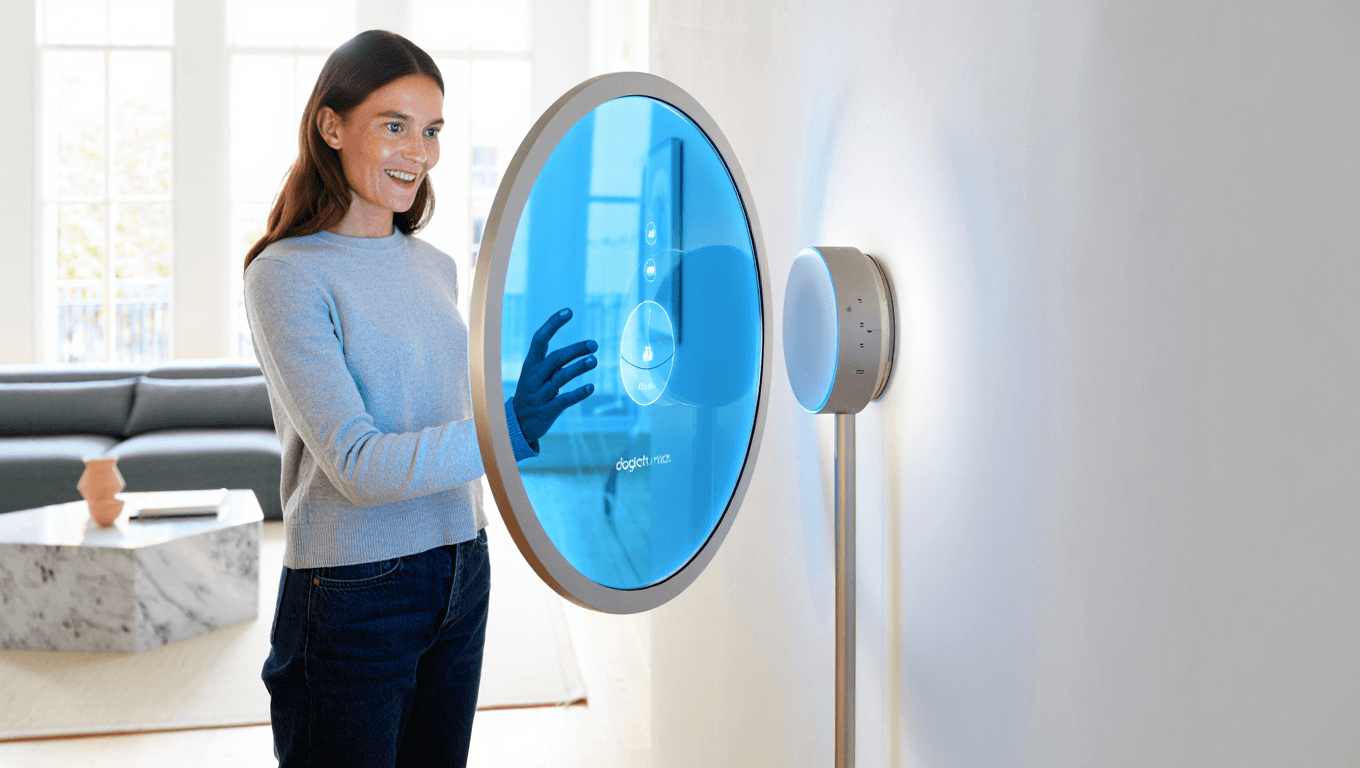
Samsung presented at Milan Design Week 2026 a prototype that proposes to change the presence of artificial intelligence in the home: Project Lunaa human-centric round-screen assistant. The announcement comes at a time when the industry is looking to integrate AI in more visible and useful ways into everyday life, so it’s worth asking what this design means for users and for the domestic market.
The presentation was on display at an exhibition called Design is an Act of Love and was part of a section called Culinary Intelligence, a space where Samsung grouped ideas to make the kitchen more interactive and connected.
Project Luna It’s not just another speaker: its distinctive feature is a circular screen that can rotate to point at a person or a specific point in a room, giving it a sense of purpose and physical presence.
- Media playback: the ability to place music and audio in different environments.
- Active notifications: Call and event alerts with focused attention.
- Home control: control lighting and connected devices.
- Contextual interaction: It integrates with other elements such as projectors that display food information to provide useful data while cooking.
At the show, Samsung showed the Luna project, which coexists with TVs, projectors and even players, pointing to a home ecosystem where devices “talk” to each other and are organized around people’s activities.
The company says the goal is to focus technology on people and improve their quality of life. In this sense, Mauro Porcini, Head of Design at Samsung Device eXperience (DX), explained that the intention goes beyond the production of products: it is about creating a relevant personal experience that makes sense in the routine.
That this prototype has been revealed now responds to several converging trends: the maturing of artificial intelligence for household tasks, the demand for less intrusive interfaces, and the growing interest in design that communicates purpose. If Project Luna becomes a product, it will change the way we think as visitors: from discreet devices to objects with presence.
The practical and commercial implications are different, and not all are technical. Among the points that should be followed, you can highlight:
- Privacy and data: Greater physical presence raises questions about microphones, cameras and the handling of personal information.
- Adoption and interior design: A user-facing assistant redefines where and how to place devices in the home.
- Interoperability: Its value will depend on the ability to integrate with other devices and platforms.
- User Experience: True intentions will be measured by how intuitive and useful they are for everyday tasks like cooking or entertainment.
For now, Project Luna is a design exercise, but it sends a clear signal: Samsung is exploring the possibility of a makeover artificial intelligence into the tangible center of the connected home, not just into a service hidden inside an app or speaker. This orientation is especially relevant at a time when manufacturers and designers are trying to distinguish their offers in a market saturated with virtual assistants.
Additionally, the prototype comes in a context where the company is facing changes in its portfolio of services that could accelerate its commitment to physical devices that strengthen its ecosystem. The result—whether Luna remains a commercial product or a concept—will be an indicator of where the form and function of home automation will go in the coming years.
Therefore, Project Luna presents a design proposal that tries to make artificial intelligence visible in the home; Its success will depend on how it deals with practical and ethical issues and whether it manages to integrate smoothly into everyday things and habits.
Similar items

Diego Saler investigates technology trends and digital innovation. You’ll enjoy hands-on tutorials and straight-forward advice to better understand artificial intelligence, cybersecurity, and emerging technologies.