
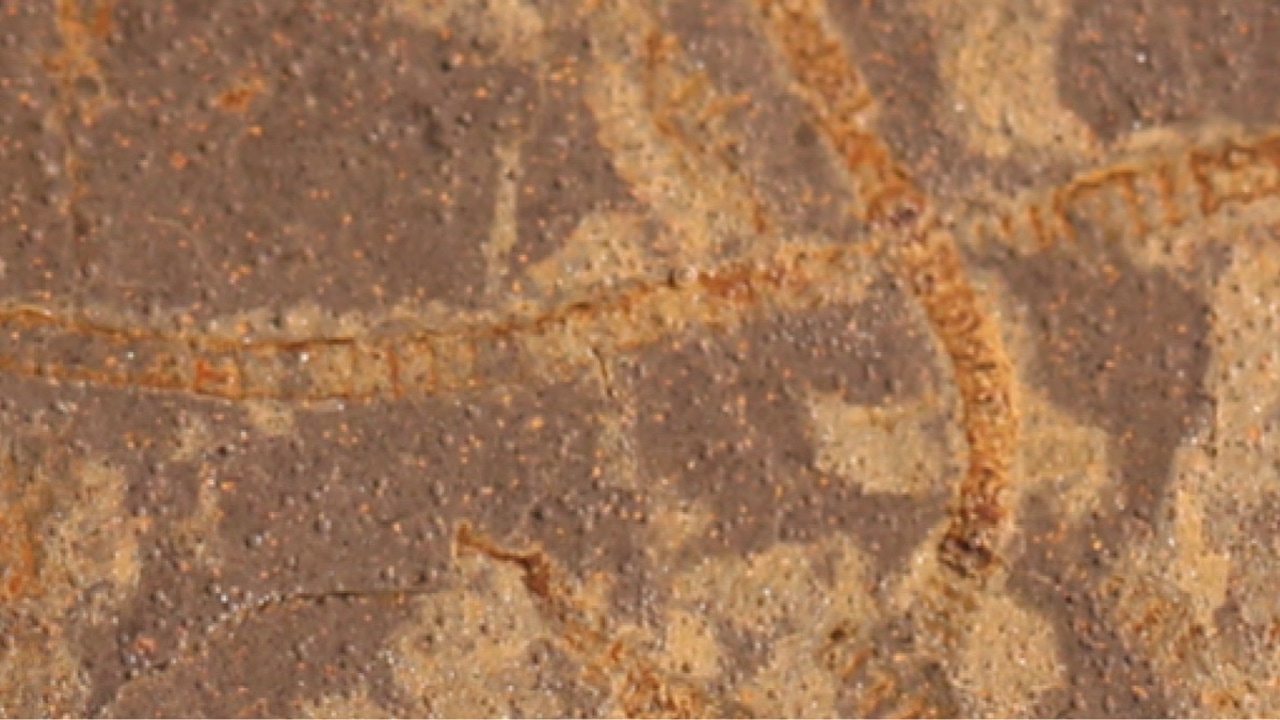
What was the most important step in the history of life on Earth? What was the most important change brought about by evolution? We might think it’s an honor it is held by the brainthe most complex organ we know of in the universe, but it would be very anthropocentric. If we think on a planetary level, it was given by small microorganisms long before we were here. In reality, there were no humans, animals, or multicellular creatures. They were the first organisms capable of producing oxygen through photosynthesis, and according to a new study published in the journal PNAS, this may have happened much sooner than we thought. Without them, there would be no oxygen in the atmosphere, and without oxygen there is not enough energy to power complex life forms. We owe everything we are to this evolutionary innovation, and now, thanks to chemistry and artificial intelligence, we have traced its origins.
If the research is correct, the key step for the emergence of complex life forms could have occurred in a much shorter time since the formation of the Earth, about 1000 million years. This means it may be more likely than we realize. Imagine two opaque boxes. From one I have to get 10 balls to get a blue ball out, from the other it comes out the first time. With no further information… which one do you think you have the best chance of finding blue orbs in? And the more likely it is, the easier it happens during the first moments planet, when there is still enough left for life to develop.
When Earth formed 4.5 billion years ago, the combined planetesimals were little more than a swarm of burning coals, a tidal wave of lava glowing in uncertain. Bridging the gap between reality and what we can convey in a few sentences, this hell has mellowed over time, but the Earth it originated on was still very far from what we know. Even when life appeared, the scenario was completely different, and the reason, although invisible, had a more than tangible effect on the planet: there was no oxygen in the atmosphere.
Oxygen is an element that tends to combine with silicon, both of which are very common, to form silicates in the form of rocks and sand. Life originated about 4 billion years ago in this environment and did without oxygen for a long time, but at some point something changed. A group of microorganisms called cyanobacteria have developed a remarkable survival strategy called “oxygenic photosynthesis.” That is, they received energy from the sun to produce nutrients and in the process released oxygen into the atmosphere. Until now, we thought it happened between 2.4 and 2.7 billion years ago. And it had dramatic consequences.
Oxygen, so basic to our survival, became an invisible killer, a highly reactive element toxic to many life forms at the time, which perished, marking the milestone of life on Earth that we call the Great Oxidation. This happened about 2 billion years ago, and these large amounts of oxygen not only provided an interesting source of energy for the most resistant organisms, but also allowed the formation of ozone molecules (composed of three oxygens), which would form a protective shield around our planet, blocking life-damaging radiation such as ultraviolet. Since then, the planet has not stopped changing, and in many ways thanks to oxygen.
Now a study conducted by specialists from Carnegie Institution for Science and Michigan State University It advanced to this milestone by almost 1,000 million years, specifically to 3,500 million years ago, when life on Earth first appeared. To reach these conclusions, the experts used high-resolution chemical techniques to break down the organic and inorganic materials present in the rocks into tiny molecular fragments. They then trained an artificial intelligence system with more than 400 samples (from modern plants and animals to billion-year-old fossils and meteorites) to learn to distinguish which combinations of fragments were typical of biological processes and which were not. The model was able to identify these “chemical fingerprints” with more than 90% accuracy, even in rocks so old and transformed that they do not retain any of the original biomolecules.
Applying this method to rocks more than 3.3 billion years old, the system found a signal compatible with oxygenic photosynthesis, meaning that microorganisms capable of releasing oxygen were already there much earlier than the traditional geological record suggests. According to the team, these “chemical clues” are so subtle that they have gone unnoticed for decades, buried under billions of years of geological transformation. However, a combination of advanced chemistry and machine learning has made it possible to detect them and reconstruct an important part of the history of life.
In fact, this method will allow us to (almost) double the time window in which we can detect these biochemical signals in the geological record. As the researcher Cathy Maloney points out, this technique opens a new way to study not only our planet, but also samples from Mars or other worlds, where any biological signal will be as weak and fragmented. An interesting technique that is tested with the most important episode of life on Earth.
NOT KNOWN:
- We still know very little about the first forms of life on Earth and how they could have arisen. In fact, with so little information, drawing conclusions from what AI tells us can seem risky. At the end of the day, we can’t compare these results to reality to know how well our model will adjust, and while there are ways to iron out this uncertainty, we have to live with the uncertainty. This does not mean that we should avoid these experiments, far from it, but that we should be cautious about their results as we adjust our instruments. The more data we collect, the more accurate the AI models will be.
REFERENCES (MLA):
- “Organic Geochemical Evidence for Life in Archean Rocks Revealed by Pyrolysis-GC-MS and Supervised Machine Learning” Proceedings of the National Academy of Sciences. Carnegie Institution for Science, 2025.


