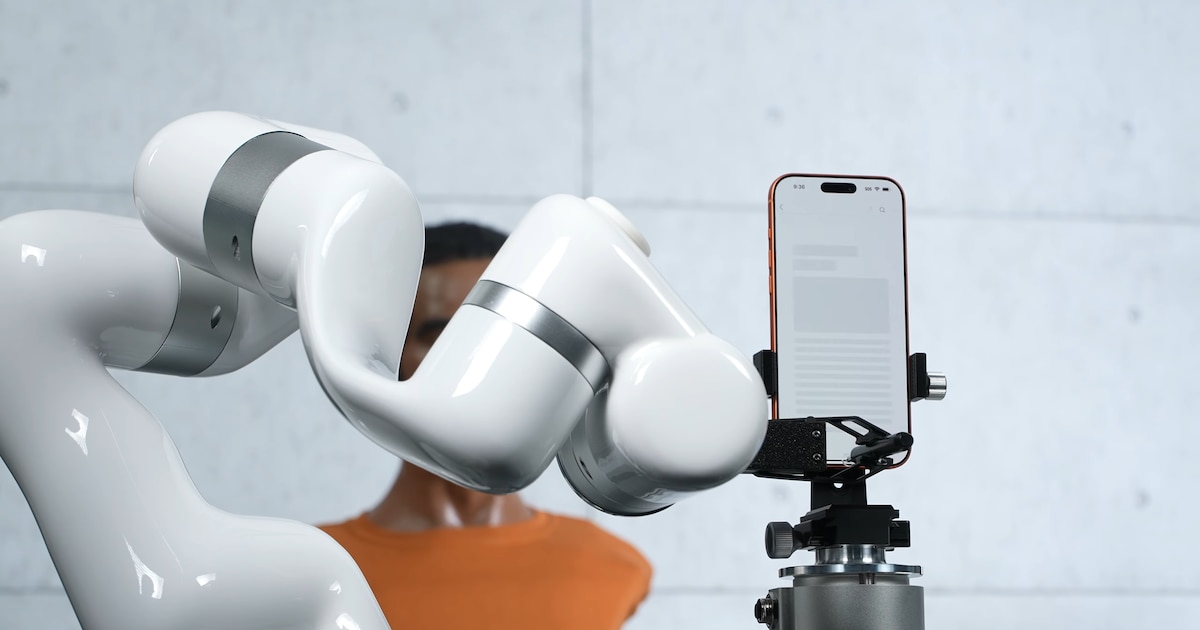
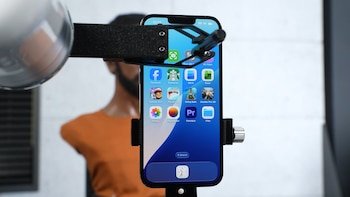
Every time an iPhone comes out, the question arises as to how different it is from the previous generation, so YouTube channel PhoneBuff decided to do a test with the robot to compare the last six models and to infer differences in performance.
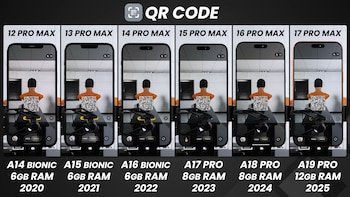
Tests were conducted on models from the iPhone 12 Pro to the latest iPhone 17 Pro. All in the same conditions and under the control of a robotic arm, avoiding human error.
The comparison developed by PhoneBuff was distinguished, first of all, by the neutrality of the applied technique. All devices worked under the same operating system (iOS 26), with a screen brightness of 200 nits and auto-adjustment disabled.
Devices were placed equidistant from the WiFi access point to ensure a level playing field in terms of connectivity and network latency. In addition, the tests ranged from the most everyday use (such as opening messaging programs, social networks or loading large documents in Microsoft Word) to tasks with high computational demands, including burst photography, panoramas, image and video editing, and graphics-intensive video games.
To do this, they used a robotic arm programmed to always perform the same actions on each phone and at the same intervals, thus, time is measured with maximum accuracy and without subjective intervention.
In the most common tasks, the six iPhones showed remarkably similar performance. for example Scanning the QR code returned eight seconds for the iPhone 12 Pro and 17 Pro. When opening Facebook, the difference between the oldest and latest models was barely a second.
Even when loading a 5,000-row spreadsheet into Excel, the results remained very close, a testament to Apple’s robust optimization across generations.
This segment of the test made it clear that for those who use the phone primarily for core activities, The five-year-old processor still runs smoothly, maintaining the brand’s longevity and support for previous models.
When the tests were processing-intensive tasks, the differences became more pronounced. After taking ten photos in portrait mode with changing lighting and subject movement, The iPhone 17 Pro completed the task in just 14 seconds, while the iPhone 12 Pro took 23 seconds.
Photo and video processing has been a real challenge for generations. Applying the noise reduction filter in Photomator took 34 seconds on the iPhone 17 Prowhile the iPhone 12 Pro consumed one minute and 14 seconds.
When exporting a minute-long video with the background removed to Adobe Premiere, the advantage of the new iPhone was even greater: 46 seconds versus 1 minute 23 seconds for the oldest device in the sample.
Also, in the task of decompressing a 6 GB file, the difference remained at five seconds in favor of the last model. These results show a marked evolution in processing power and efficiency, especially visible for those who edit multimedia content.
The second stage consisted of repeating all the tests at maximum demand, without pausing to allow the phones to cool down.
Thermal regulation appeared in iPhone 15 Pro Max and 16 Pro Maxsurpassing not only the iPhone 17 Pro, but also the immediately preceding models, such as the iPhone 13 and 14 Pro Max, whose aluminum and steel constructions provided better dispersion than the titanium body used in the latest models.
In this round, while the iPhone 17 Pro maintained a constant speed, completing the lap in 4 minutes 40 seconds, the 15 and 16 Pro Max took more than five minutes, and the iPhone 12 Pro Max almost touched seven minutes.
During extreme multitasking, The iPhone 16 Pro Max was unable to keep apps open in the background due to lack of sufficient RAM, a limitation that the iPhone 17 Pro solved with the new 12 GB memory configuration.
In the test summary, The iPhone 17 Pro proved to be the clear winner in all the tough processing tasksadvanced photography and temperature management. PhoneBuff concluded that those who still have an iPhone 12, 13 or 14 will find noticeable improvements when they upgrade to the next-generation models.
Owners of the iPhone 15 Pro or 16 Pro can wait without problems, except for those who particularly suffer from overheating with demanding applications, where the iPhone 17 Pro really shows an advantage due to the advanced cooling system.