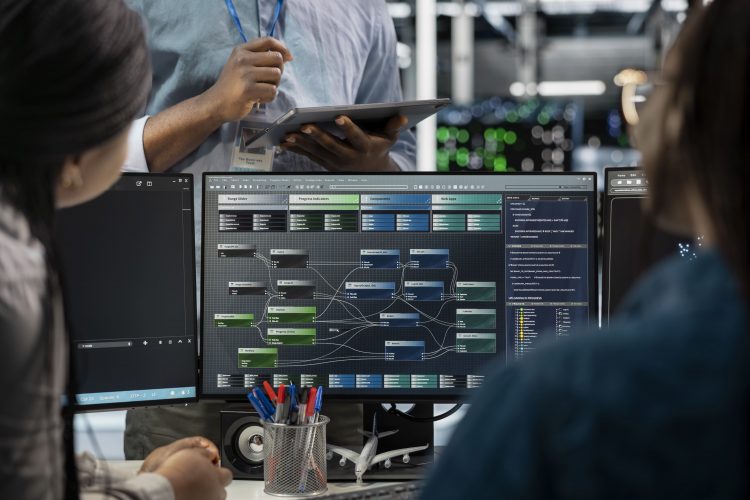

- Schneider Electric is leading a transformation where automation and artificial intelligence are empowering, improving processes and redefining the role of talent.
According to Coursera Global Skills Report 2025Peru ranked 45th out of 109 countries for digital skills development, excelling in technology (38th) and data science (46th). Despite this progress, the business community continues to face challenges in filling positions that require advanced digital skills, indicating a gap between labor demand and the technical training available in the country.
In this context, Schneider Electric reaffirms a fundamental principle: automation does not replace people, it pushes them into more important roles. The integration of technologies such as artificial intelligence, data analysis and interoperable systems allows Peru’s key industries such as mining, energy, manufacturing and construction to improve operational efficiency while creating new professional opportunities.
“Industrial technology does not come to replace people, but to empower them. By freeing them from repetitive tasks, they allow them to focus on what really adds value: creativity, critical thinking and strategic decision-making. The future of work is based on intelligent collaboration between human talent and technology, where innovation, data and knowledge come together to anticipate change, promote sustainable solutions and provide quality jobs,” said Vanessa Moreno, Head of Schneider Electric Peru and Bolivia.
Technology with a purpose: to transform work, not eliminate it
With tools like the Industrial Internet of Things (IIoT) and interoperable software, Schneider Electric is redefining the landscape of the industrial workplace. These advances create a safer, more engaging and collaborative environment for new generations, while improving tracking, energy efficiency and performance.
A case in point is Sanwa in Asia, where the adoption of EcoStruxure™, Schneider Electric’s open and interoperable platform, enabled the full digitization of operations.
The result has not been job loss, but evolution: manual tasks have been replaced by automated and connected cells, while workers have moved into roles focused on supervision, data analysis, and continuous improvement. This transformation increased operational efficiency, reduced energy costs and enabled real-time process control.
The ability to counter the shortage of industrial talent
It is currently estimated that there are between 2 and 3.5 million unfilled jobs in the manufacturing industry worldwide due to the retirement of skilled workers and a lack of new generations with technical training. If no action is taken, about 2.4 million of these jobs could remain vacant by 2028, according to the Manufacturing Institute.
This paradigm shift requires not only new skills, but also a strategic view that combines innovation, continuous learning and people-centric talent management. Data-driven automation and independent software are redefining traditional industry roles and creating more dynamic, secure and engaging career paths.
Schneider Electric’s commitment is clear: to lead an industrial transformation that puts people at the center, promoting sustainable and inclusive models. Because it is through the combination of technology and human talent that innovative responses emerge that can have a positive impact on business, society and the environment.
About Schneider Electric
Schneider Electric is a global leader in energy technologies that deliver efficiency and sustainability by electrifying, automating and digitizing industries, businesses and homes. Its technologies enable buildings, data centers, factories, infrastructure and networks to operate as open, interconnected ecosystems, optimizing performance, resilience and resilience. Its portfolio includes smart devices, software-defined architecture, artificial intelligence-driven systems, digital services and expert consulting. With more than 160,000 employees and 1 million partners in more than 100 countries, Schneider Electric is consistently one of the most sustainable companies in the world.