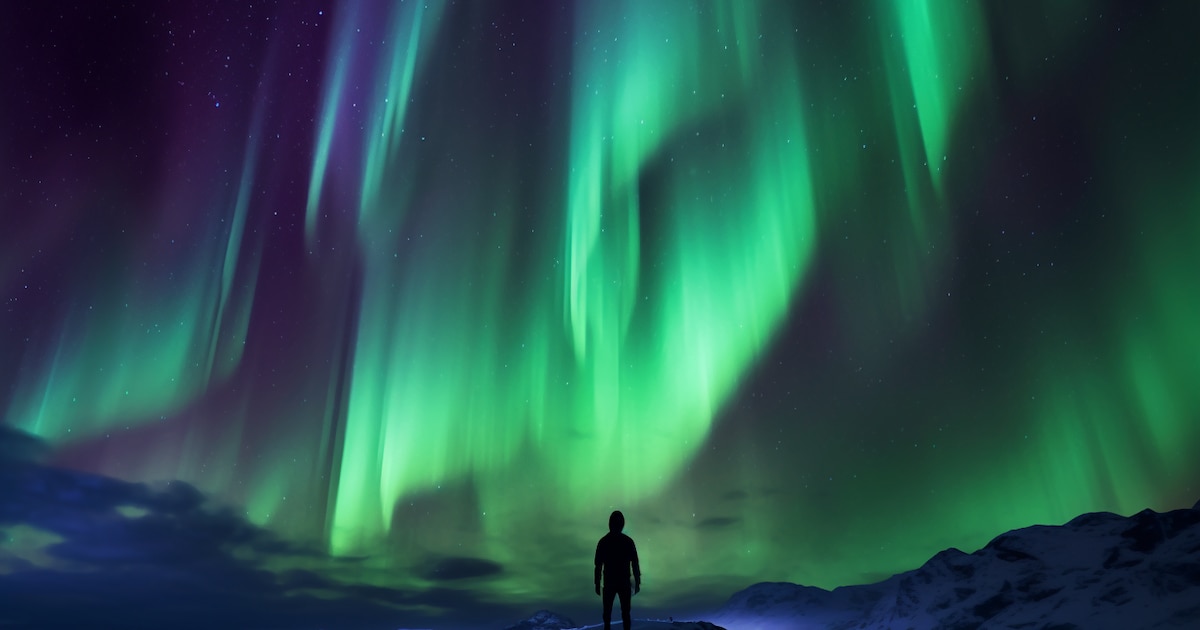
Astronomical and meteorological conditions may favor the appearance of the northern lights in the northern hemisphere this March, according to National Oceanic and Atmospheric Administration (NOAA) and scientific organizations specializing in space weather. The possibility of observing these light phenomena is explained by the increase in solar activity and the approach of the vernal equinox, scheduled for March 20, 2026.
According to NOAA through its Space Weather Prediction Center, the aurora season typically peaks in the weeks before and after the equinox due to interactions between the solar wind and Earth’s magnetic field. The US agency lifted its G1 geomagnetic storm warning for March 6, but maintains a forecast for more auroras in the coming days. The scientific tests confirm that March is one of the most polar active months on record ABC News and a site specializing in the dissemination of science EarthSky.org.
The phenomenon of the northern lights is explained by the interaction of solar particles with the upper layers of the Earth’s atmosphere. The scientific community defines periods close to the equinoxes as aurora seasonwhen the magnetic collision of the Earth and the Sun promotes the arrival of charged particles to the poles. Such behavior, documented by art University of California, Los Angeles (UCLA) and collected by NOAA, known as the Russell-McFerron effect.
The appearance of the northern lights is associated with solar activity, in particular with coronal holes, areas of the solar atmosphere that release high-speed streams of the solar wind. NOAA details that this solar wind can reach Earth and cause geomagnetic storms that create the well-known glow in the night sky.
During March, the geometry between Earth and the Sun promotes an alignment of magnetic fields, a phenomenon described by Christopher Russell and Robert McFerron in 1973. This alignment, known as the Russell-McFerron effect, allows the solar wind to more easily penetrate Earth’s magnetic field, according to Space.com. As a result, the probability and visibility of the northern lights in the middle and high latitudes increases.
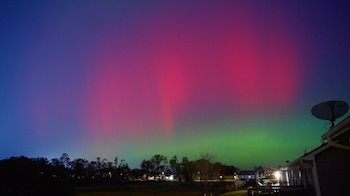
The vernal equinox in the northern hemisphere will occur on March 20, 2026. According to NOAA and the platform Aurora dashboardthe optimal window for viewing the aurora is expanding from 10 to 25 March. The most favorable conditions occur on clear nights with little or no light pollution and in between 10pm and 2am localities
Organizations such as NOAA and portals that specialize in astronomy, such as the Astronomy Tourism Platform The world of adventure in Space.comagree that the final visibility of the auroras will depend on the intensity of solar storms and the orientation of the interplanetary magnetic field, as well as the local cloud cover in each region.
In March, the northern lights could be seen in the north USAsouth of the village Canada and other high latitudes of the Northern Hemisphere, according to NOAA. In situations of geomagnetic storms G1 level or higherphenomenon could be seen in USA in states like Wisconsin, Minnesota, and Montana.
NOAA recommends looking for locations away from light pollution and preferring moonless or crescent nights. The organization is constantly updating its information Aurora dashboarda tool that allows you to check aurora activity in real time.
The visibility of the northern lights will depend on several factors: the intensity of the geomagnetic storm, the direction of the sun’s magnetic field, and local weather conditions. With a favorable magnetic orientation, storms occur G1 level or higherauroras can be seen with the naked eye in places far from light pollution.
The phase of the solar cycle is another important element. He 25 solar cycle peaked in 2024but the potential for isolated high-activity events remains in the coming years, according to the analysis Space.com. “Solar activity continues to generate intense episodes of solar and geomagnetic wind with the potential for auroras in the following days of the equinox,” the specialized portal notes.
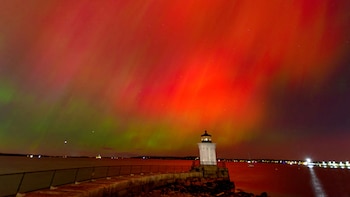
NOAA advises observers to consult updated forecasts and take advantage of the window of peak activity from March 10 to 25. The best hours for viewing are between 10 p.m. and 2 a.m. local time, preferring open spaces without light pollution. The entity also remembers that cloud cover can limit visibility, so it suggests checking weather conditions before each departure.
Experts from EarthSky.orgquote ABC Newswarn that the likelihood of auroras increases in the weeks near the equinox, when the solar wind can more easily penetrate the Earth’s magnetic field.
Projected increase in aurora activity could attract tourists and astronomy enthusiasts to northern regions USA and south of Canada. NOAA warns that while geomagnetic storms are expected to remain low to moderate, solar activity may occasionally affect navigation and satellite communications systems.
The probability of seeing the northern lights this month will depend on the development of solar activity and local weather conditions. Official predictions will be continuously updated across the platforms NOAA and specialized international agencies.