
Every December, when the cold intensifies and the winter constellations dominate the sky, a bright spectacle erupts to say goodbye to the year: the Geminid meteor shower. Considered one of the most reliable and spectacular in the astronomical calendar, it returns with activity that promises to dazzle skygazers.
Unlike most meteor showers caused by icy comets that spew dust as they approach the Sun, the Geminids originate from an unusual object: the asteroid 3200 Phaeton. Astronomers describe it as a “rocky comet,” an asteroid-like body that approaches the Sun so closely that its surface is broken by the intense heat, releasing particles that form a faint tail.
NASA’s STEREO probe confirmed the presence of this small tail. “The tail provides strong evidence that Phaethon is ejecting dust,” explained astronomer David Jewitt of the University of California, Los Angeles. This process, caused by thermal fracturing and desiccation of its surface, suggests that Phaethon is indeed the source of the Geminids, a celestial puzzle that still continues to unravel its secrets.
When and how to perform them
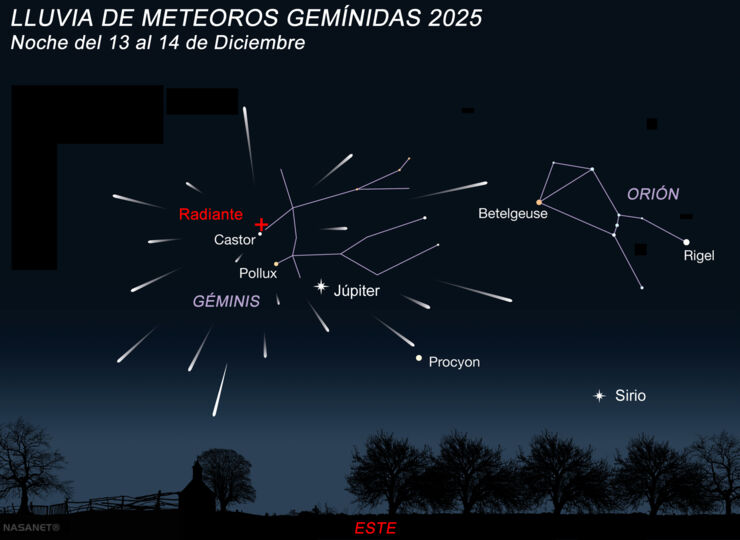
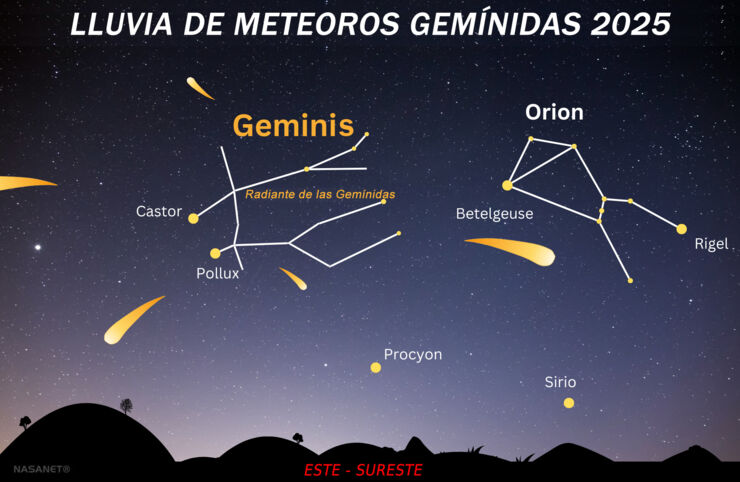
According to Bill Cooke of NASA’s Meteor Environment Office, activity peaks during the night of Dec. 13 and the early hours of Dec. 14, when under ideal conditions up to one meteor per minute can be seen. Between midnight and 4:00 a.m., when the radiant, located in the constellation Gemini, is high in the sky, the most flashes are expected.
In addition, conditions are particularly favorable this year: the subdued phase of the Moon prevents the Moon’s light from competing with the faintest meteors, allowing even the faintest trails to be observed.
Tips on how to enjoy the show
- At first glance: using telescopes or binoculars is not recommended; meteors cross the entire sky.
- Look for Darkness: Moving away from cities allows you to see more tracks.
- Adapt to the night: It will take your eyes 20 to 30 minutes to adjust to the dark.
- Essential wool: The best times coincide with cold temperatures, especially in the northern hemisphere.
An annual event that wins everyone over
The Geminids are visible from most parts of the world, although their spectacle is particularly impressive in the northern hemisphere. With dozens – and even more than a hundred – meteors per hour under the best conditions, this meteor shower has proven to be a winter event not to be missed.
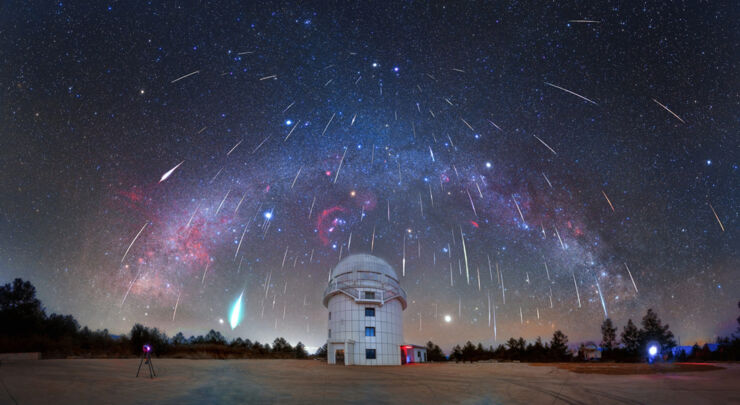
Its constant rhythm and the chance to see the occasional fireball make this rain a brilliant reminder of the beauty that passes silently overhead. A natural spectacle that once again promises to leave its mark.


