
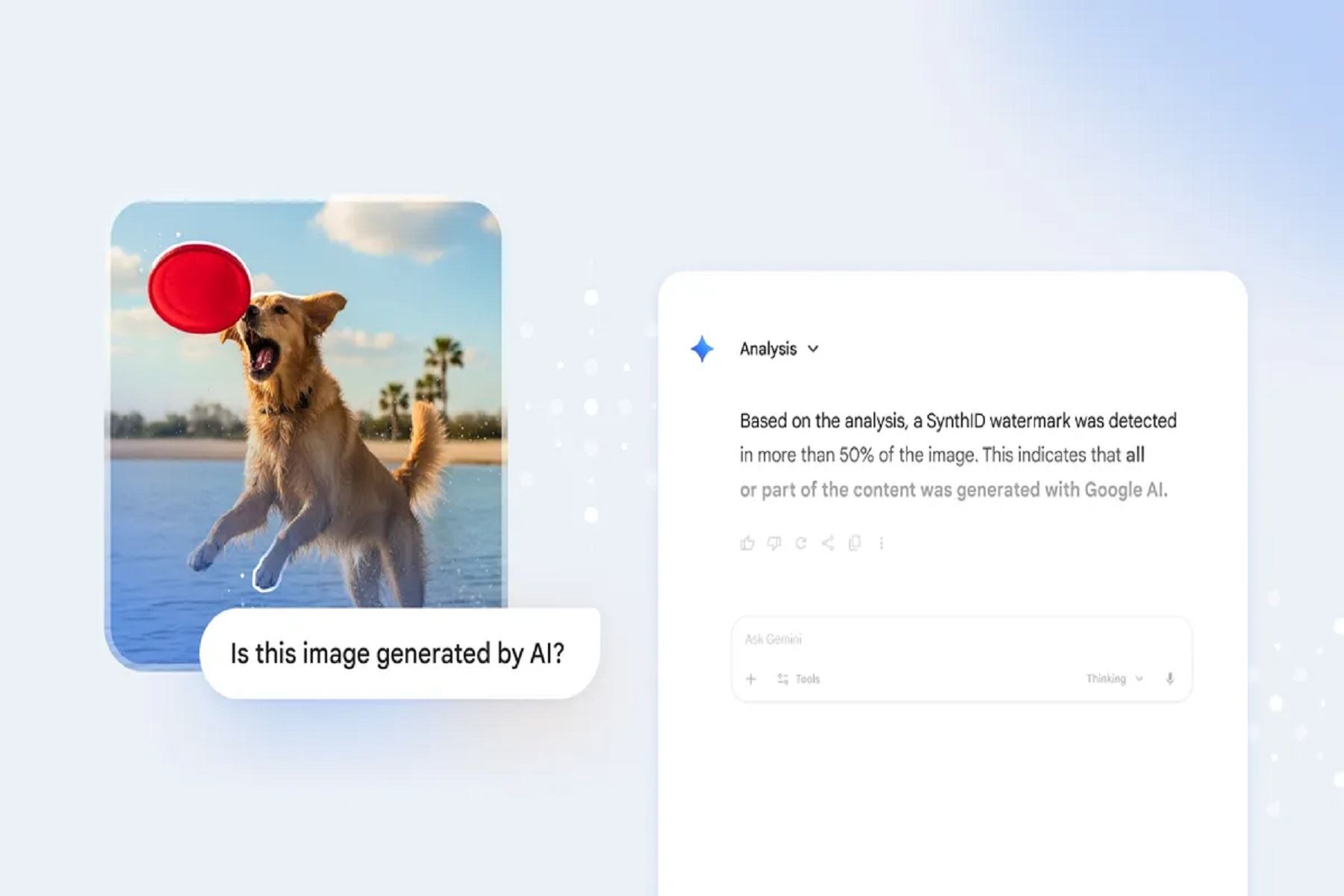
For many, it is still difficult to distinguish content created by artificial intelligence, thinking about those users that Google implemented SynthID, a tool that creates watermarks and identifies content created by Google’s AI models.
“We make it easy for anyone to check if an image was created or edited by Google’s AI right in the Gemini app using SynthID, our digital watermarking technology that combines imperceptible signals into AI-generated contentGoogle explained in its blog.
In 2023, the tech giant introduced SynthID, since then more than 20 billion pieces of AI-generated content have been watermarked with SynthID.
The SynthID watermark is customized for each content. If it is an image, it is inserted and “hides” in the pixels of the image without changing its visual perception.
The watermark is added to the content when the image is created, which means that it becomes part of the image and cannot be separated from each other.
Also read: Google unveils Nano Banana Pro, its new AI model for image creation
How does it work?
If you see an image and want to confirm that it was created by Google’s AI, load it into the Gemini app and ask a question like, “Was this created with Google’s AI?” or “Is this image generated by artificial intelligence?”
Gemini will look for the SynthID watermark and use its own reasoning to provide the answer which gives you more context about the content you find online.
what next
This launch builds on Google’s track record of providing context around images in Google Search and exploring new research innovations such as Google DeepMind’s Backstory.
quickly SynthID validation will be extended to support formats other than images, such as video and audioand will bring these features to more platforms like Search.
“In addition to our own tools, we work with industry partners to advance content transparency and authenticity standards across our ecosystem of products (including YouTube, Search, Pixel, and Photos) through our role on the Coalition for Content Provenance and Authenticity (C2PA) steering committee,” Google said in a blog post.
“Over time, we’ll also expand our verification approach to support C2PA content credentials, meaning you’ll be able to verify the original source of content created by models and products that exist outside the Google ecosystem,” he concludes.
See more science, technology and innovation news on Agencia Andina and listen to inspiring stories on the Andina Podcast.
Published: 12/10/2025


