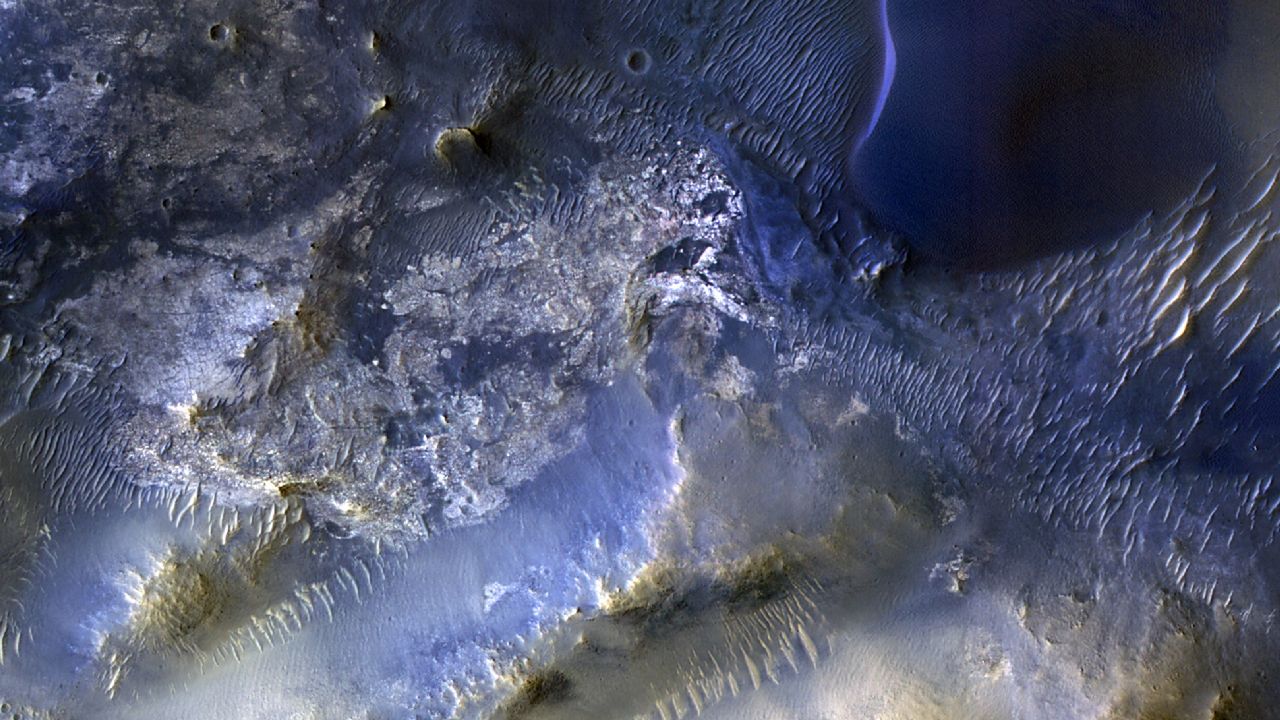
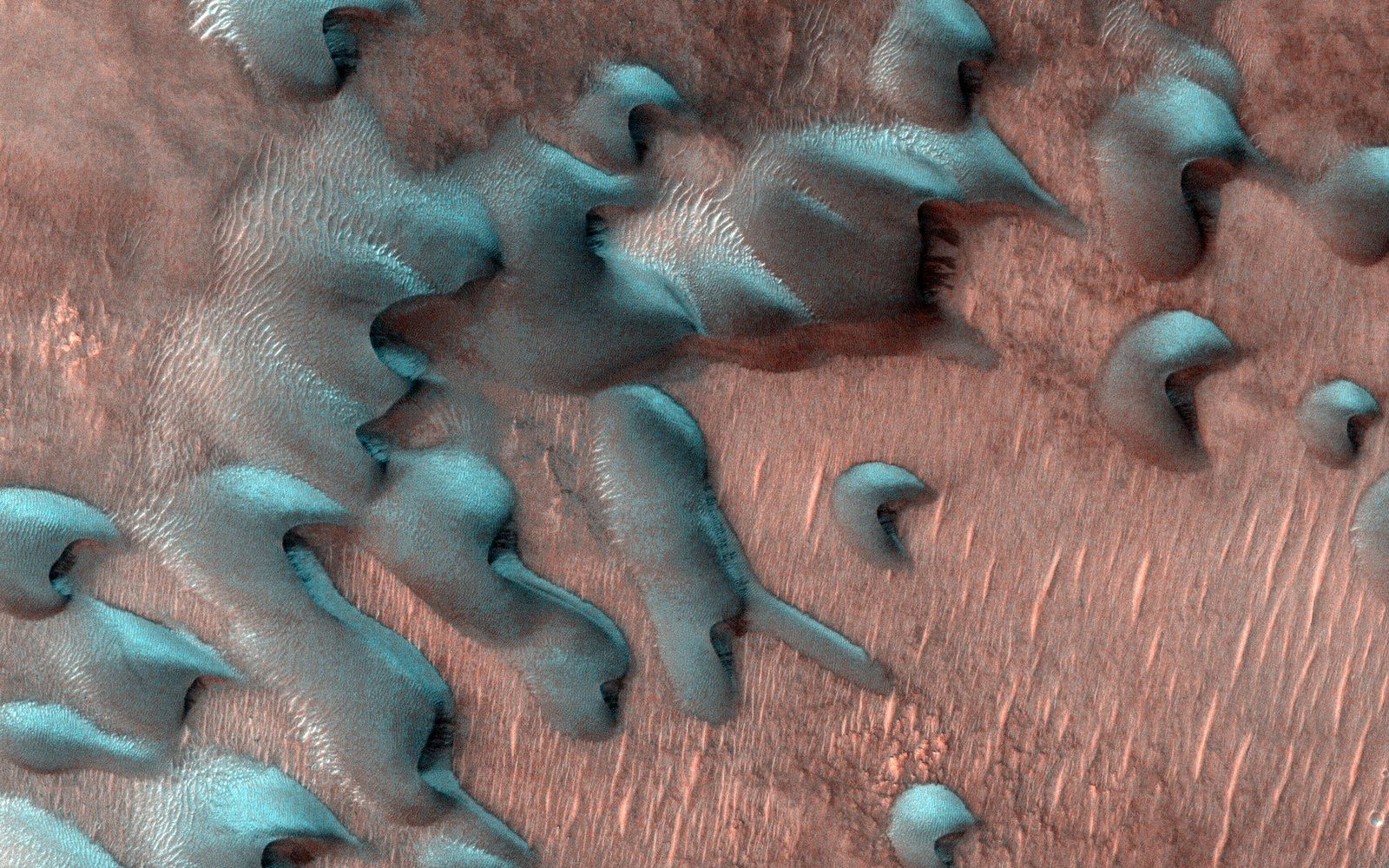
Rocks containing hydrous minerals in the Labyrinth of Noctis
The image below shows the Noctis Labyrinth on Mars, taken in May 2014. This labyrinth of landforms lies between the Pharsida region and Marineris Canyon, and many of its depressions contain minerals that indicate the presence of water in the past.
It is believed that from the Late Hesperian (3000-3600 million years ago) to the Amazonian period (3000 million years ago to the present), the climate in this region was dry and cold, similar to modern Mars. However, the presence of these minerals indicates that liquid water has been stored in the area for a long time.
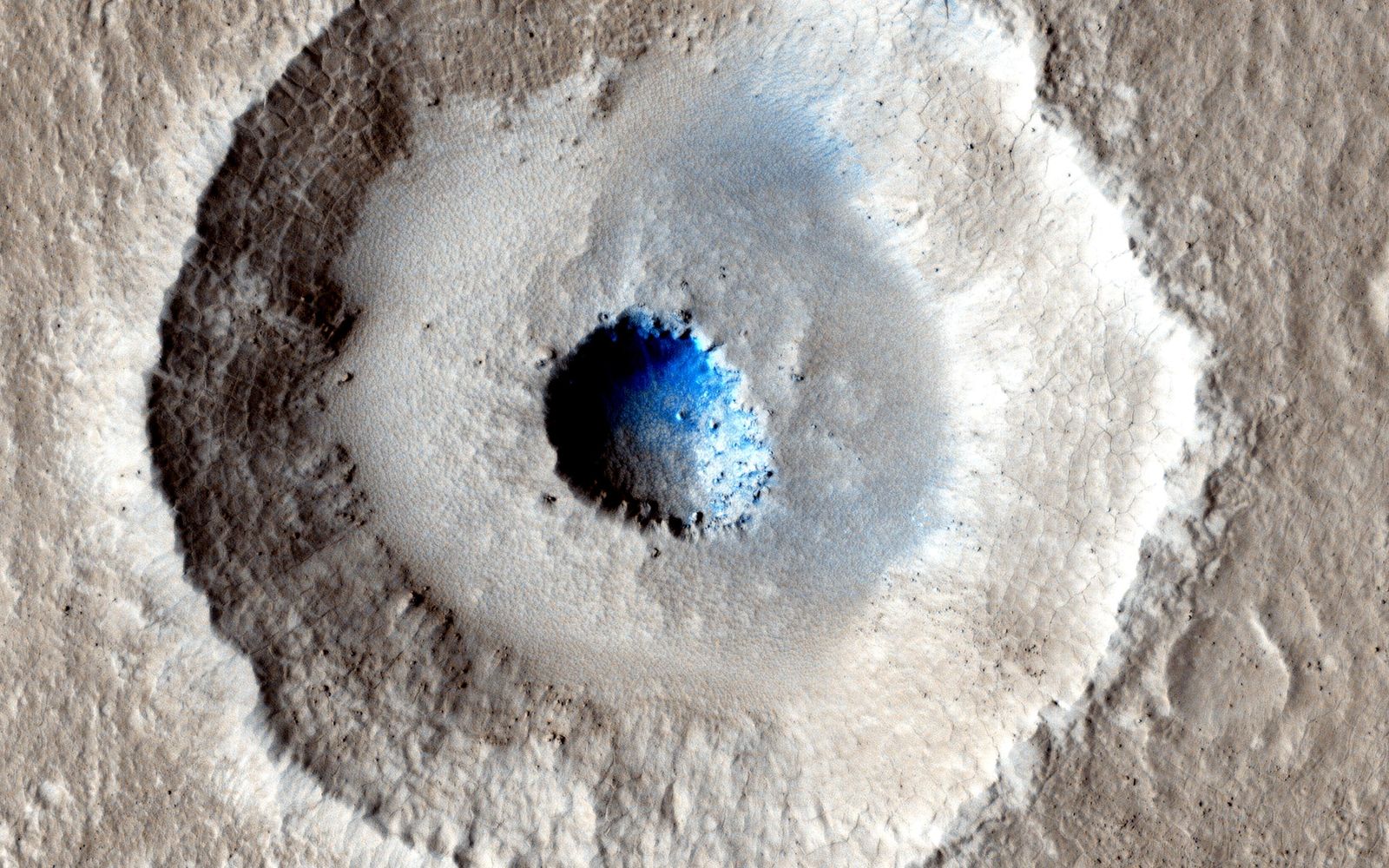
The crater was photographed in January 2014 and has an unusual shape, different from normal craters. It is believed that these peculiar forms arise from changes in the consistency of the underground soil, going from harder areas to weaker ones.
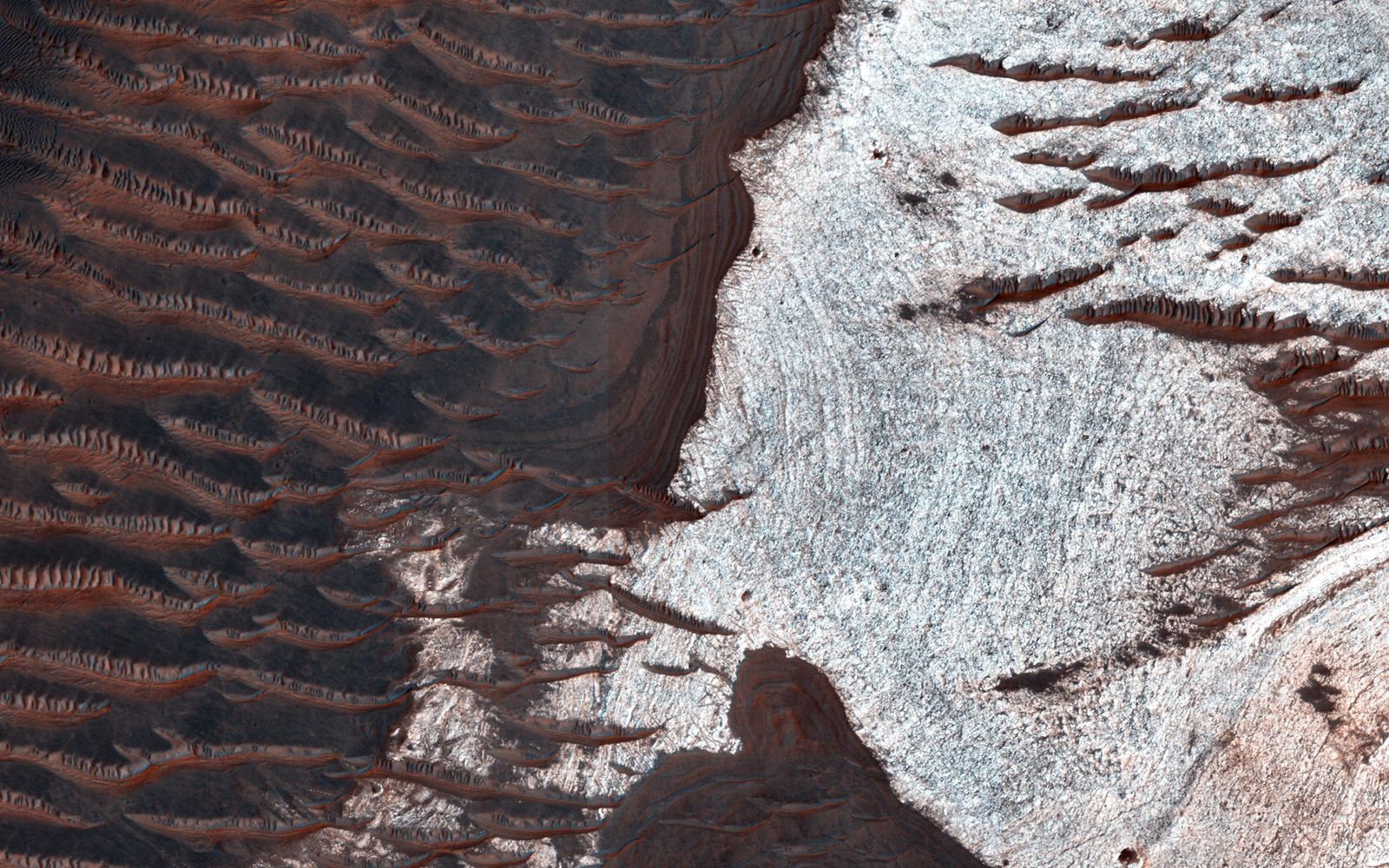
Avalanches on Mars
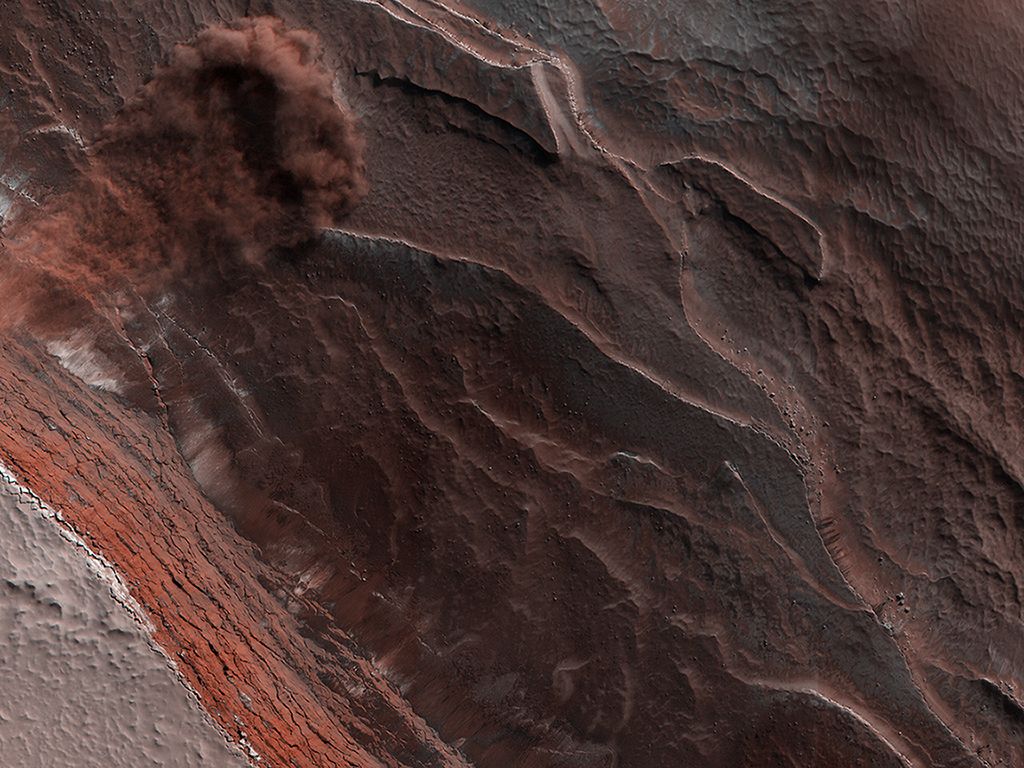
The image below, taken in May 2019, shows ice cascading off a 500m cliff. According to the report, when temperatures rise in the spring and the ice begins to sublimate, the fragments become unstable and fall, kicking up dust.
A dust devil winds its way across the Amazon plain
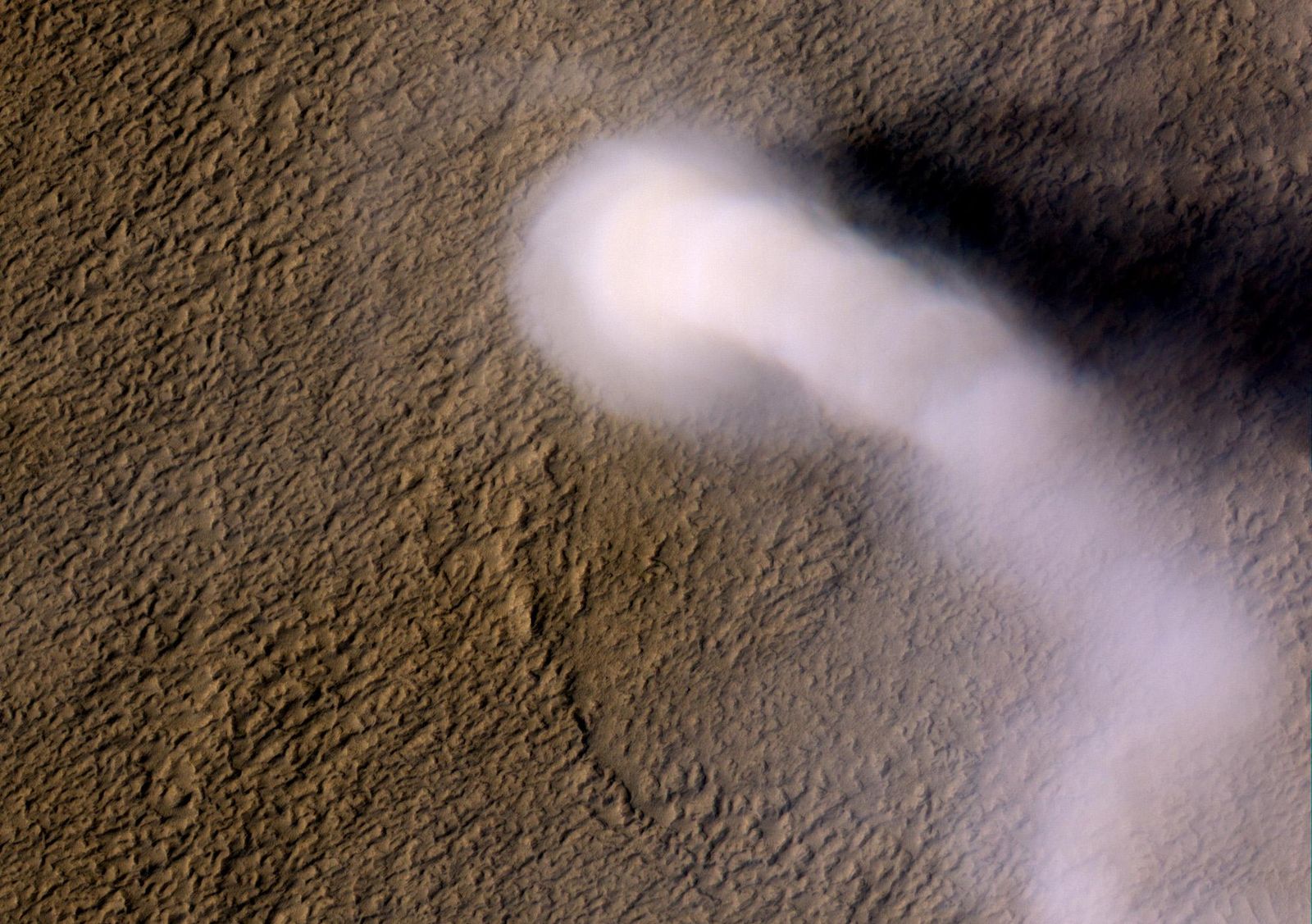
The image below, taken in March 2012, shows a dust devil winding its way across the Amazonian Plain, located between the Pharsida region and the Elysium Plain. It is believed that it reaches up to 20 km in height, although its width is small, only about 70 meters.
Interstellar Comet 3I/ATLAS
The image below shows the interstellar comet 3I/ATLAS taken on October 2, 2025. Discovered on July 1 by the Asteroid Late Beam Warning System (ATLAS) in Chile, it is the third interstellar object discovered outside the Solar System, after 1I/’Oumuamua and Comet 2I/Barysau.
The image was taken from a relatively short distance of 29.9 million kilometers, and its analysis will allow a more accurate estimate of the size of 3I/ATLAS.
(Tattentranslate)Espacio(T)nasa